
MIT announces leadership of its Quest for Intelligence
Faculty from across the Institute tapped to lead new initiative in human and machine intelligence.
Faculty from across the Institute tapped to lead new initiative in human and machine intelligence.
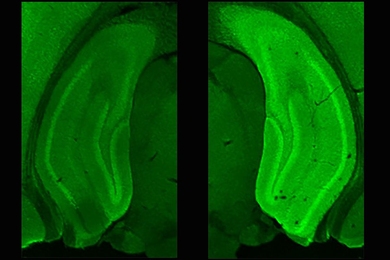
MIT researchers find that encountering novel contexts cues the brain to churn out neurogranin.
New neural model reveals how the brain adapts to new information.

Annamarie Bair, a premed student turned computer science major, is drawn to the promise of artificial intelligence and health care.
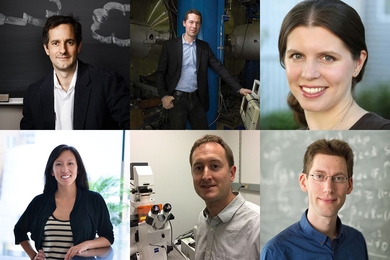
Six faculty members are granted tenure in four departments.
Taking time to understand underlying causes of stress can help children escape debilitating health effects, symposium speakers argue.
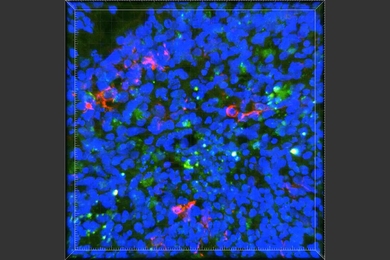
Study reveals why people with the APOE4 gene have higher risk of the disease.
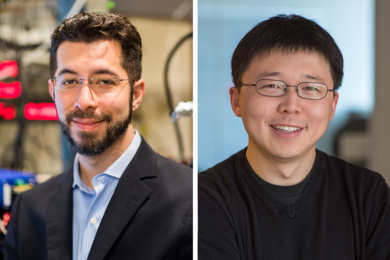
MIT faculty members are among 19 top scientists selected from across the nation.

Study tracks eye movement to determine how well people understand English as a foreign language.
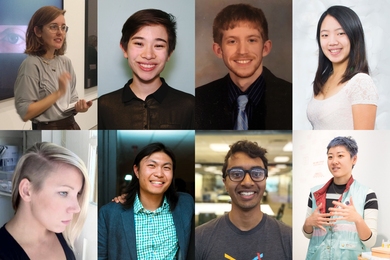
Graduating students and alumni will conduct research abroad in 2018-19 academic year.

MIT grad students explain why some people hear "Yanny" and others hear "Laurel" in the audio clip that's taken the world by storm.

MIT neuroscientist is recognized for her pioneering work on the complexity and function of the basal ganglia.

Scientists pinpoint neural interactions that are necessary for observational learning.
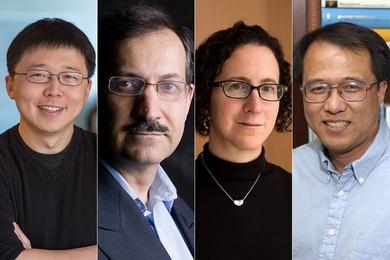
Finkelstein, Kardar, Wen, and Zhang honored for research achievements.

Study shows children remain adept learners until the age of 17 or 18.