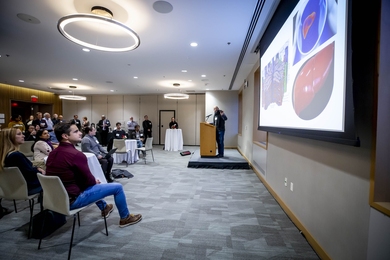
MIT-Takeda program launches
Research projects will harness the power of artificial intelligence to positively impact human health.
Research projects will harness the power of artificial intelligence to positively impact human health.

Neuroscientists delve into how background brightness influences our perception of an object.

MIT researchers pinpoint mechanism and demonstrate that drugs could help.

Children Helping Science, co-led by Professor Laura Schulz, brings research to families, and families to research.
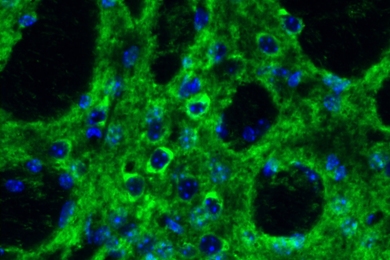
Knocking out the immune cytokine IL-6 exacerbates symptoms in HD model mice, affects neural connection genes.

Approach for generating numbers at random may help analyses of complex systems, from Earth’s climate to financial markets.

UROP students explore applications in robotics, health care, language understanding, and nuclear engineering.
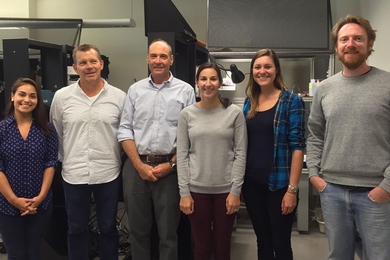
Drug compound, tested in mice, could be effective in treating the leading heritable cause of intellectual disability and autism.
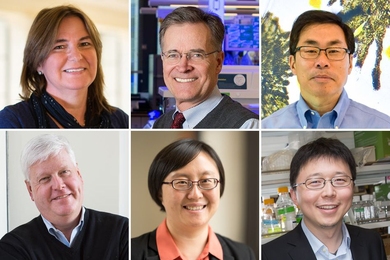
Multi-institutional MassCPR initiative announces more than $16.5 million to support 62 Boston-area projects.
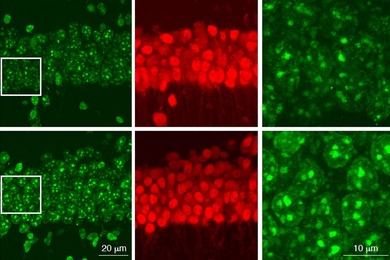
Reactivating an enzyme that promotes DNA repair can help to reverse age-related cognitive decline in mice.

The protein Synaptotagmin 7 limits supply of neurotransmitter-containing vesicles for release at synapses.
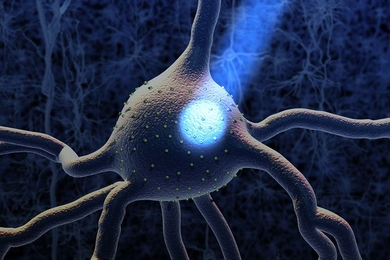
The Feng lab has developed a next-generation optogenetic system for non-invasive stimulation of neurons.
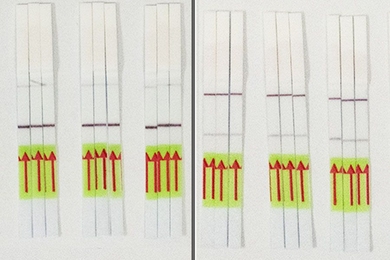
New CRISPR-based research tool delivers results in an hour; researchers share protocol and kits to advance research and move toward clinical validation.
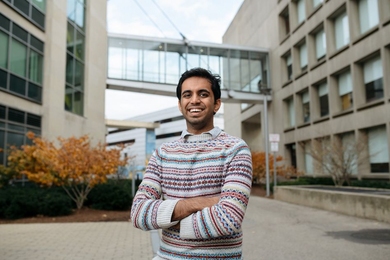
At MIT, senior Tarun Kamath has explored neuroscience and science policy, while helping his peers find ways to reduce stress.
Picower Institute researchers are embarking on experiments to learn the mechanisms by which coronavirus might affect mental health.