School of Engineering awards for 2014
Awards given to outstanding faculty, and graduate and undergraduate students
Awards given to outstanding faculty, and graduate and undergraduate students
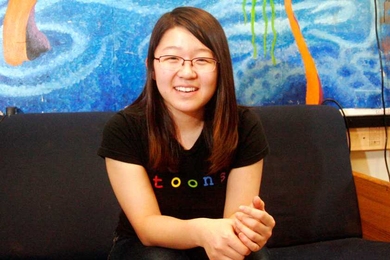
MIT senior Esther Jang uses science, engineering, and teaching to help others and challenge herself.

New theory could reduce number of sensors required for high-resolution imaging systems.
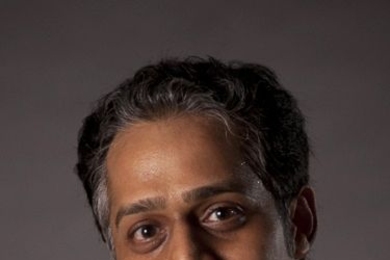
Rahul Sarpeshkar bridges biology and engineering to advance research and applications in biotechnology, medicine, and supercomputing.
Technique developed at MIT reveals the motion of energy-carrying quasiparticles in solid material.
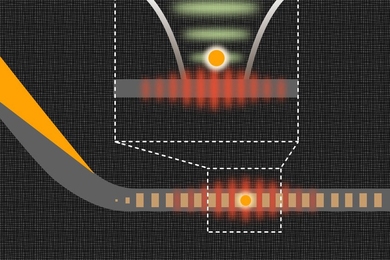
A light lattice that traps atoms may help scientists build networks of quantum information transmitters.
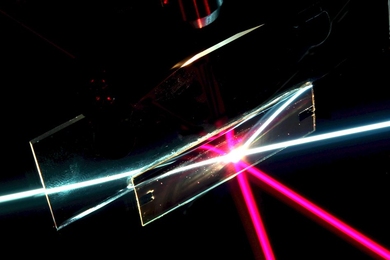
System could provide first method for filtering light waves based on direction.
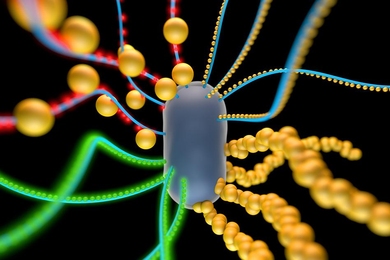
Hybrid materials combine bacterial cells with nonliving elements that can conduct electricity or emit light.
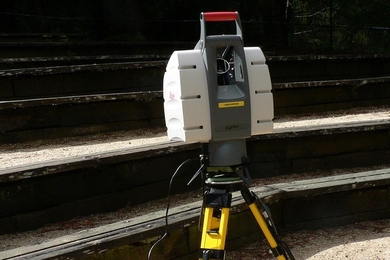
New scheme could enable laser rangefinders to infer depth from a hundredth as much light — and to produce images from only one nine-hundredth the light.
Munther Dahleh is appointed as acting director of ESD and new organization with focus on socio-technical systems, information and decision systems and statistics.

Technique could be applied to the study of disease, social networks and other diverse fields.
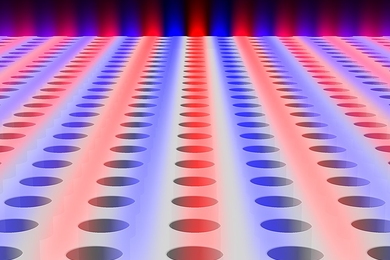
MIT researchers discover a new phenomenon that could lead to new types of lasers and sensors.

An optical switch that can be turned on by a single photon could point toward new designs for both classical and quantum computers.

Researchers show how the vagaries of real-world circuitry affect the performance of a promising new technique in signal processing and imaging.
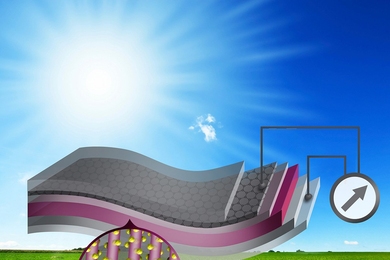
MIT researchers develop a new approach using graphene sheets coated with nanowires.