
Improving the performance of high-power electronics
By using a thin layer of diamond to manage excessive heat, researchers can boost the speed and energy-efficiency of next-generation wireless devices.
By using a thin layer of diamond to manage excessive heat, researchers can boost the speed and energy-efficiency of next-generation wireless devices.

With $25 million investment from the Commonwealth of Massachusetts, MIT to build a new shared-use facility to serve as a statewide quantum toolbox.

MIT.nano Immersion Lab collaborates with Emerson College students to advance the art of virtual production.

With a novel design, MIT researchers overcame a stubborn problem that has limited the effectiveness of chip-based systems for lidar.
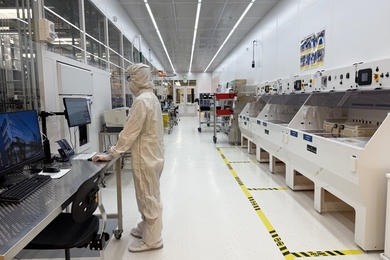
NanoFab Equipment Management and Operations (NEMO) system streamlines shared facilities management via tool trainings, reservations, and lab communications.
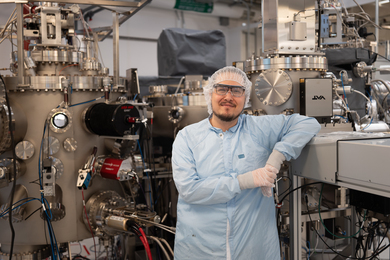
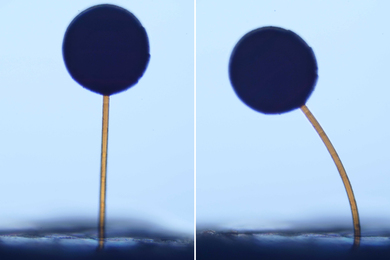
MIT researchers’ new fabrication technique can produce soft, microscopic structures with magnetically activated moving parts.
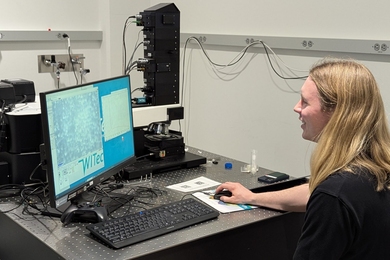
Startup accelerator program grows to over 30 companies, almost half of them with MIT pedigrees.
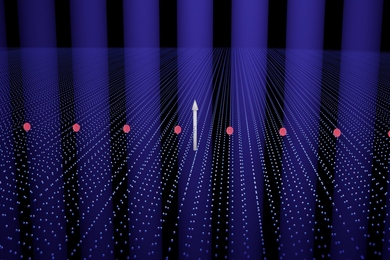
MIT physicists have discovered 3D “moiré crystals” that simulate four-dimensional quantum materials to a T.

The electrical engineering and nanotechnology leader will guide the US Army-sponsored research center as it advances next-generation materials, electronics, and photonics for national security.
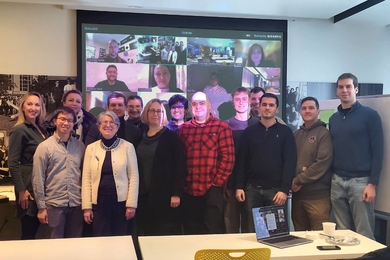
Build for Ukraine 2.0 united students, researchers, and Ukrainian collaborators to prototype solutions shaped by wartime conditions.
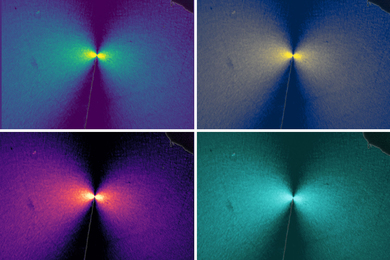
New insights into metallic cracks that harm battery performance could advance the longstanding quest to develop energy-dense solid-state batteries.
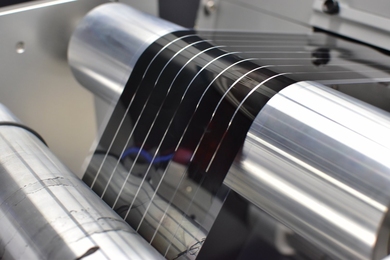
This award-winning startup with roots at the MIT Energy Initiative is developing lightweight, flexible, high-efficiency solar energy films designed to be used on roofs, walls, and any curved surface.
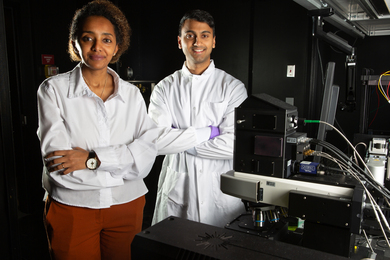
The technology could enable fast, point-of-care diagnoses for pneumonia and other lung conditions.
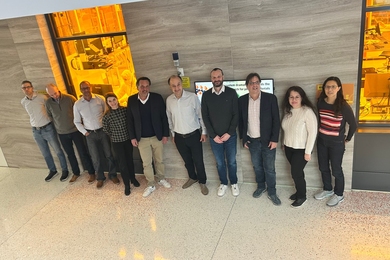
The advanced manufacturing group becomes a member and will contribute equipment to MIT.nano.