
From MIT to IBM, expediting AI and quantum deployment
MIT affiliates engage with the MIT-IBM Computing Research Lab to bring rigorous theory to production systems.
MIT affiliates engage with the MIT-IBM Computing Research Lab to bring rigorous theory to production systems.

MIT researchers use the classic game as a test bed for AI agents, finding a small AI model can outperform the biggest ones at 1 percent of the cost.

MIT faculty member in electrical engineering and computer science to focus on innovation in engineering education and new pedagogical approaches.

Building on a long-standing MIT–IBM collaboration, the new lab will chart the convergence of AI, algorithms, and quantum computing.

The “EnergAIzer” method generates reliable results in seconds, enabling data center operators to efficiently allocate resources and reduce wasted energy.
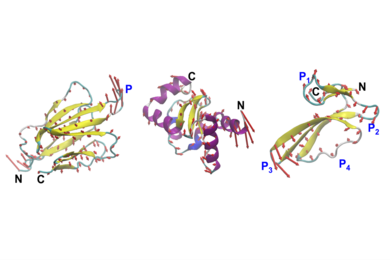
An AI model generates novel proteins based on how they vibrate and move, opening new possibilities for dynamic biomaterials and adaptive therapeutics.
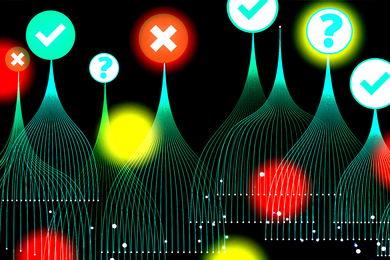
This new metric for measuring uncertainty could flag hallucinations and help users know whether to trust an AI model.

Academia-industry relationship is an early-stage accelerator, supporting professional progress and research.

By leveraging idle computing time, researchers can double the speed of model training while preserving accuracy.
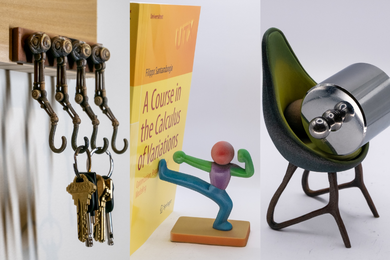
To help generative AI models create durable, real-world accessories and decor, the PhysiOpt system runs physics simulations and makes subtle tweaks to its 3D blueprints.
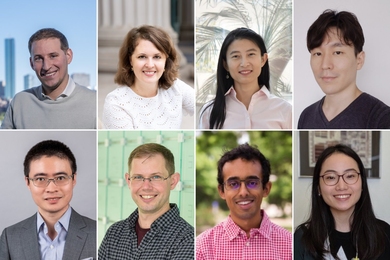
Annual award honors early-career researchers for creativity, innovation, and research accomplishments.

Removing just a tiny fraction of the crowdsourced data that informs online ranking platforms can significantly change the results.

Torralba’s research focuses on computer vision, machine learning, and human visual perception.

By leveraging excess heat instead of electricity, microscopic silicon structures could enable more energy-efficient thermal sensing and signal processing.
CSAIL researchers find even “untrainable” neural nets can learn effectively when guided by another network’s built-in biases using their guidance method.