
A new way to increase the capabilities of large language models
MIT-IBM Watson AI Lab researchers developed an expressive architecture that provides better state tracking and sequential reasoning in LLMs over long texts.
MIT-IBM Watson AI Lab researchers developed an expressive architecture that provides better state tracking and sequential reasoning in LLMs over long texts.
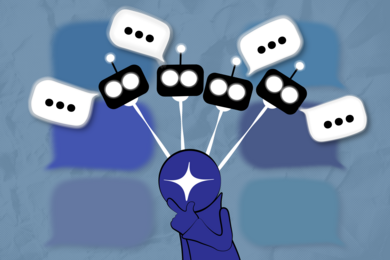
The “self-steering” DisCIPL system directs small models to work together on tasks with constraints, like itinerary planning and budgeting.
This new technique enables LLMs to dynamically adjust the amount of computation they use for reasoning, based on the difficulty of the question.
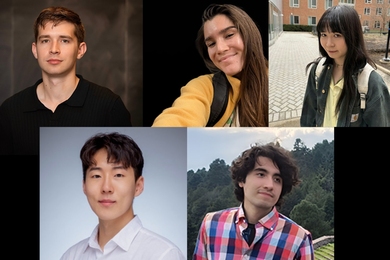
MIT PhD students who interned with the MIT-IBM Watson AI Lab Summer Program are pushing AI tools to be more flexible, efficient, and grounded in truth.

How the MIT-IBM Watson AI Lab is shaping AI-sociotechnical systems for the future.
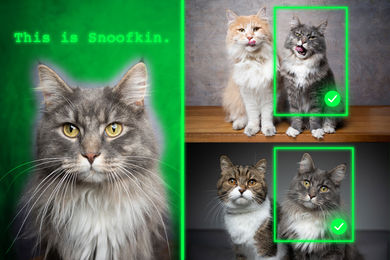
After being trained with this technique, vision-language models can better identify a unique item in a new scene.

MIT-IBM Watson AI Lab researchers have developed a universal guide for estimating how large language models will perform based on smaller models in the same family.

By visualizing Escher-like optical illusions in 2.5 dimensions, the “Meschers” tool could help scientists understand physics-defying shapes and spark new designs.

The CodeSteer system could boost large language models’ accuracy when solving complex problems, such as scheduling shipments in a supply chain.
Researchers developed a way to make large language models more adaptable to challenging tasks like strategic planning or process optimization.

A new framework from the MIT-IBM Watson AI Lab supercharges language models, so they can reason over, interactively develop, and verify valid, complex travel agendas.

The system automatically learns to adapt to unknown disturbances such as gusting winds.

With demand for cement alternatives rising, an MIT team uses machine learning to hunt for new ingredients across the scientific literature.

This new machine-learning model can match corresponding audio and visual data, which could someday help robots interact in the real world.
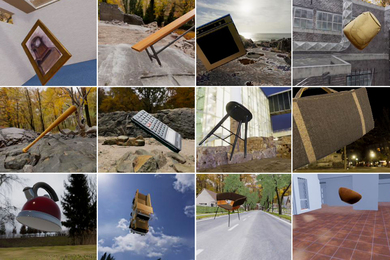
New research using computational vision models suggests the brain’s “ventral stream” might be more versatile than previously thought.