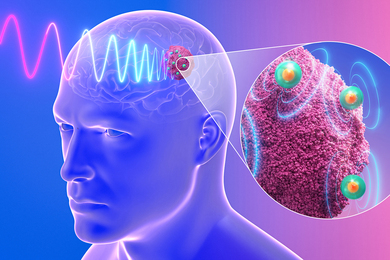
Injectable nanodevices could provide effective treatment for drug-resistant glioblastoma
MIT researchers show implanted nanoantennas can be activated wirelessly to kill brain cancer cells without damage to healthy tissue.
MIT researchers show implanted nanoantennas can be activated wirelessly to kill brain cancer cells without damage to healthy tissue.
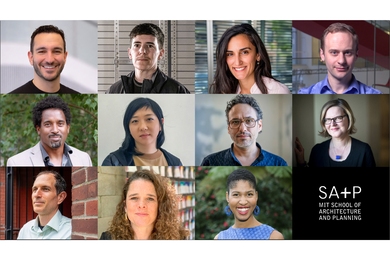
The range of faculty disciplines showcases the breadth of research and scholarship across the school.

The senior lecturer, already director of the degree program, will now oversee all aspects of the center’s activities and operations.

The PhD student works to give young people an active role in shaping digital technologies that can support their own well-being.
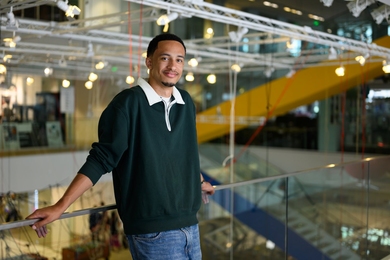
MIT senior Kayode Dada has a passion for designing games, and a penchant for building community.

The new technique could help scientists learn how the entire brain works to generate decisions and emotions.

MIT researchers can now precisely measure how heat moves through multilayered materials like computer chips.
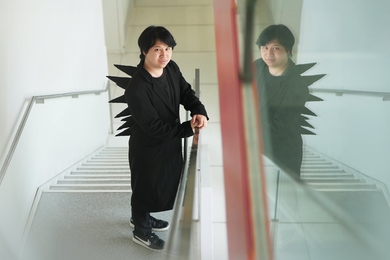
Assistant Professor Pat Pataranutaporn describes a new interface that lets everyday users glimpse inside an AI's neural network before their chatbot ever says a word.
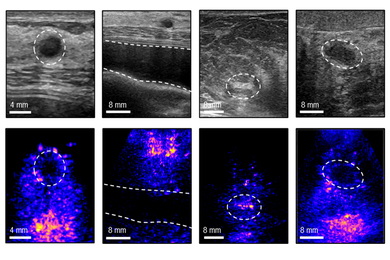
The new technology, which generates high-resolution, 3D images of breast tissue, requires no expertise to operate and could be used at home.

Associate Professor Anna Huang delivers the keynote address, “In Search of Human-AI Resonance,” to a capacity crowd.
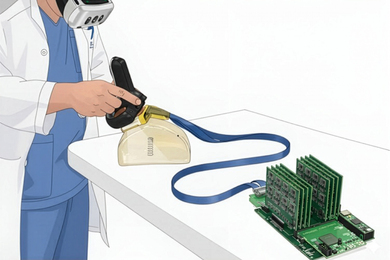
MIT researchers have designed an ultrasound system that creates a real-time 3D representation of the object being imaged.

A Media Lab study shows that, much like how GPS has weakened our navigation skills, AI can make us worse at detecting fake news.
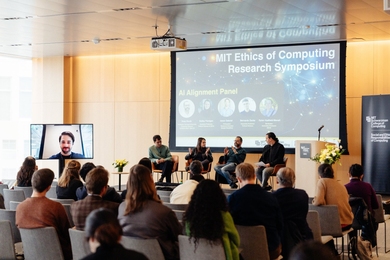
The MIT Ethics of Computing Research Symposium brought together experts and researchers working at the heart of ethical and social impact in technology.

Using technology invented at MIT, Cartesian’s system for locating objects could also find uses in manufacturing, logistics, and robotics.

MIT RAISE and Georgia State University announce an initiative to connect universities, community colleges, industry, and government to expand industry-aligned AI training and career pathways.