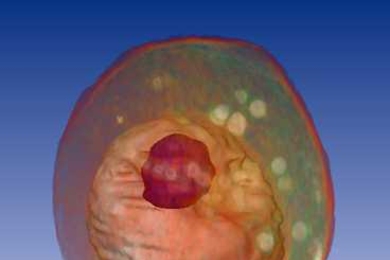
Biologists discover how yeast cells reverse aging
The gene they found can double yeast lifespan when turned on late in life.
The gene they found can double yeast lifespan when turned on late in life.

Combining an ancient principle with new technology, MIT researchers have devised a way to answer that question.
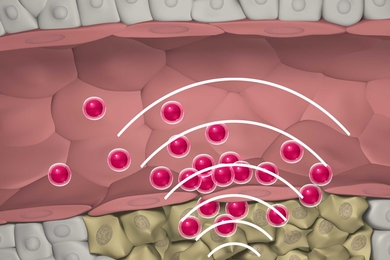
MIT-designed nanoparticles communicate with each other inside the body to target tumors more efficiently.'
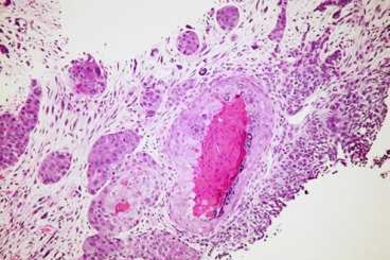
MIT biologists pinpoint a genetic change that helps tumors move to other parts of the body.

Researchers gather to discuss the state of their field and the potential for new treatments.
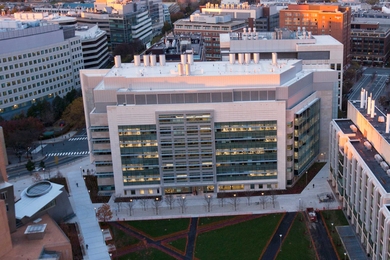
MIT celebrates the official opening of the institute's new building.
Team identifies potential drugs that enhance stress caused by too many chromosomes.

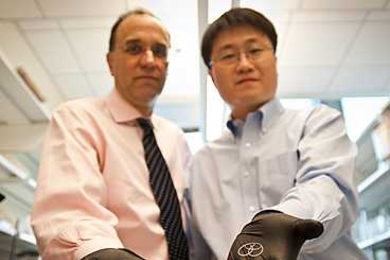
Implanted device can release slow, steady dose of medicine over extended period, removing the need for repeated procedures.
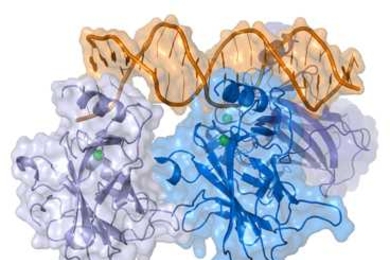
Biologists find that restoring the gene for p53 can slow the spread of advanced lung tumors, but doesn’t help early-stage cancers.
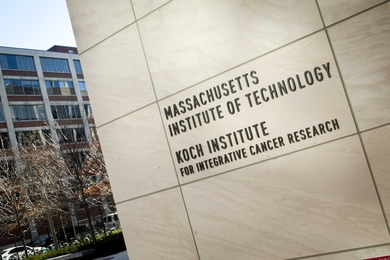
Completion of cancer-research building opens green space for community use and creates vibrant streetscape.
RNA interference holds much promise as a cancer treatment, but technical challenges remain.

In spite of slow progress toward targeting cancer drugs to individual patients, hope remains.
Shutting down an enzyme that responds to DNA damage could boost the effects of traditional chemotherapy.
