Skip to content ↓

📬 Want a dose of MIT in your inbox? Subscribe to the MIT Daily and/or MIT Weekly newsletters.

Top News

Looking for audio? Listen to the MIT News podcast

Recent Highlights

More MIT News articles

In the Media

New Scientist

New Scientist’s Jacklin Kwan highlights Prof. Christoph Kehle’s work demonstrating that extremal black holes, a variety of black hole that has zero temperature, could exist. “Extremal black holes were thought of as an idealised, unattainable limit: something you could write down as a solution, but which could never be reached [through any real physical] process, but we proved that wrong,” says Kehle. 

NPR

Prof. Tavneet Suri joins NPR’s Robert Smith, host of “Planet Money,” to discuss several economic and business development programs in Kenya and Nigeria, and the lessons they offer for business students and entrepreneurs. “I do think that core to the growth of an economy is this thing we call human capital, which is about the education and the health of your population,” says Suri. “It's the sort of, in quotes, "capital" that a human brings to the table.” 

Fast Company

Bob Mumgaard PhD ‘15, co-founder and CEO of MIT spinout Commonwealth Fusion Systems, speaks to Fast Company’s Adele Peters about building his company’s first power plant, set to come online in the 2030s in Virginia. “To make fusion into more than just the first plants, it has to be an industry and there’s multiple parts of that,” says Mumgaard. 

Forbes

Writing for Forbes, Joseph Coughlin, director of the MIT AgeLab, emphasizes the importance of longevity planning for retirement. “For decades, preparedness meant saving enough, investing wisely, paying down debt, and entering retirement financially secure,” writes Coughlin. “Those remain essential. But longer lives are changing what it means to be prepared. Retirement planning now requires longevity planning — preparing for the long game of more years of life and all the things that life exposes us to.” 


Fast Company

Prof. Jackson Lu speaks to Fast Company’s Sarah Bregel about metacognitive techniques, tuning into one’s thinking and learning process, to use AI more creatively. “Even the most powerful AI won’t boost creativity if employees don’t know how to use it effectively,” says Lu. “Organizations should pair AI deployment with metacognition training to maximize the creative benefits.” 

New Scientist

Prof. Joshua Tenenbaum discusses whether AI systems will perform better if they have increased awareness of the world around them with New Scientist’s Daniel Cossins. “One of the big misconceptions is that intelligence is a single thing, that there is a single world model in the brain,” says Tenenbaum. “What we actually have is the ability to run many different models depending on the context, task and goal.” 

VICE

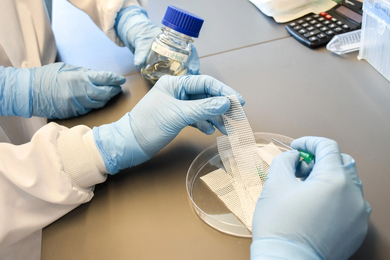
MIT researchers have developed a new, breathable hydrogel material that is “packed with microscopic air tunnels inspired by the way human lungs move oxygen” and allows heat and sweat to escape, reports Luis Prada for VICE. “The material proved to be about 10 times more breathable than conventional hydrogels and retained about 95 percent of its airflow even after being stretched 10,000 times,” explains Prada. 

GBH

President Sally Kornbluth joins Jim Braude and Margery Eagan, hosts of GBH’s Boston Public Radio, for a live conversation about the unique value of university research, the impacts of immigration policy on international students and the nation’s talent pipeline, and MIT’s commitment to ensuring the nation remains a leader in science and innovation. “You're not going to see an effect immediately. What's going to happen is five years, 10 years, 20 years down the line, you're going to see a pipeline that's not full anymore—a pipeline of talent, a pipeline of basic discoveries,” says Kornbluth.

Mel Robbins Podcast

Mel Robbins visits the MIT AgeLab and tries out the lab’s Age Gain Now Empathy System (AGNES) suit, which is designed to help wearers experience the challenges associated with aging. “When we think about aging, most people don’t really have a definition of it. They think about it as a number of birthdays—that's older,” says Joseph Coughlin, AgeLab director. “Actually, aging is about diminishing capacity over time. So weightlifting is increasing your capacity—you're pushing out the clock. Learning something new keeps you cognitively well.” 

Anthropocene

MIT researchers have designed a recyclable elastic yarn, made from polyethylene, that mimics the stretchiness of spandex-polyester and spandex-nylon blends, the Anthropocene team writes. “[T]he researchers spun a spool of yarn, melted it, and re-spun it into new yarn several times. Even after 10 cycles, the yarn was as strong and flexible as conventional blended fibers,” explains Anthropocene.  

The Hill

In an article for The Hill, contributor Juan Williams celebrates the homecoming of his nephew, MIT alumnus and NASA astronaut Christopher Williams PhD ‘12, who travelled 102 miles over the course of eight months on the International Space Station. “Inside the space station he [Christopher] and fellow astronauts measured how eyes change in zero gravity,” writes Juan. “They checked on how the human brain orients its sense of direction in space. They also tracked bone density and DNA changes to gauge the impact a long space journey has on the human body.” 

Electronic Design

MIT researchers have developed a low temperature process to extract battery-grade lithium from spodumene, the most common type of mineral containing lithium, using a reusable liquid reagent, writes Electronic Design’s Lee Goldberg. “The new process uses a liquid reagent to dissolve the rock into the useful forms of its constituent parts — not just battery-ready lithium salts, but also smelter-grade alumina and cement-ready silica,” writes Goldberg. “After the minerals are extracted, the solvent and reagent can be recovered and used again so that waste levels approach zero.”  

Fox News

Researchers from MIT and Toyota Research Institute developed SceneSmith, a system that allows robots to practice everyday tasks and action plans in over 1,300 AI generated environments before entering a real home or workplace, writes Fox News’ Kurt Knutsson. “SceneSmith's ability to combine realistic design with usable physics gives the project its strongest advantage,” notes Knutsson.  

Community Updates

Featured Multimedia

Video thumbnail

MIT engineers have designed a robot that can fly through the air, dive underwater to swim, then flap back into flight—much like a diving bird. The breakthrough could pave the way for a new class of aerial-aquatic vehicles for ocean exploration.

Video thumbnail

Researchers at MIT have developed injectable "mini livers" designed to temporarily take over essential liver functions, offering a potential new option for people with liver failure who are waiting for a transplant—or who aren't eligible for one at all.

Video thumbnail

A baseball-sized sensor could help detect dangerous chemical threats before they spread. Developed by MIT Lincoln Laboratory, the "TOSSIT" device can quickly identify hazardous vapors and aerosols, helping warn service members and first responders of potential danger.

Video thumbnail

Some of the most important things in life feel ordinary, until you stop and think about what makes them possible. A cure. A car. A comet. Someone right now is chasing answers to questions we haven't even asked yet. From medicine to infrastructure to breakthroughs we can't yet imagine, science touches every part of daily life because someone followed their curiosity.

More News