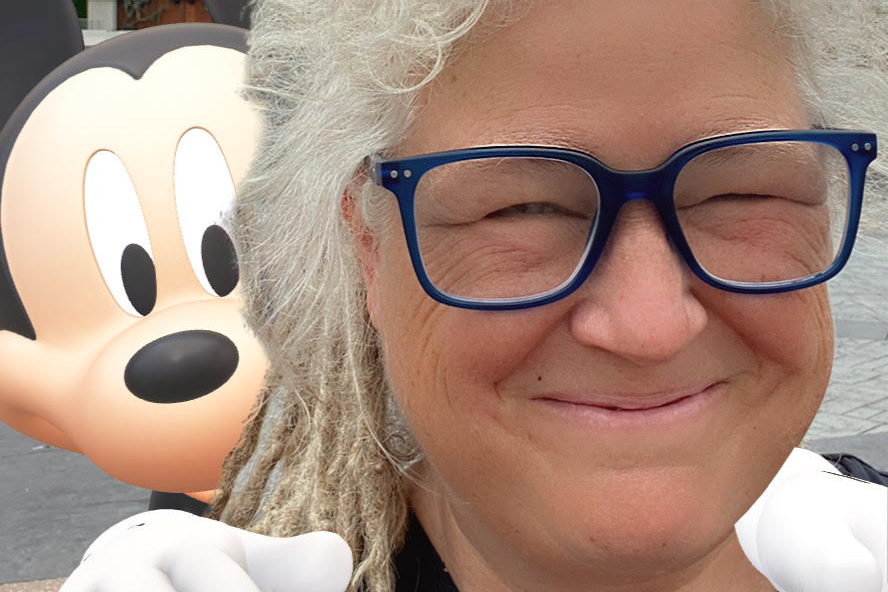
MIT Comparative Media Studies/Writing Professor T.L. Taylor has been named a 2026-27 fellow at the Center for Advanced Study in the Behavioral Sciences at Stanford University (CASBS), a highly selective residential program that convenes scholars from a wide range of disciplines for a year of focused research, collaborative exchange, and intellectual engagement.
Professor Taylor — an ethnographer whose work sits at the intersection of sociology; media studies; and science, technology, and society — will be focusing on her current project exploring the rise of “immersion” in physical spaces as a contemporary cultural pursuit. While new entertainment undertakings like The Sphere in Las Vegas, interactive theater like Sleep No More, or Meow Wolf’s growing list of city-based immersive art projects have captured popular attention, Taylor’s project turns to their progenitor, a much older, more widespread instantiation of the immersive experience — the theme park.
Building on fieldwork undertaken over the last several years in Disney parks around the world, as well as interviews with both designers and attendees, she will be working on a new book that examines theme parks as sitting at the analytically rich intersection of design, infrastructure, and play. Extending her influential work on digital environments and online communities, this project bridges from game and virtual world studies to an examination of physical, immersive environments.
As in her prior work, Taylor treats leisure as an area of study worth taking seriously. Not dissimilar to gaming, there is a tendency to underestimate, or simply dismiss, the economic and cultural significance of these environments. In 2025, theme parks worldwide boasted 976 million visitors and the Walt Disney Co.’s “Experiences” division alone reported $10 billion in profit last year. Spaces of play and experiential engagement also regularly embody some of our most pressing contemporary conversations. Theme parks, she notes, are “at the heart of economic and media systems, technological development, and cultural imaginaries despite — like video games before them — often being dismissed as peripheral to ‘serious’ matters.”
The fellowship project frames theme parks as simultaneously operating on several levels: intentionally designed worlds “that invite people to step into them,” socio-technical infrastructures “meant to facilitate affective, embodied experience,” and as “playgrounds” that sometimes afford participation beyond corporate control and governance.
At the center of the work is a tension familiar from digital environments. “You invite people into a designed space,” she says, “but what happens when emergent culture collides with expectations of use?” One of the most interesting examples of this tension she has encountered in her fieldwork, for example, is of fan-organized live-action role-play within a theme park, a moment in which the environment functions as a playground for emergent experience within an otherwise tightly controlled commercial frame.
The CASBS fellowship will offer Taylor the time and intellectual cross-pollination needed to best situate, and even challenge, her new work. The program’s interdisciplinary cohort is drawn from across the social sciences, humanities, law, health, and other fields; it includes 36 scholars from 30 institutions. “It’s an amazing opportunity to work through the data and write in a really vibrant setting where conversation and cross-disciplinary engagement is at the heart of the experience” she says.