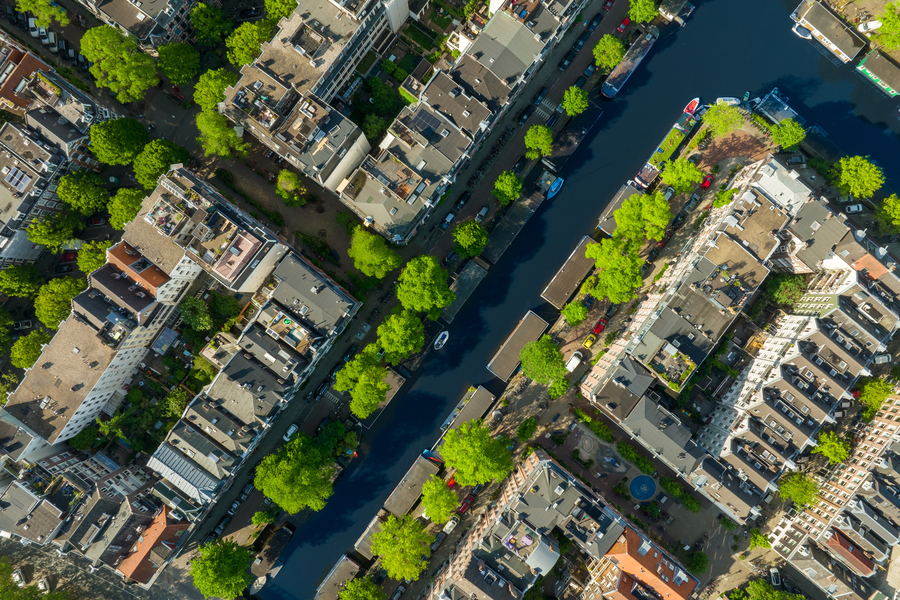
One of the best forms of heat relief is pretty simple: trees. In cities, as studies have documented, more tree cover lowers surface temperatures and heat-related health risks.
However, as a new study led by MIT researchers shows, the amount of tree cover varies widely within cities, and is generally connected to wealth levels. After examining a cross-section of cities on four continents at different latitudes, the research finds a consistent link between wealth and neighborhood tree abundance within a city, with better-off residents usually enjoying much more shade on nearby sidewalks.
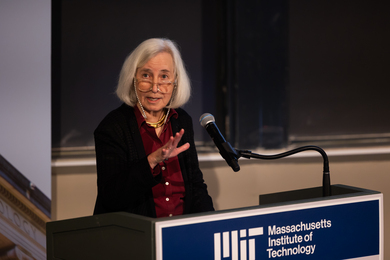
“Shade is the easiest way to counter warm weather,” says Fabio Duarte, an MIT urban studies scholar and co-author of a new paper detailing the study’s results. “Strictly by looking at which areas are shaded, we can tell where rich people and poor people live.”
That disparity is evident within a range of cities, and is present whether a city contains a large amount of tree cover overall or just a little. Either way, there are more trees in wealthier spots.
“When we compare the most well-shaded city in our study, Stockholm, with the worst-shaded, Belem in northern Brazil, we still see marked inequality,” says Duarte, the associate director of MIT’s Senseable City Lab in the Department of Urban Studies and Planning (DUSP). “Even though the most-shaded parts of Belem are less shaded than the least-shaded parts of Stockholm, shade inequality in Stockholm is greater. Rich people in Stockholm have much better shade provison as pedestrians than we see in poor areas of Stockholm.”
The paper, “Global patterns of pedestrian shade inequality,” is published today in Nature Communications. The authors are Xinyue Gu of Hong Kong Polytechnic University; Lukas Beuster, a research fellow at the Amsterdam Institute for Advanced Metropolitan Solutions and MIT’s Senseable City Lab; Xintao Liu, an associate professor at Hong Kong Polytechnic University; Eveline van Leeuwen, scientific director at the Amsterdam Institute for Advanced Metropolitan Solutions; Titus Venverloo, who leads the MIT Senseable City Amsterdam lab; and Duarte, who is also a lecturer in DUSP.
From Stockholm to Sydney
To conduct the study, the researchers used satellite data from multiple sources, along with urban mapping programs and granular economic data about the cities they examined. There are nine cities in the study: Amsterdam, Barcelona, Belem, Boston, Hong Kong, Milan, Rio de Janeiro, Stockholm, and Sydney. Those places are intended to create a cross-section of cities with different characteristics, including latitude, wealth levels, urban form, and more.
The scholars looked at the amount of shade available on city sidewalks on summer solistice day, as well as the hottest recorded day each year from 1991 to 2020. They then created a scale, ranging from 0 to 1, to rate the amount of shade available on sidewalks, both citywide and within neighborhoods.
“We focused on sidewalks because they are a major counduit of urban activity, even on hot summer days,” Gu says. “Adding tree cover for sidewalks is one crucial way cities can pursue heat-reduction measures.”
Duarte adds: “When it comes to those who are not protected by air conditioning, they are also using the city, walking, taking buses, and anybody who takes a bus is walking or biking to or from bus stops. They are using sidewalks as the main infrastructure.”
The cities in the study offer very different levels of tree coverage. On the 0-to-1 scale the researchers developed, much of Stockholm falls in the 0.6-0.9 range, with some neighborhoods being over 0.9. By contrast, large swaths of Rio de Janeiro are under the 0.1 mark. Much of Boston ranges from 0.15 to 0.4, with a few neighborhoods reaching 0.45 on the scale.
The overall pattern of disparities, however, is very consistent, and includes the more affluent cities. The bottom 20 percent of neighborhoods in Stockholm, in terms of shade coverage, are rated at 0.58 on the scale, while the top 20 percent of Belem neighborhoods rate at 0.37; Stockholm has a greater disparity between most-covered and least-covered. To be sure, there is variety within many cities: Milan and Barcelona have some lower-income neighborhoods with abundant shade, for instance. But the aggregate trend is clear. Amsterdam, another well-off place on average, has a distinct pattern of less shade in lower-income areas.
“In rich cities like Amsterdam, even though it’s relatively well-shaded, the disparity is still very high,” Beuster says. “For us the most surprising point was not that in poor cities and more unequal societies the disparity would be notable — that was expected. What was unexpected was how the disparity still happens and is sometimes more pronounced in rich countries.”
“Follow transit”
If the tree-shade disparity issue is quite persistent, then it raises the matter of what to do about it. The researchers have a basic answer: Add trees in areas with public transit, which generate a lot of pedestrian mileage.
“In each city, from Sydney to Rio to Amsterdam, there are people who, regardless of the weather, need to walk,” Duarte says. “And it’s those people who also take public transportation. Therefore, link a tree-planting scheme to a public transportation network. And secondly, they are also the medium-and low-income part of the population. So the action deriving from this result is quite clear: If you need to increase your tree coverage and don’t know where, follow transit. If you follow transit, you will have the right shading.”
Indeed, one takeaway from the study is to think of trees not just as a nice-to-have part of urban aesthetics, but in functional terms.
“Planners and city officials should think about tree placement at least partly in terms of the heat-mitigating effect they have,” Beuster says.
“It’s not just about planting trees,” Duarte observes. “It’s about providing shade by planting trees. If you remove a tree that’s providing shade in a pedestrian area and you plant two other trees in a park, you are still removing part of the public function of the tree.”
He adds: “With increasing temperatures, providing shade is an essential public amenity. Along with providing transportation, I think providing shade in pedestrian spaces should almost be a public right.”
The Amsterdam Institute for Advanced Metropolitan Solutions and all members of the MIT Senseable City Consortium (including FAE Technology, Dubai Foundation, Sondotécnica, Seoul AI Foundation, Arnold Ventures, Sidara, Toyota, Abu Dhabi’s Department of Municipal Transportation, A2A, UnipolTech, Consiglio per la Ricerca in Agricoltura e l’Analisi dell’Economia Agraria, Hospital Israelita Albert Einstein, KACST, KAIST, and the cities of Laval, Amsterdam, and Rio de Janeiro) supported the research.