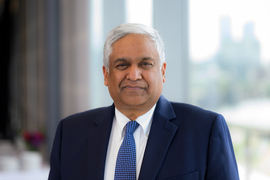
In the early months of a PhD program, everything can feel urgent. Ideas move quickly, expectations feel high, and timelines, especially initial deadlines, may become heavy. In those moments, Professor Anantha P. Chandrakasan is there for his students, armed with steady mentorship and clear guidance to help them regain perspective and move forward with confidence.
Appointed provost of MIT in 2025, Chandrakasan is a pioneering researcher in low-power electronics, integrated circuits, and energy-efficient system design within MIT’s Department of Electrical Engineering and Computer Science. His work has shaped how modern devices — from mobile systems to large-scale computing platforms — manage energy consumption and performance. Spanning circuits and systems for sensing, communication, and machine learning, his research focuses on pushing the limits of efficiency. Students note that his scholarship is defined by rigor, precision, and a forward-thinking approach, and that the same principles carry through to his mentorship.
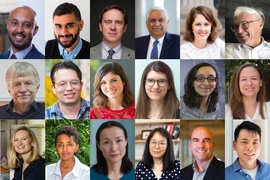
One of the 18 faculty members within the 2025–27 Committed to Caring cohort, Chandrakasan is recognized for a style that meets students not just at the level of their research, but at the level of their experience. His guidance works to ground students, balancing ambition with steadiness, and precision with perspective. Across his lab and the broader MIT community, he has become known for a simple but clear pattern: When pressure rises, he is there to help.
Interrupting the pressure cycle
One student recalls their first semester at the Institute as a blur of excitement, but also of mounting stress. Given the opportunity to contribute to a conference-bound project, they pushed hard to meet a January submission deadline.
“I poured myself into the work, but as the deadline approached, it became clear that the project was taking longer than expected,” remembers the student. “I began to … worry that I might not finish in time.”
When Chandrakasan noticed, his response was not to continue with the current unsustainable pace of research, but to recalibrate it — adding both perspective and a support structure to help ground the work.
He connected the student with a more senior lab member, creating a steady channel for both technical troubleshooting and day-to-day guidance. “This not only helped me overcome research challenges, but also created a natural environment for me to engage in discussions and build relationships with lab members,” the student reflected.
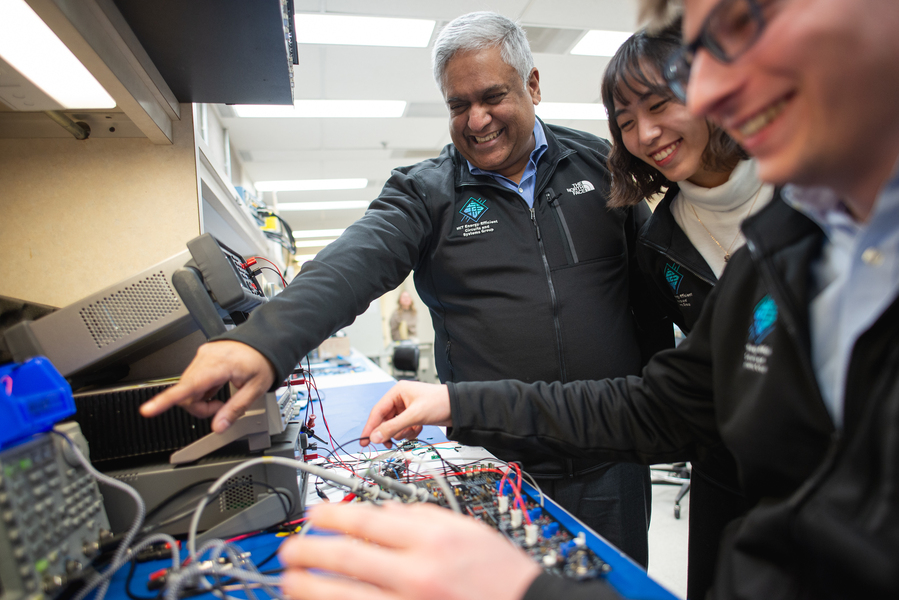
Within Chandrakasan’s research group, mentorship is never confined to one-on-one advising. He actively builds structures that allow students to learn from one another, pairing newer members with more experienced researchers and encouraging organic collaboration across projects.
These connections serve a dual purpose. They accelerate technical growth, but they also reduce the isolation that can accompany early-stage research. By embedding students within a broader support network, he ensures that they are never navigating unfamiliar challenges entirely on their own.
One nominator describes this emphasis on camaraderie as a defining feature of the lab: an environment where independence is cultivated, but never at the expense of connection.
Redefining what counts
In addition to creating this support structure, Chandrakasan also reframed the overwhelmed student’s situation. Rather than treating the conference deadline as definitive, he reminded the student that one missed milestone would not determine the trajectory of their PhD, or of their career as a whole. “His thoughtful words and calm demeanor helped me regain my balance, both emotionally and academically,” noted the student.
It was a small shift in framing, but a consequential one. The pressure that had once felt absolute became part of a much larger perspective. Armed with that reassurance, the student recovered footing and ultimately completed the submission.
While this particular story of looming deadlines and stress is one student’s experience, it is a relatable one for graduate students. Within academic spaces, it is easy for tangible milestones — papers, conferences, and results — to become the primary measure of progress. Chandrakasan does not dismiss their importance, but he does encourage a broader view.
“There will always be another opportunity,” he tells students. This principle serves as a consistent baseline for how to engage with the work. The goal is not to remove challenges, but to ensure that the work can endure through them.
Chandrakasan’s advising philosophy centers on calibration: of expectations, goals, and how students interact with their academic work. “My technical advising is direct, because I believe clarity is a form of care,” shares Chandrakasan. In his eyes, precise feedback is one of the most meaningful forms of support a mentor can offer.
While his style is often candid, it is never harsh — honest feedback is softened by sincerity. Students describe an approach that is highly attuned to the individual, with Chandrakasan compromising, showing empathy, and adapting his teaching style to fit their needs. When asked, Chandrakasan shares that his advising technique is “always personal … focused on drawing out each student’s strengths, rather than imposing a single template of success.”
Students are encouraged to arrive at their own conclusions, with Chandrakasan shifting the focus from short-term fixes to long-term capability. “I help in creating space for students to think deeply, develop their own perspectives, and arrive at their own solutions,” he explains. This strategy “builds both independence and confidence.”
His mentorship extends beyond immediate outcomes. It shapes how students come to understand their own potential, how they navigate difficulty, and how they, in turn, show up for others. In a field driven by innovation and speed, Chandrakasan’s approach offers something grounding: a model of mentorship where rigor and care are not competing priorities, but mutually reinforcing ones.
Reflecting on their time in Chandrakasan’s lab, his student shared that “I learned that real mentorship is not just about solving problems — it’s about understanding the person behind them.”