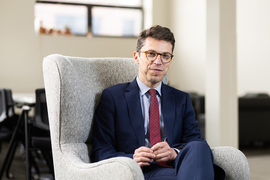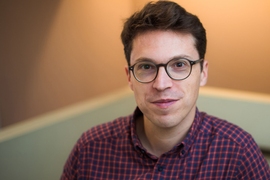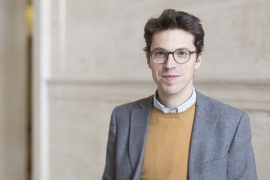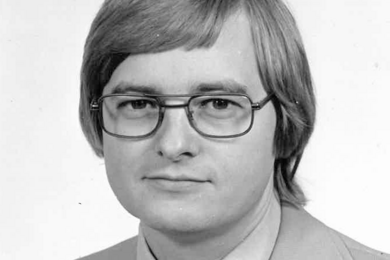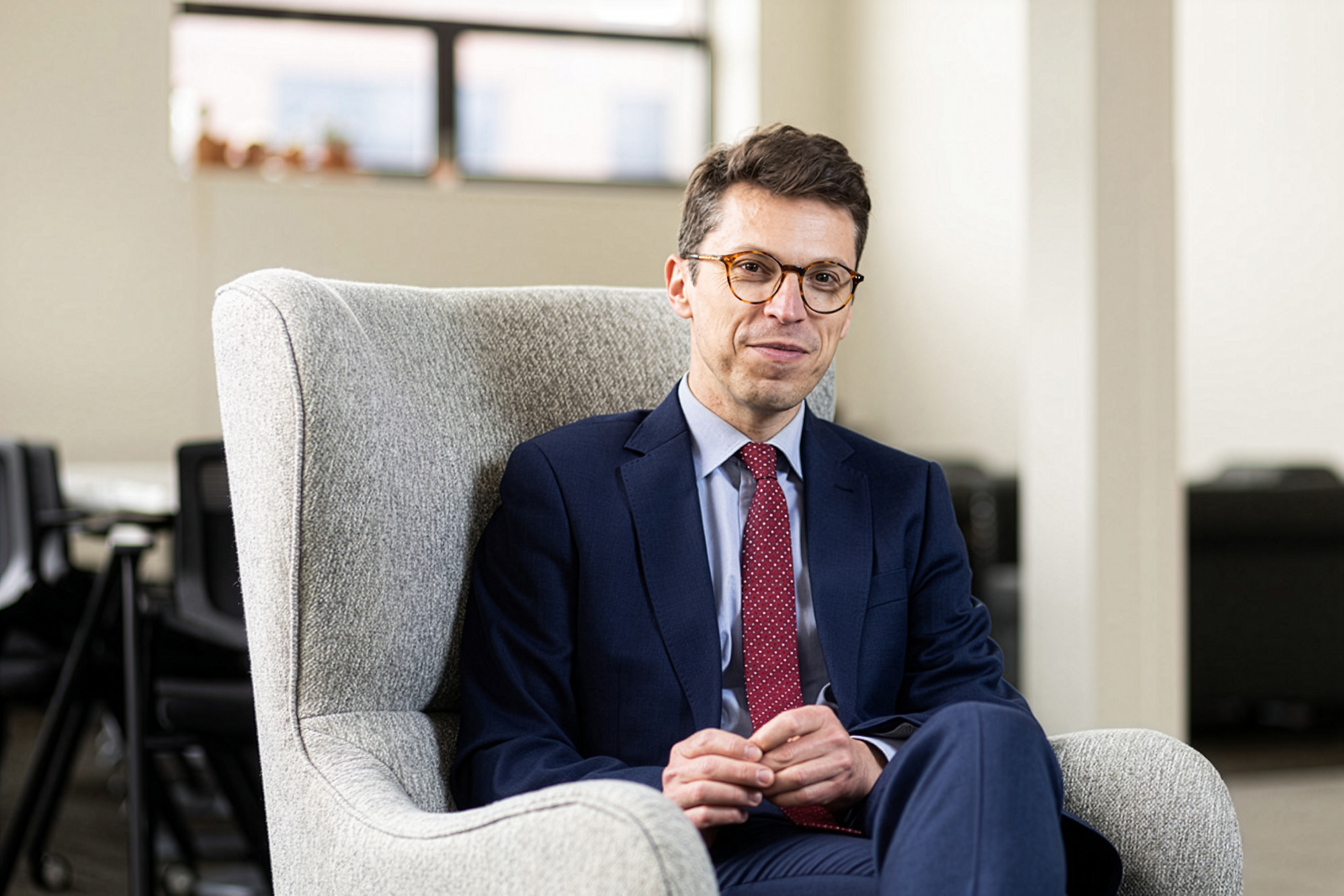
Nuno Loureiro, a professor of nuclear science and engineering and of physics at MIT, has died. He was 47.
In a letter to the MIT community, President Sally Kornbluth wrote, “With great sadness, I write to share the tragic news that Professor Nuno Loureiro, director of the Plasma Science and Fusion Center (PSFC), died early this morning from gunshot wounds he sustained a few hours before. In the face of this shocking loss, our hearts go out to his wife and their family and to his many devoted students, friends and colleagues.”
A lauded theoretical physicist and fusion scientist, Loureiro joined MIT’s faculty in 2016. His research addressed complex problems lurking at the center of fusion vacuum chambers and at the edges of the universe.
Loureiro’s research at MIT advanced scientists’ understanding of plasma behavior, including turbulence, and uncovered the physics behind astronomical phenomena like solar flares. He was the Herman Feshbach (1942) Professor of Physics at MIT and was named director of the Plasma Science and Fusion Center in 2024, though his contributions to fusion science and engineering began far before that.
His research on magnetized plasma dynamics, magnetic field amplification, and confinement and transport in fusion plasmas helped inform the design of fusion devices that could harness the energy of fusing plasmas, bringing the dream of clean, near-limitless fusion power closer to reality.
“Nuno was not only a brilliant scientist, he was a brilliant person,” says Dennis Whyte, the Hitachi America Professor of Engineering, who previously served as the head of the Department of Nuclear Science and Engineering and director of the Plasma Science and Fusion Center. “He shone a bright light as a mentor, friend, teacher, colleague and leader, and was universally admired for his articulate, compassionate manner. His loss is immeasurable to our community at the PSFC, NSE and MIT, and around the entire fusion and plasma research world.”
“Nuno was a champion for plasma physics within the Physics Department, a wonderful and engaging colleague, and an inspiring and caring mentor for graduate students working in plasma science. His recent work on quantum computing algorithms for plasma physics simulations was a particularly exciting new scientific direction,” says Deepto Chakrabarty, the William A. M. Burden Professor in Astrophysics and head of the Department of Physics.
Whether working on fusion or astrophysics research, Loureiro merged fundamental physics with technology and engineering, to maximize impact.
“There are people who are driven by technology and engineering, and others who are driven by fundamental mathematics and physics. We need both,” Loureiro said in 2019. “When we stimulate theoretically inclined minds by framing plasma physics and fusion challenges as beautiful theoretical physics problems, we bring into the game incredibly brilliant students — people who we want to attract to fusion development.”
Loureiro majored in physics at Instituto Superior Tecnico (IST) in Portugal and obtained a PhD in physics at Imperial College London in 2005. He conducted postdoctoral work at the Princeton Plasma Physics Laboratory for the next two years before moving to the UKAEA Culham Center for Fusion Energy in 2007. Loureiro returned to IST in 2009, where he was a researcher at the Institute for Plasmas and Nuclear Fusion until coming to MIT in 2016.
He wasted no time contributing to the intellectual environment at MIT, spending part of his first two years at the Institute working on the vexing problem of plasma turbulence. Plasma is the super-hot state of matter that serves as the fuel for fusion reactors. Loureiro’s lab at PSFC illuminated how plasma behaves inside fusion reactors, which could help prevent material failures and better contain the plasma to harvest electricity.
“Nuno was not only an extraordinary scientist and educator, but also a tremendous colleague, mentor, and friend who cared deeply about his students and his community. His absence will be felt profoundly across NSE and far beyond,” Benoit Forget, the KEPCO Professor and head of the Department of Nuclear Science and Engineering, wrote in an email to the department today.
On other fronts, Loureiro’s work in astrophysics helped reveal fundamental mechanisms of the universe. He put forward the first theory of turbulence in pair plasmas, which differ from regular plasmas and may be abundant in space. The work was driven, in part, by unprecedented observations of a binary neutron star merger in 2018.
As an assistant professor and then a full professor at MIT, Loureiro taught course 22.612 (Intro to Plasma Physics) and course 22.615 (MHD Theory of Fusion Systems), for which he was twice recognized with the Department of Nuclear Science and Engineering’s PAI Outstanding Professor Award.
Loureiro’s research earned him many prominent awards throughout his prolific career, including the National Science Foundation Career Award and the American Physical Society Thomas H. Stix Award for Outstanding Early Career Contributions to Plasma Physics Research. He was also an American Physical Society Fellow. Earlier this year, he earned the Presidential Early Career Award for Scientists and Engineers.
Friends of the Loureiro family have set up a GoFundMe account to support the family, and the Nuno Loureiro Memorial Fund has been established to support MIT graduate students at NSE and PSFC.
Additional tributes from those in the MIT community who knew Nuno Loureiro
“I was one of Nuno’s PhD students at PSFC. Nuno has granted me some of the most rewarding years of my life. He was an incredible mentor, a caring teacher, and a good friend. I am grateful to have had a couple of truly transformative years with him.”
—Dion Li, graduate student in physics
“I worked closely with Nuno since I joined the PSFC in 2018. In my 15 years working at MIT, Nuno has been one of the best PIs I have had the privilege to work with. I witnessed him start as an associate professor and rise to become the head of our lab. Over the years, we worked, laughed, and grew together. I saw firsthand how hard he worked, how many proposals he wrote, and how deeply he cared for his family, students, colleagues, and friends. He was impactful, kind, and grounded, and through humor and sincerity, he reminded us that scientists don’t just do science — they also carry deep feelings for the people around them.”
—Kwokin Ou, research administrator in the MIT Plasma Science and Fusion Center
“In losing Nuno, we have lost a singularly brilliant scientist and human being. His leadership was built upon not only scientific excellence, but also the personal connections he forged by making people in the laboratory community feel valued. Nuno treated teaching with tremendous care, and his love of the field shone through continuously. I am so fortunate to have learned from him.”
—Rachel Bielajew, visiting scientist in the MIT Plasma Science and Fusion Center
“Speaking at a PSFC all-hands meeting in May 2024 — his first as the newly appointed PSFC director — Nuno said the following, which I found to be quite inspiring: ‘I am very certain that there is no point whatsoever in doing anything here [at the PSFC] that we don’t have the chance of being the best in the world at. … If we do something new, or if we keep doing what we’re doing, let it be for the reason that we can be the best. So if we’re not the best, that’s what we should be aspiring to be; if we are the best, let’s keep it that way.’”
—Alex Tinguely, research scientist and group leader in the MIT Plasma Science and Fusion Center
“From the very beginning and throughout, Nuno was a foundational part of my life here at MIT — he interviewed me when I applied, he and my primary advisor held joint group social events, he helped me study for qualifying exams, he taught a class I took, and he was on my qualifying exam and thesis committees. Shortly after my final oral presentation for quals, I ran into him in a PSFC hallway, and we were alone. Nuno told me that he was seriously impressed, that I should be proud of myself, and that he was excited to see how our research unfolds. I will forever carry this and countless other memories of Nuno’s kindness. I already miss him deeply.”
—Lansing Horan IV, graduate student in nuclear science and engineering
“Nuno strived for and inspired excellence with warmth and compassion. As an advisor, teacher, and director, he thought deeply about how to enable people, including me, to do their best science and grow to their full potential. I am deeply honored that he put his faith in me to help him reach his community building and career development goals and I will do everything I can to keep the initiatives he started in motion going forward. He leaves an unfillable hole and will be sorely missed.”
—Maria Gatu Johnson, principal research scientist and assistant director in the MIT Plasma Science and Fusion Center
“During the first two years of my PhD here, I took every class Nuno taught, even when not required, because he was a tremendous teacher, and I knew I would learn and laugh a lot. Nuno was one of the smartest people I’ve met and also one of the most charismatic. I will cherish my time with him.”
—Henry Wietfeldt, graduate student in physics
“My first graduate class was taught by Nuno, and to this day it remains the hardest class I have ever taken. His passion for plasma physics and his fun, snarky yet rigorous teaching style inspired me and taught me so much. He also provided me with tremendous help and encouragement when I was going through academic hardships. He believed in my ability and potential, and I will forever remember our conversations and carry that support with me throughout the rest of my academic journey.”
—Lily Li, graduate student in nuclear science and engineering
“Nuno was my advisor, and to say that he was one of my biggest supporters and advocates is an understatement. I am grateful for having the privilege of being his student. I was always in awe of his brilliance and compassion, and I aspire to be even half the person he was. He was a great mentor and friend, and I will truly cherish the time I have spent here at MIT learning from him.”
—Simran Chowdhry, graduate student in nuclear science and engineering
“Although I did not work with Nuno directly, my interactions with him through classes and his help with my qualifying exam left a profound impact on my life. Always student focused, Nuno never let his successes interfere with being a great educator and friend. Whether it was through quick updates in the hallways of the PSFC or joking about who makes the best espresso during meetings, Nuno was always willing to give students his time.”
—Evan Lambert, graduate student in nuclear science and engineering
“I was lucky to have taken Intro to Plasma with Nuno. Nuno was endlessly patient with my stubborn questions and filled each class with witty remarks. When I recently pitched him a project that he had every right to call crazy, he instead was nothing but supportive and had faith I could handle it. Nuno’s belief in the PSFC’s students will be sorely missed for years to come, and it is hard to imagine the center without him.”
—Grant Rutherford, graduate student in nuclear science and engineering
“Chairing my qualifying exam, Professor Loureiro tried to look stern, pushing me to the edges of my knowledge. A gentle smile revealed that he was still my biggest cheerleader, rooting for me to succeed. Nuno was a friend and mentor to all his students, teaching by listening, understanding, and encouraging us to persevere. I will fondly remember the thoughtful conversations I shared with him.”
—Nikola Goleš, graduate student in nuclear science and engineering
“In Nuno I found a mentor, a teacher, and a friend. Our work meetings always began with conversations about our families, moments that reminded me how deeply he cared about the people behind the work. He listened to me with generosity and patience, offered honest and unfiltered feedback, trusted my opinions, and helped shape them through thoughtful, critical discussions. He helped me grow and ultimately entrusted me with the role of division head. I will do my very best to honor him by continuing to support PSFC’s excellence, treasuring the lessons he taught me, and carrying in my heart his joyful smile.”
—Cristina Rea, Data Science Division Head at the MIT Plasma Science and Fusion Center
“During a moment of intense stress, when I was visibly shaken and about to give a major presentation, Nuno noticed even as others were focused on the meeting ahead. He came over, quietly asked if I was okay, and waited for the answer. It’s clear to me that if I’d said no, he would’ve found a way to make space for me to collect myself. I’ll never forget that simple act of kindness and genuine care when I needed it most.”
—Julianna Mullen, communications director at the MIT Plasma Science and Fusion Center
“A great smile upon entering the PSFC early every morning revealed to me Nuno’s delight to come work on his passions with his community, every day. His leadership was motivating. His energy was brighter than the plasmas he loved to observe and his purposeful steps leave great imprints on our spirits. Thank you, Nuno.”
—Alicia Valeriano, administrative assistant in the MIT Plasma Science and Fusion Center
“Nuno was a fun spirit who brought an infectious energy to the PSFC. We used to always give each other a hard time in the corridors and at social events, with him kidding me about being an experimentalist. I took an advanced plasma physics course with him and his biggest compliment to me was him asking if I had ever considered doing some theory and simulation work at the end of the course. He always pushed us to do better and be better. I will always remember him for this.”
—Adam Kuang PhD ’19, visiting scientist at the MIT Plasma Science and Fusion Center