New MIT program to train military leaders for the AI age
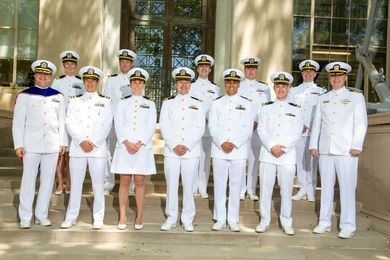
The new certificate program will equip naval officers with skills needed to solve the military’s hardest problems.
The new TechAMP program teaches production principles to workers, helping them advance their careers and identify savings at their firms.
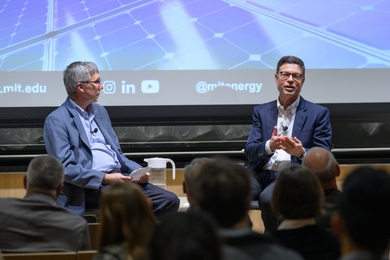
At MITEI’s Fall Colloquium, General Motors’ battery development expert emphasized how affordability, accessibility, and commercialization can position the US as a leader in battery tech.
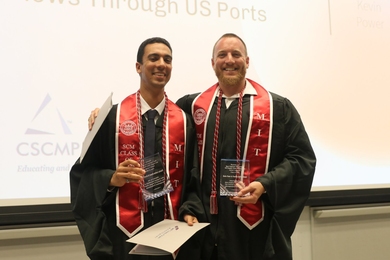
The MIT Supply Chain Management master's program hosts three Military Fellows each year from the US Army, reflecting the long-standing relationship between the military and the logistics industry.
First-of-its-kind handbook serves as a guide for design safety for civilian nuclear ships.
Analysis from MIT’s Center for Transportation and Logistics finds companies are still acting to reduce emissions, but often lag in measurement techniques.
MIT’s Initiative for New Manufacturing extends a deep Institute legacy of expanding US growth and jobs through industrial production.
The Institute-wide effort aims to bolster industry and create jobs by driving innovation across vital manufacturing sectors.
Graduates from top undergraduate supply chain programs across the US receive tuition fellowships and conditional acceptance to the MIT Supply Chain Management master’s program.
A detailed MIT analysis identifies some promising options but also raises unexpected concerns.
Through workshops based on an MIT class, students in Kenya and Uganda gained hands-on experience engineering medical hardware.
Graduate engineering program is No. 1 in the nation; MIT Sloan is No. 5.
Speaking at MIT, Rasmussen detailed the company’s manufacturing footprint, and the importance of balancing innovation, cost efficiency, and sustainability.
Inaugural cohort of Tecnológico de Monterrey undergraduates participate in immersive practicum at MIT featuring desktop fiber-extrusion devices, or FrEDs.
A new international collaboration unites MIT and maritime industry leaders to develop nuclear propulsion technologies, alternative fuels, data-powered strategies for operation, and more.