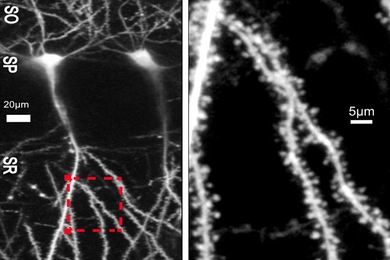
Findings weaken notion that size equals strength for neural connections
Among study’s many surprises may be a new way to address Fragile X syndrome — by finding a “protein X.”
Among study’s many surprises may be a new way to address Fragile X syndrome — by finding a “protein X.”

The science program for local high school students is remote this year, as MIT instructors create at-home lab experiences.
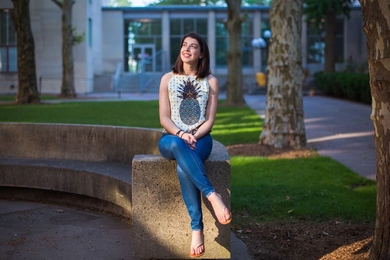
With a newly minted PhD, Fernanda de Araújo Ferreira now explores the scientific enterprise through journalism.
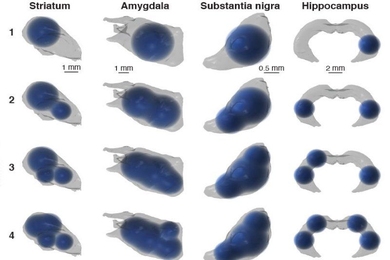
A new computational method fine-tunes delivery of therapeutics to specific brain regions.
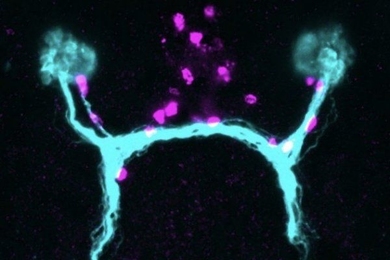
Peter Reddien's lab at the Whitehead Institute takes a step forward in understanding how neural circuits could be regenerated in adults.
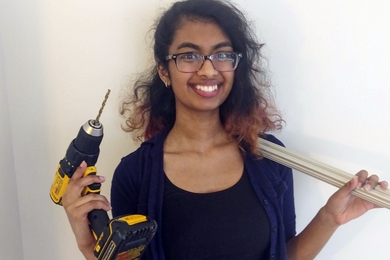
Hundreds of miles from campus, Sreya Vangara recalibrates her approach to laboratory research and other MIT commitments.
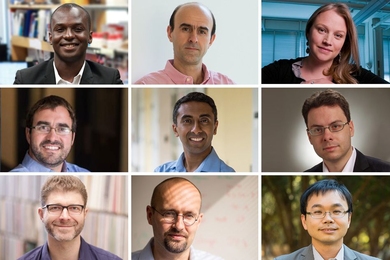
Professors earn tenure in the departments of Brain and Cognitive Sciences, Chemistry, Mathematics, and Physics.
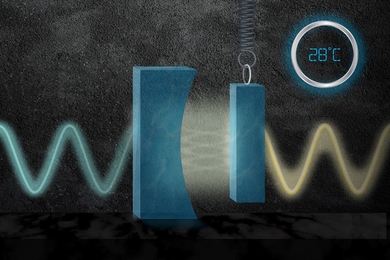
“Light squeezer” reduces quantum noise in lasers, could enhance quantum computing and gravitational-wave detection.
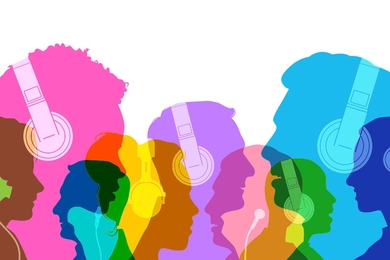
Acoustic and biological constraints shape how we hear harmony across cultures.
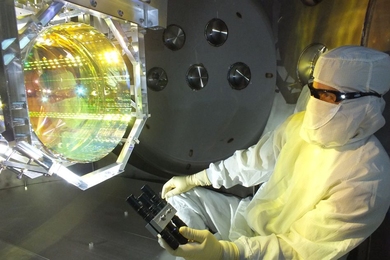
Study shows LIGO’s 40-kilogram mirrors can move in response to tiny quantum effects, revealing the “spooky popcorn of the universe.”

Neptune-sized planet may be remnant core of a much larger planet.
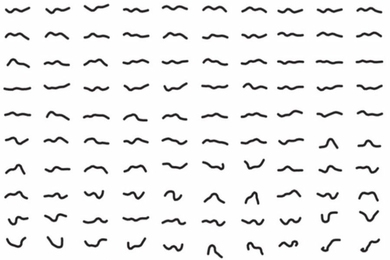
To spy on worms for days on end, Picower Institute scientists invent a new open-source microscopy platform.
Honor recognizes faculty mentors who devote true attention to students’ well-being.
Whether seeking a career change or rediscovering intellectual pursuits, learners worldwide turn to MITx courses.
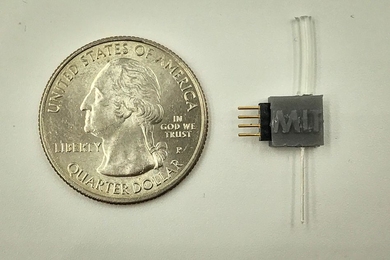
Method could shed light on nitric oxide’s role in the neural, circulatory, and immune systems.