Leading with rigor, kindness, and care
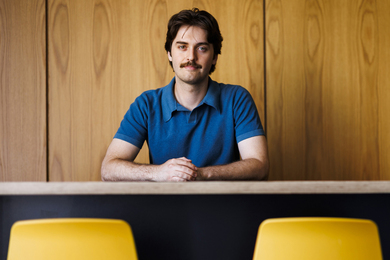
“We cannot be effective scientists if we are unhappy or unhealthy outside of the lab,” says “Committed to Caring” honoree Sara Prescott.
Physicists discovered new properties of the strong force by analyzing what happens when light-speed particles skim by each other.
The Institute also ranks second in seven subject areas.
As an aspiring physician-scientist and editor-in-chief of The Tech, MIT senior Alex Tang has found inspiration in the lives of patients and others in his community.
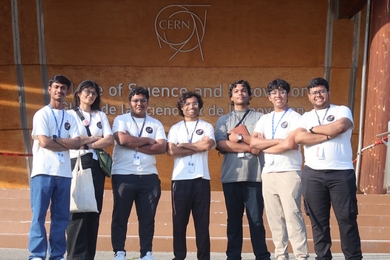
At a daylong science competition, high school students gathered from across New England to test their science knowledge for a shot at nationals in Washington.
A new model shows how levels of the “atmosphere’s detergent” may rise and fall in response to climate change.
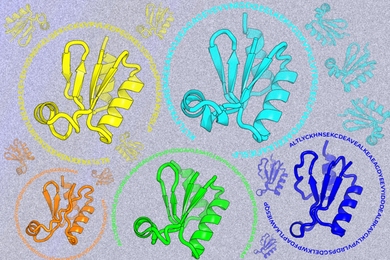
The method allows researchers to observe biomolecular complexes in a quick, accurate, and budget-friendly way, providing new insights into bacterial protein synthesis.
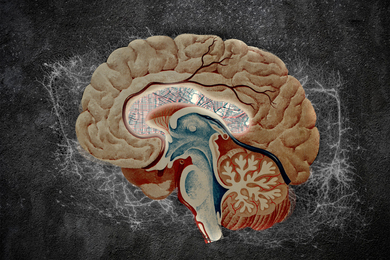
Tsai, who has grown the MIT neuroscience institute, will increase focus on research including Alzheimer’s disease and Down syndrome.
Their flight patterns change in response to different sensory cues, a new study finds. The work could lead to more effective traps and mosquito control strategies.
MIT senior Srihitha Dasari reflects on the power of experiential learning through the PKG Center for Social Impact.
Impairments of this circuit may help to explain why some people with schizophrenia lose touch with reality.
Discovering this common mechanism could lead to a universal anesthesia-delivery system to monitor patients more effectively.
By showing the problem derives from genetic mutations that lead to overexpression of a microRNA, MIT researchers’ study points to potential treatment.
Using a computational model, neuroscientists showed how the brain can selectively focus attention on one voice among others in a noisy environment.
MIT astronomers are developing a new way to detect, monitor, and mitigate the threats posed by smaller asteroids to our critical space infrastructure.