
Explained: Cement vs. concrete — their differences, and opportunities for sustainability
Concrete is the world’s most consumed construction material. Yet there’s a lot the public doesn’t know about it or its environmental impact.
Concrete is the world’s most consumed construction material. Yet there’s a lot the public doesn’t know about it or its environmental impact.
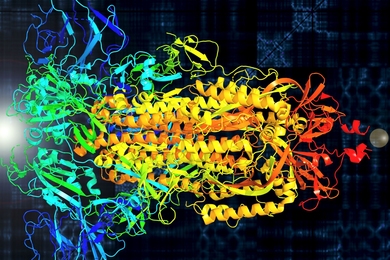
Translated into sound, SARS-CoV-2 tricks our ear in the same way the virus tricks our cells.
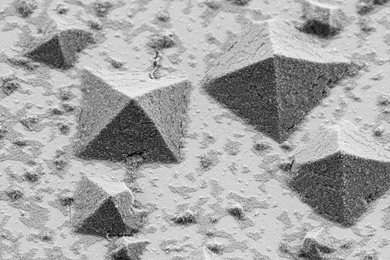
DNA-based self-assembling system sheds light on processes essential for semiconductors and nanotechnology.
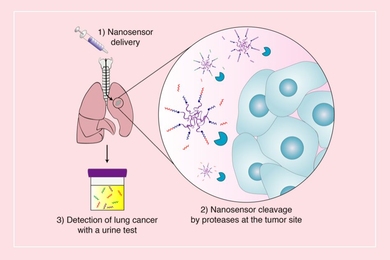
Study shows that a simple urine test can reveal the presence of lung cancer in mice.
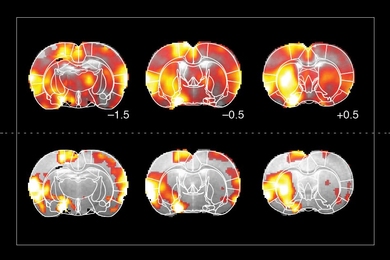
A specialized MRI sensor reveals the neurotransmitter’s influence on neural activity throughout the brain.

Abel Sanchez discovers three major takeaways for translating on-the-ground courses to online virtual formats.

A team from MIT has designed disposable face shields that can be mass produced quickly to address hospitals’ needs nationwide.
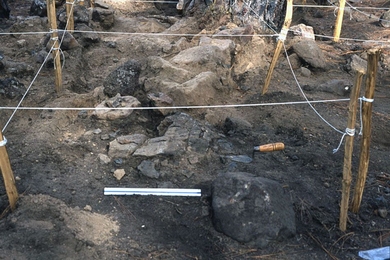
Spanish conquerors depended on indigenous expertise to keep up their munitions supplies, archaeologists have found.

MIT Concrete Sustainability Hub researchers are investigating how the layouts, or textures, of cities influence extreme weather events.

Chemical engineers have developed a way to protect transplanted drug-producing cells from immune system rejection.
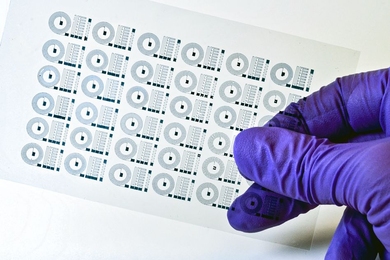
Technique may enable speedy, on-demand design of softer, safer neural devices.

In response to the Covid-19 pandemic, MIT enters a new mode for teaching and learning.

Professor Martin Culpepper provides caution on the use of 3D printing to make masks and other PPE for individuals on the front lines of the Covid-19 crisis.

A variety of companies with MIT ties are working to address aspects of the Covid-19 pandemic.
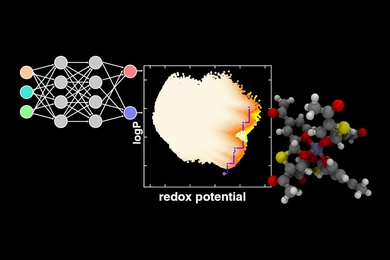
Sorting through millions of possibilities, a search for battery materials delivered results in five weeks instead of 50 years.