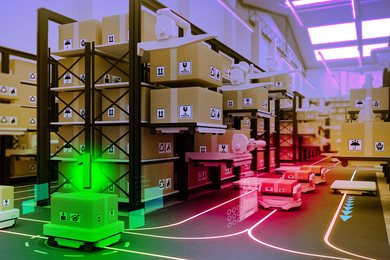
AI system learns to keep warehouse robot traffic running smoothly
This new approach adapts to decide which robots should get the right of way at every moment, avoiding congestion and increasing throughput.
This new approach adapts to decide which robots should get the right of way at every moment, avoiding congestion and increasing throughput.
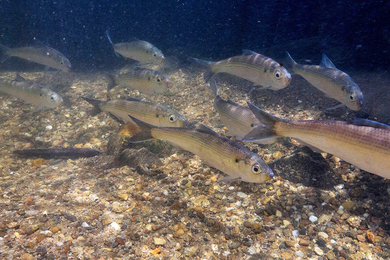
MIT Sea Grant works with the Woodwell Climate Research Center and other collaborators to demonstrate a deep learning-based system for fish monitoring.
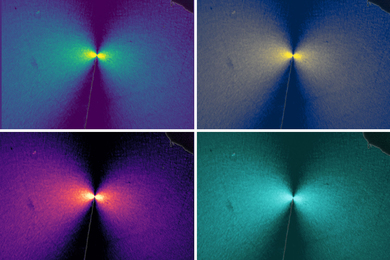
New insights into metallic cracks that harm battery performance could advance the longstanding quest to develop energy-dense solid-state batteries.
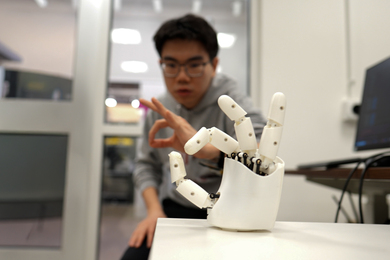
By moving their hands and fingers, users can direct a robot to play piano or shoot a basketball, or they can manipulate objects in a virtual environment.
An MIT-led team is designing artificial intelligence systems for medical diagnosis that are more collaborative and forthcoming about uncertainty.
A new model shows how levels of the “atmosphere’s detergent” may rise and fall in response to climate change.

Observations suggest a major melting event at the Ross Ice Shelf was connected to atmospheric turbulence.
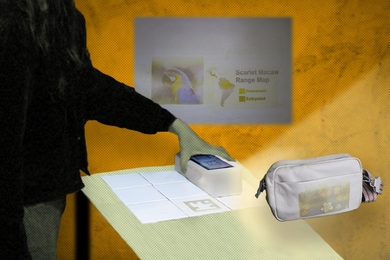
The portable “ChromoLCD” device combines LCD and LED lighting to customize high-quality designs onto things like shirts and whiteboards.
The method allows researchers to observe biomolecular complexes in a quick, accurate, and budget-friendly way, providing new insights into bacterial protein synthesis.

Jointly led by the MIT Morningside Academy for Design, MIT Schwarzman College of Computing, and the Hasso Plattner Institute in Potsdam, the hub will foster a dynamic community where computing, creativity, and human-centered innovation meet.
SMART breakthrough offers a promising pathway toward improved manufacturing of high‑quality cells for regenerative therapies to treat joint diseases.
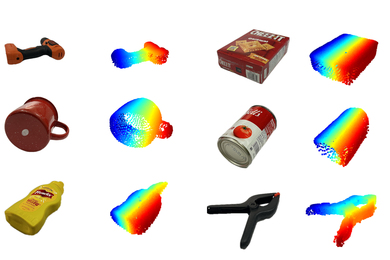
With this new technique, a robot could more accurately detect hidden objects or understand an indoor scene using reflected Wi-Fi signals.
This new metric for measuring uncertainty could flag hallucinations and help users know whether to trust an AI model.
Their flight patterns change in response to different sensory cues, a new study finds. The work could lead to more effective traps and mosquito control strategies.
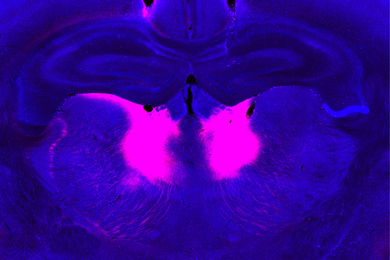
Impairments of this circuit may help to explain why some people with schizophrenia lose touch with reality.