
MIT astronomers discover the earliest known flickering quasar
When the universe was just 850 million years old, this voracious black hole was already surprisingly mature, a new study finds.
When the universe was just 850 million years old, this voracious black hole was already surprisingly mature, a new study finds.

By using a thin layer of diamond to manage excessive heat, researchers can boost the speed and energy-efficiency of next-generation wireless devices.

Using technology invented at MIT, Cartesian’s system for locating objects could also find uses in manufacturing, logistics, and robotics.
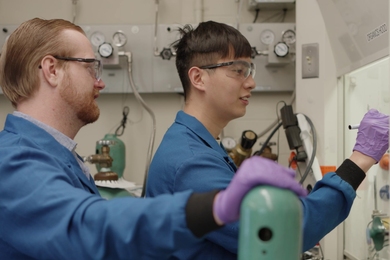
MIT researchers present a promising new approach to efficient, flexible carbon capture and removal.

IAIFI enters its second phase with increased funding, broader ambitions, and a growing community at the frontier of AI and fundamental physics.

MIT researchers use the classic game as a test bed for AI agents, finding a small AI model can outperform the biggest ones at 1 percent of the cost.
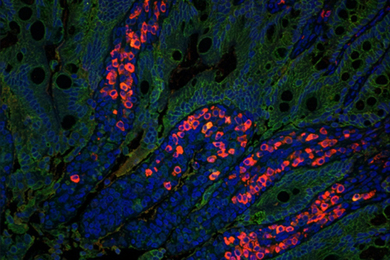
The adjuvant can help the injectable polio vaccine induce a strong immune response in the GI tract, which is considered critical to eradicating the virus.

Introducing weaker bonds into polystyrene and rubber helps these materials dissipate energy, making them more resistant to destructive forces.

The new ChartNet training dataset could improve the accuracy of vision-language models that help analyze business trends or interpret scientific figures.

The new design could offer a surgery-free alternative to traditional cardiac implants.

Study shows the tradeoff between conservation and growth is less stark with a locally adjusted policy featuring both tradeable offsets and taxes.
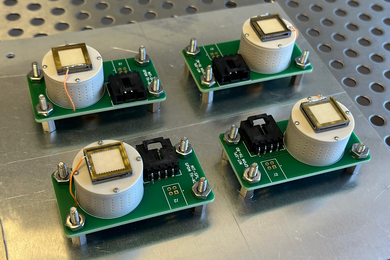
For satellites as small as a briefcase, getting around in space just got a whole lot easier.
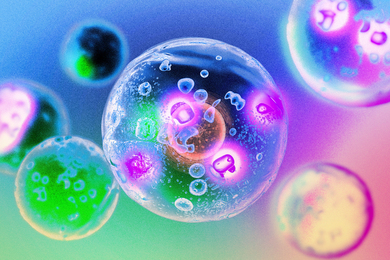
MIT biologists find highly concentrated droplets can help cells keep enzymes organized and control growth signals.
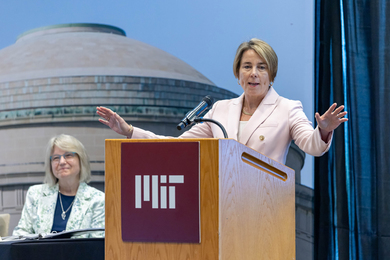
The Quantum Systems Laboratory will catalyze quantum innovation and be open to government, academic, and industry researchers.
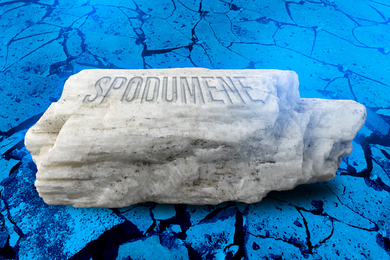
The low-temperature process could unlock cleaner lithium from America’s abundant hard rock while minimizing waste.