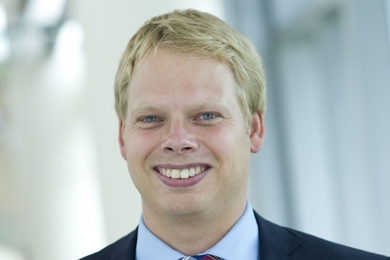
3 Questions with Richard Nielsen: How political science helps combat terrorism
Assistant Professor Richard Nielsen explores why some Muslim clerics adopt the ideology of militant jihad while most do not.
Assistant Professor Richard Nielsen explores why some Muslim clerics adopt the ideology of militant jihad while most do not.

Engineered bacteria produce rare and commercially useful compounds in large quantities.

DUSP practicum proposes new approaches to mobility and housing in urban neighborhoods.
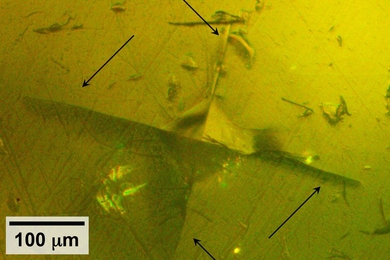
Researchers investigate mechanics of lithium sulfides, which show promise as solid electrolytes.

Book explores what France’s LGBTQ rights battle says about identity and belonging.
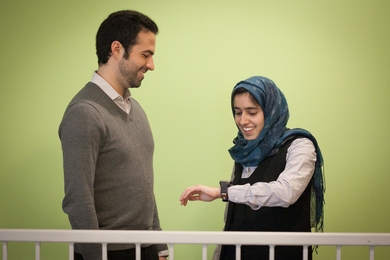
Coupled with audio and vital-sign data, deep-learning system could someday serve as a “social coach” for people with anxiety or Asperger’s.

Made from hydrogel, robots may one day assist in surgical operations, evade underwater detection.

J-PAL North America funds randomized studies to evaluate crime-prevention programs.

Techniques that develop a sense of belonging help to improve global MOOC persistence and completion rates.

MIT graduate students in energy fields gain skills and advance knowledge while helping to move toward a low-carbon future.

Study shows online retail prices often match store prices — and suggests why they sometimes do not.

Carbon dioxide isn’t the only one that matters, and the gases vary widely in potency and duration.

Modifying the “middle end” of a popular compiler yields more-efficient parallel programs.

Marking 25 years of science and policy studies, the MIT Joint Program launches new website showcasing its expanded research portfolio.

Collaboration will explore ways of working with natural systems to address climate change.