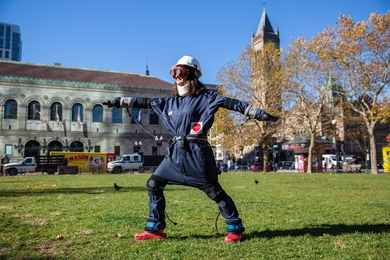
SilverSneakers exercise program fights isolation
MIT AgeLab researchers find that an exercise program for older adults has unexpected social and health benefits.
MIT AgeLab researchers find that an exercise program for older adults has unexpected social and health benefits.

Together, cell growth rate and gene expression shed light on why some tumor cells survive treatment.
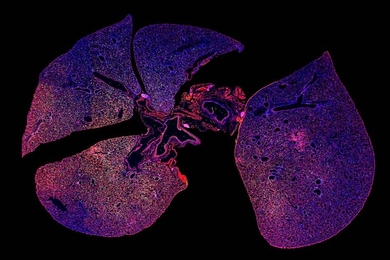
Results could also indicate whether antibiotics have successfully treated the infection.
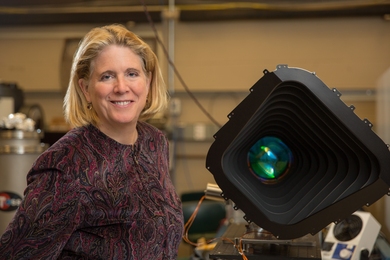
Physics professor brought leadership, resources, and an intellectual focus to the MIT astrophysics faculty and research staff during 15 years at the helm.

Injectable material made of nanoscale particles can deliver arthritis drugs throughout cartilage.

Device developed at MIT could provide refrigeration for off-grid locations.
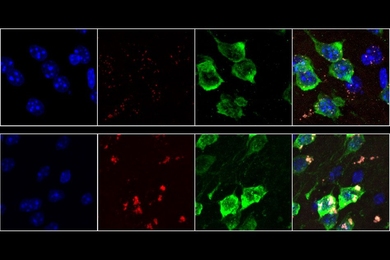
Snippets of RNA that accumulate in brain cells could interfere with normal function.

Carl Wunsch continues to expand his foundational framework for understanding the behavior of worldwide oceans as a whole.

The silent, lightweight aircraft doesn’t depend on fossil fuels.

MIT Joint Program on the Science and Policy of Global Change workshop explores risks and opportunities for the agriculture sector.

Researchers uncover the factors that have caused photovoltaic module costs to drop by 99 percent.

Microhydraulic actuators, thinner than one-third the width of human hair, are proving to be the most powerful and efficient motors at the microscale.

When you slow down after exiting the highway, or hush your voice in the library, you’re using this brain mechanism.

Study reveals the role of the activation domain, a part of transcription factors previously shrouded in mystery.

Study illuminates new mode of bacteria dispersal.