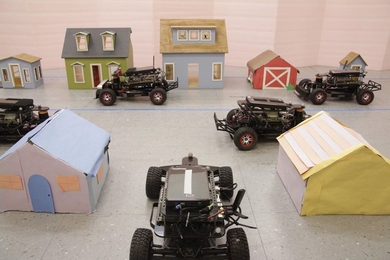
Better autonomous “reasoning” at tricky intersections
Model alerts driverless cars when it’s safest to merge into traffic at intersections with obstructed views.
Model alerts driverless cars when it’s safest to merge into traffic at intersections with obstructed views.
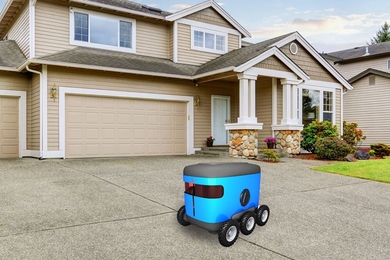
Navigation method may speed up autonomous last-mile delivery.
MIT and University of Colorado researchers are collaborating on an experiment to be sent to the International Space Station.
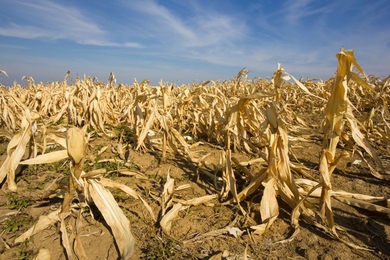
The Abdul Latif Jameel Water and Food Systems Lab presents a new report on climate, agriculture, water, and food security — with plans for more research.
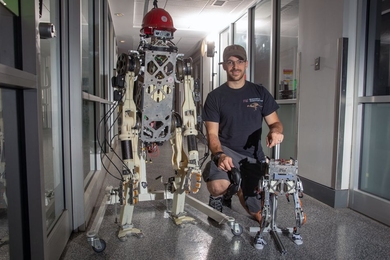
New control system may enable humanoid robots to do heavy lifting and other physically demanding tasks.
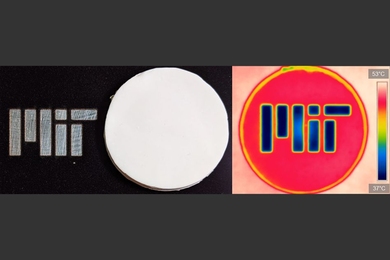
Passive device relies on a layer of material that blocks incoming sunlight but lets heat radiate away.
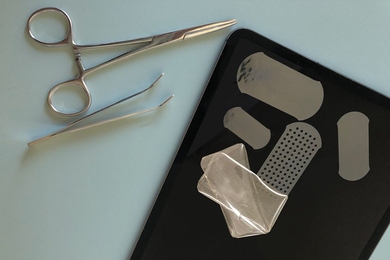
New adhesive that binds wet surfaces within seconds could be used to heal wounds or implant medical devices.
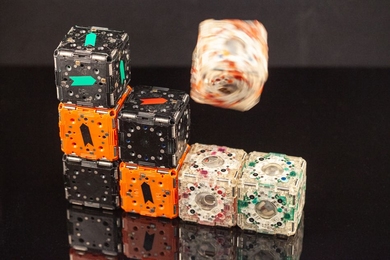
Developed at MIT’s Computer Science and Artificial Intelligence Laboratory, robots can self-assemble to form various structures with applications including inspection.
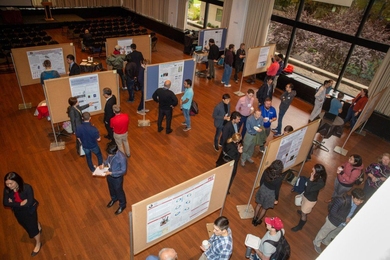
At the sixth annual Mechanical Engineering Research Exhibition, graduate students and postdocs sharpen their communication and presentation skills.
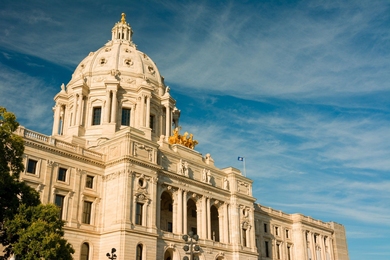
New partners will work with J-PAL to develop rigorous evaluations of policies related to criminal justice, health, housing stability, and economic security.
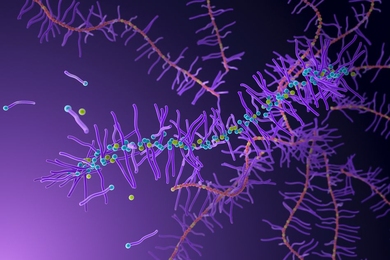
Materials could be useful for delivering drugs or imaging agents in the body; may offer alternative to some industrial plastics.
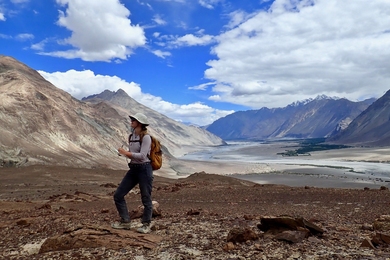
MIT geologists use paleomagnetism to determine the chain of events that resulted in the Himalayan mountains, with the support of MISTI-India.
A low-cost analog circuit based on synchronizing oscillators could scale up quickly and cheaply to beat out digital computers.
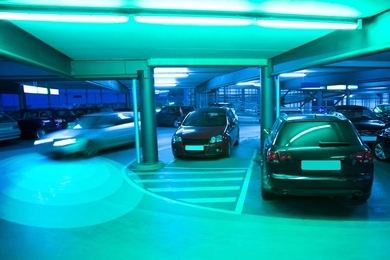
By sensing tiny changes in shadows, a new system identifies approaching objects that may cause a collision.
Modeling web traffic could aid cybersecurity, computing infrastructure design, Internet policy, and more.