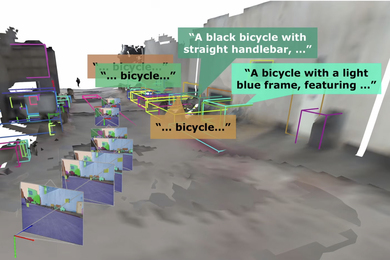
Could AI tell you where you left your keys?
A new spatial memory system for robots efficiently captures details about the objects they see while exploring their environment.
A new spatial memory system for robots efficiently captures details about the objects they see while exploring their environment.

Researchers establish key insights for reading and writing information for quantum sensing, communication, computing, and control.
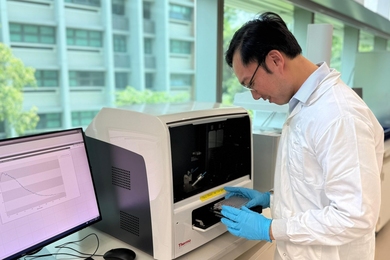
Researchers developed an optical nanosensor to rapidly detect a key gut biomarker, enabling faster, accessible screening.
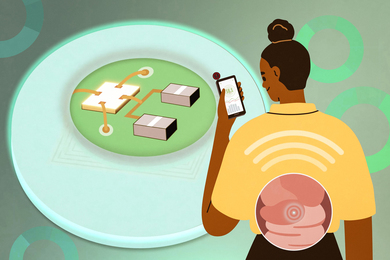
After being swallowed, the devices could offer continuous monitoring of patients who are sick or at risk of hypothermia.
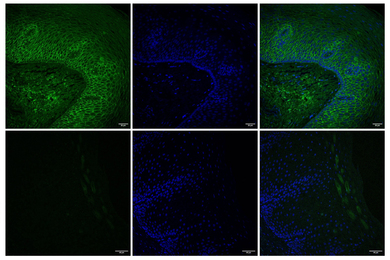
Their new gel-like drug formulation can coat the esophageal lining and release drugs that could help treat inflammatory conditions affecting the esophagus.

MIT researchers provide a major upgrade to the nearly century-old idea of random utility models.
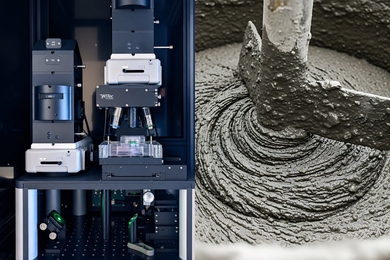
New research reveals the chemical sequence triggered by CO₂ injection in cement paste, capturing a fleeting intermediate reaction for the first time using real-time Raman spectroscopy.

A new study shows people expect reciprocal generosity only in interactions with friends or others of equal social status.
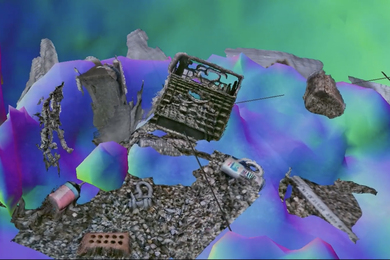
The “Sonar-MASt3R” combines sonar and visual data to create real-time 3D maps, even in cloudy water.
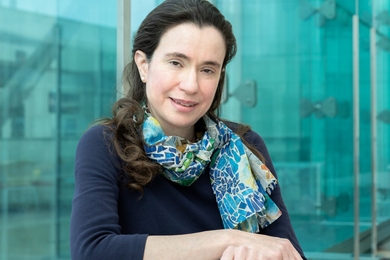
Heiman, who studies neurodegenerative diseases such as Huntington’s and Parkinson’s, will lead the institute beginning July 1.

A new kernel called Fractal gives researchers a cleaner view of what’s happening inside a processor, and has already surfaced previously unknown behavior in Apple’s M1.
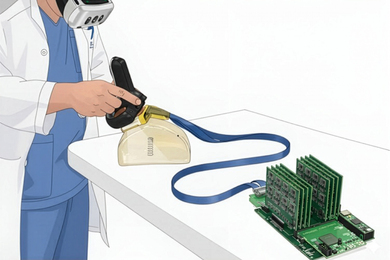
MIT researchers have designed an ultrasound system that creates a real-time 3D representation of the object being imaged.

A Media Lab study shows that, much like how GPS has weakened our navigation skills, AI can make us worse at detecting fake news.
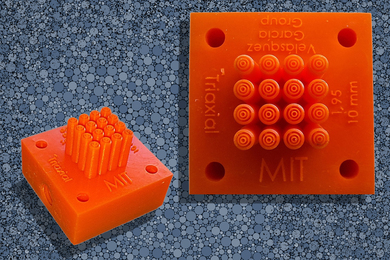
The cost-effective devices, which can be built in hours, leverage electrospray emitter technology to efficiently produce three-layered particles at scale.
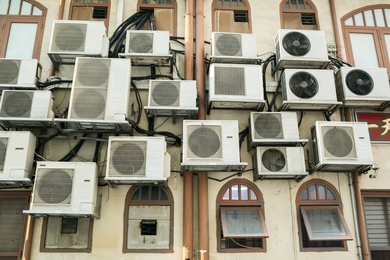
Low-cost personal cooling and emissions-free air conditioning among ideas studied with MIT’s Climate Project seed funding.