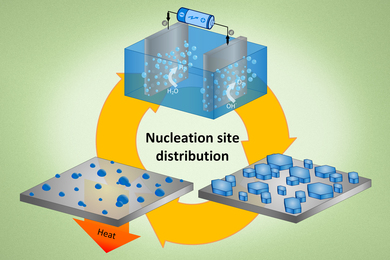
New microscope technique reveals details of droplet nucleation
The initiation of droplet and bubble formation on surfaces can now be directly imaged, allowing for design of more efficient condensers and boilers.
The initiation of droplet and bubble formation on surfaces can now be directly imaged, allowing for design of more efficient condensers and boilers.

Lincoln Laboratory researchers join international task force to evaluate wearable and emerging technology.
Applications and challenges of sensing technology have been accelerated by Covid-19.
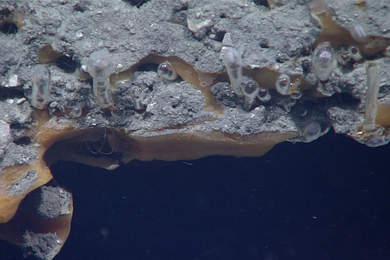
Leakage from frozen layers was a puzzle, but a new study shows how the potent greenhouse gas breaks through icy barriers.
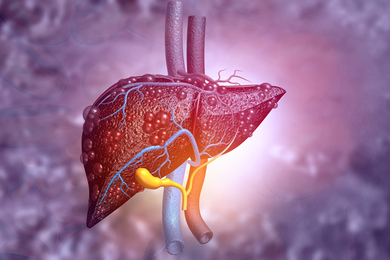
Diagnosing liver damage earlier could help to prevent liver failure in many patients.
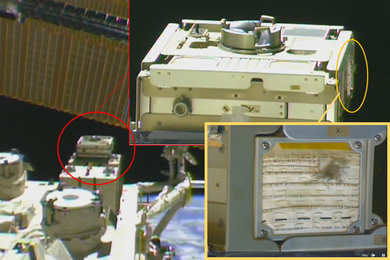
Fabric samples are headed to the International Space Station for resiliency testing; possible applications include cosmic dust detectors or spacesuit smart skins.
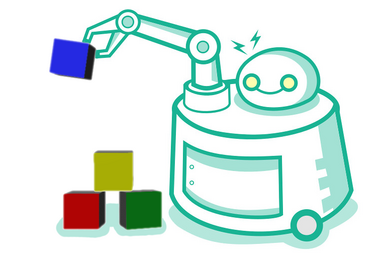
What's SSUP? The Sample, Simulate, Update cognitive model developed by MIT researchers learns to use tools like humans do.
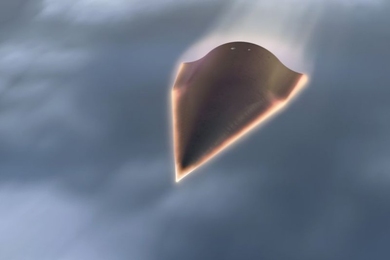
MIT is among nine universities selected as part of a program sponsored by the DoE to support science-based modeling and simulation and exascale computing technologies.
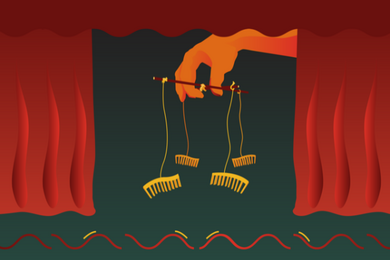
Tiny microRNAs help destroy unwanted messenger RNAs in cells. New research finds how the body keeps them in check.
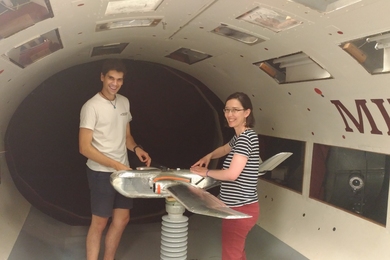
MISTI Global Seed Funds are open for proposals after Covid pivot.
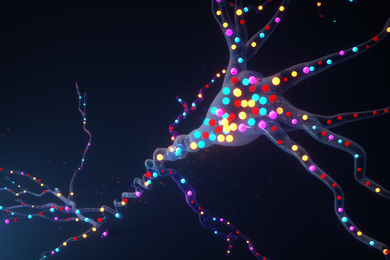
Fluorescent imaging technique simultaneously captures different signal types from multiple locations in a live cell.
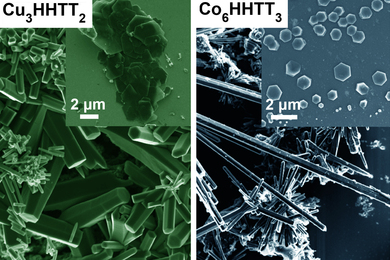
Family of compounds could someday be useful for fuel cells, supercapacitors, catalysts, and sensors.

Neuroscientists find that isolation provokes brain activity similar to that seen during hunger cravings.

In a new realm of materials, PhD student Thanh Nguyen uses neutrons to hunt for exotic properties that could power real-world applications.

Asya Magazinnik finds disparate implementation of national policies in jurisdictions across the United States.