
Study: Global cancer risk from burning organic matter comes from unregulated chemicals
The researchers hope scientists and regulators will consider a broader class of compounds in evaluating cancer risk due to PAH exposure.
The researchers hope scientists and regulators will consider a broader class of compounds in evaluating cancer risk due to PAH exposure.

New research by political science PhD candidate Meicen Sun illuminates the broad economic and political impacts of internet restrictions.

Figur8, founded by MIT alumna Nan-Wei Gong SM ’09, PhD ’13, offers a wearable sensor system to improve the diagnosis and treatment of muscle injuries.
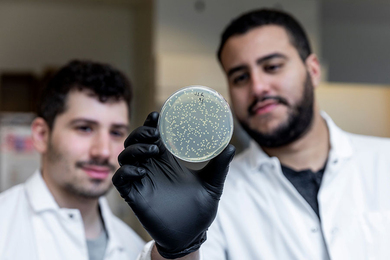
Exploring diversity among bacterial immune systems, McGovern Institute scientists uncovere a programmable system for precisely targeting and modifying RNA.

By temporarily suspending retinal activity in the non-amblyopic eye of animal models, neuroscientists restrengthen the visual response in the "lazy" eye, even at ages after the critical period when patch therapy fails.

Reversible system can flip the magnetic orientation of particles with a small voltage; could lead to faster data storage and smaller sensors.

Political science PhD student Emilia Simison has found that despotic regimes vary, and the move to democracy doesn’t necessarily guarantee policy change.
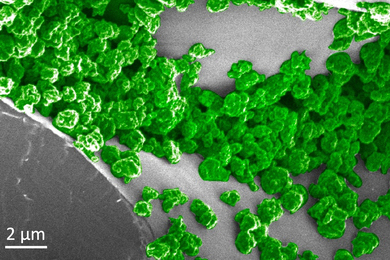
Using nanoparticles that store and gradually release light, engineers create light-emitting plants that can be charged repeatedly.
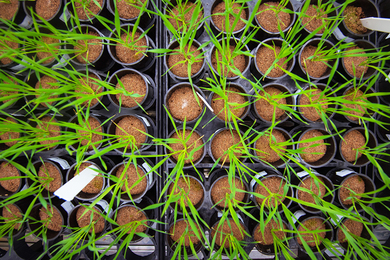
MIT professors Dave Des Marais and Caroline Uhler combine plant biology and machine learning to identify genetic roots of plant responses to environmental stress.

MIT researchers find emissions of U.S. buildings and pavements can be reduced by around 50 percent even as concrete use increases.

Vaccinating against certain proteins found on cancer cells could help to enhance the T cell response to tumors.
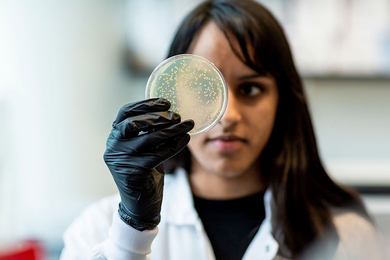
Researchers find RNA-guided enzymes are more diverse and widespread than previously believed.
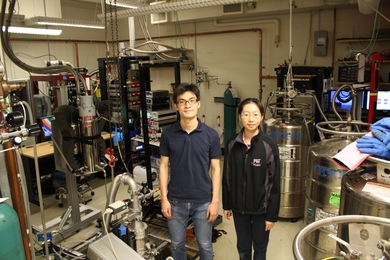
New property in an ultrathin cousin of graphene could allow for much denser computer memory.

MIT researchers propose a gasoline-ethanol engine that is cleaner and more cost-effective than existing diesel engine technologies to help meet vehicle emission reduction goals.
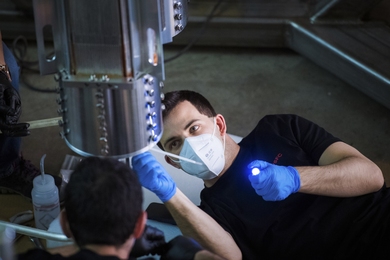
MIT engineer oversees design and testing of key magnet components for the Institute's SPARC fusion project.