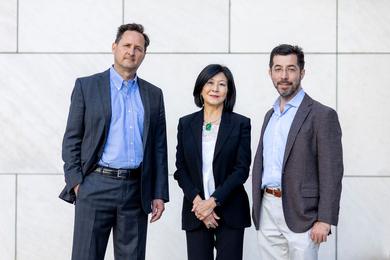
New bionics center established at MIT with $24 million gift
Interdisciplinary research center funded by philanthropist Lisa Yang aims to mitigate disability through technologies that marry human physiology with electromechanics.
Interdisciplinary research center funded by philanthropist Lisa Yang aims to mitigate disability through technologies that marry human physiology with electromechanics.

Neuroscientists at MIT and Massachusetts General Hospital develop a statistical framework that describes brain-state changes patients experience under ketamine-induced anesthesia.

By temporarily suspending retinal activity in the non-amblyopic eye of animal models, neuroscientists restrengthen the visual response in the "lazy" eye, even at ages after the critical period when patch therapy fails.
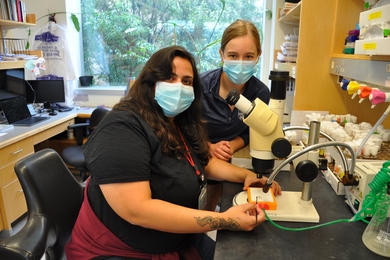
Through a summer research program at MIT, Patricia Pujols explored the neuromuscular junction, and a future in science.
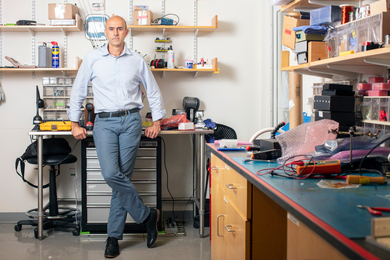
Neuroscientist’s studies help reveal how the brain keeps time, makes decisions, and evaluates other people’s actions.

Roundworms change the flow of material in and out of their mouths in response to bright light, revealing a new way for neurons to control muscle cells.

MIT-Jordan Abdul Hameed Shoman Foundation Seed Fund winners announced.
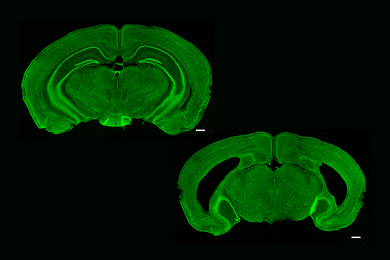
The visual cortex stores and remembers individual images, but mice can’t recognize image sequences without guidance from the hippocampus.
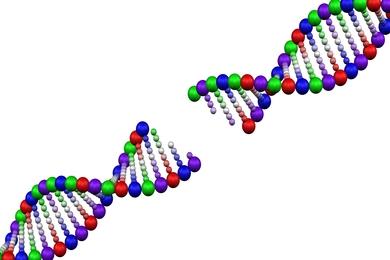
To quickly express learning and memory genes, brain cells snap both strands of DNA in many more places and cell types than previously realized, a new study shows.

MIT student Eeshan Tripathii is working with his sister to engineer an intuitive brain-controlled interface for upper-limb prosthetics.
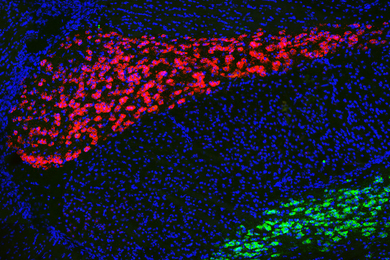
Study suggests a common mechanism underlies some behavioral traits seen in autism and schizophrenia.
How 3D-printed models of neuronal axons could accelerate development of new therapies to treat neurodegenerative disorders.
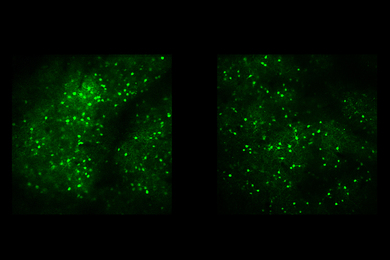
As “visual recognition memory” emerges in the visual cortex, one circuit of inhibitory neurons supplants another, and slower neural oscillations prevail.
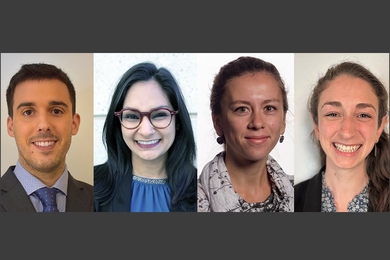
Selective global honor supports early-career scientists and engineers in taking on new pursuits.
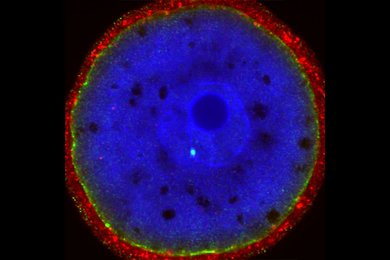
Novel method, developed by McGovern Institute researchers, may lead to safer, more efficient gene therapies.