
New materials could boost the energy efficiency of microelectronics
By stacking multiple active components based on new materials on the back end of a computer chip, this new approach reduces the amount of energy wasted during computation.
By stacking multiple active components based on new materials on the back end of a computer chip, this new approach reduces the amount of energy wasted during computation.
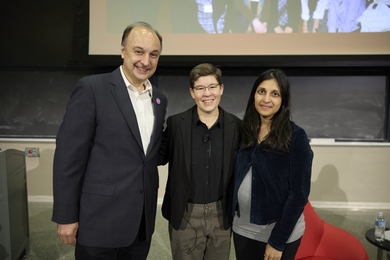
In the 2025 Dresselhaus Lecture, the materials scientist describes her work 3D printing soft materials ranging from robots to human tissues.
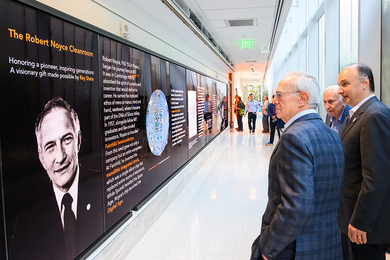
MIT.nano cleanroom complex named after Robert Noyce PhD ’53 at the 2025 Nano Summit.
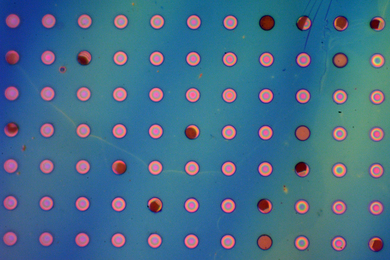
Because it’s nearly impermeable to gases, the polymer coating developed by MIT engineers could be used to protect solar panels, machinery, infrastructure, and more.
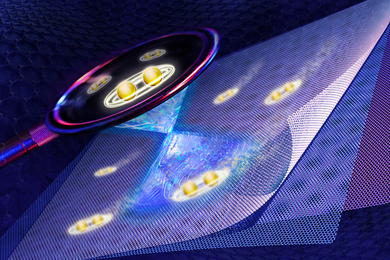
The findings could open a route to new forms of higher-temperature superconductors.
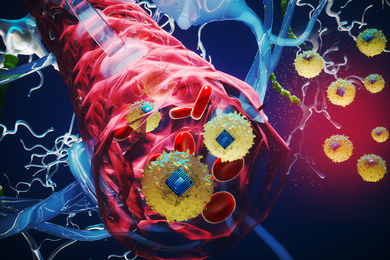
MIT researchers created microscopic wireless electronic devices that travel through blood and implant in target brain regions, where they provide electrical stimulation.
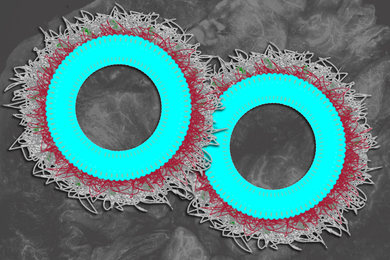
Targeted particles carrying the cytokine IL-12 can jump-start T cells, allowing them to clear tumors while avoiding side effects.
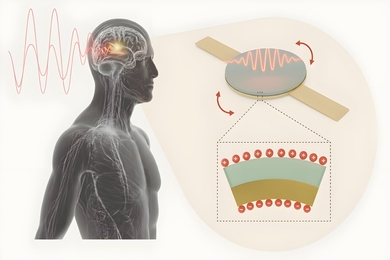
The technology would allow battery-free, minimally invasive, scalable bioelectronic implants such as pacemakers, neuromodulators, and body process monitors.
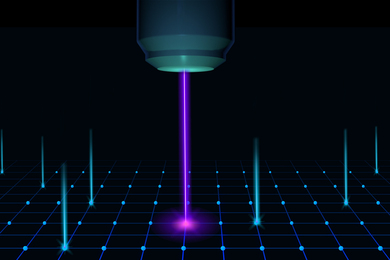
The DIGIT imaging tool could enable the design of quantum devices and shed light on atomic-scale processes in cells and tissues.
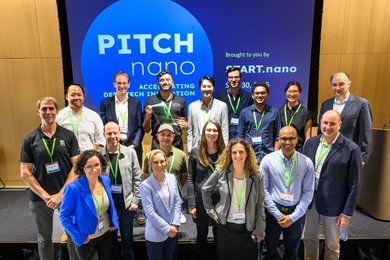
Twelve START.nano companies competed for the grand prize of nanoBucks to be used at MIT.nano’s facilities.
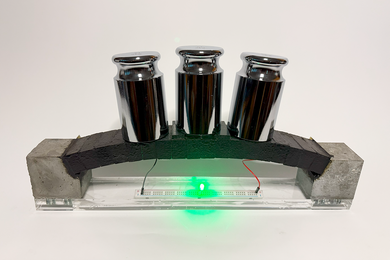
Improved carbon-cement supercapacitors could turn the concrete around us into massive energy storage systems.

The new “CRESt” platform could help find solutions to real-world energy problems that have plagued the materials science and engineering community for decades.
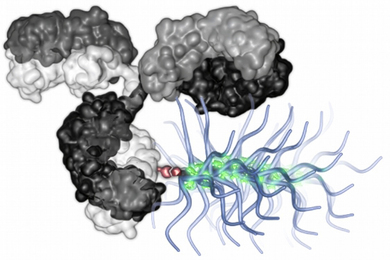
Outfitted with antibodies that guide them to the tumor site, the new nanoparticles could reduce the side effects of treatment.
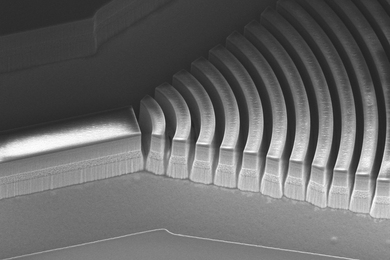
The ultrabroadband infrared frequency comb could be used for chemical detection in portable spectrometers or high-resolution remote sensors.
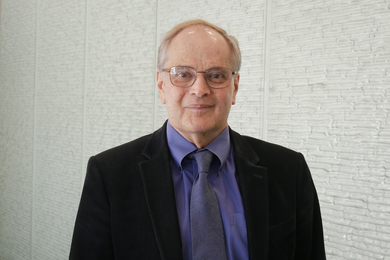
Over 50 years at MIT, the condensed-matter physicist led the development of photonic crystals, translating discoveries into wide-ranging applications in energy, medicine, and defense.