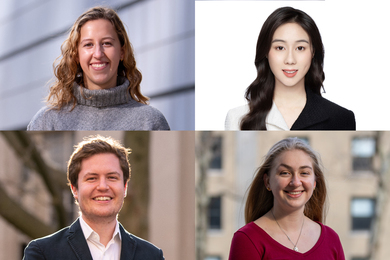
Four MIT students awarded 2022 Schwarzman Scholarships
Francesca Macchiavello Cauvi, Alice Ho, Ava Waitz, and Lucio Milanese will pursue master’s degrees in global affairs and leadership training at Tsinghua University in Beijing.
Francesca Macchiavello Cauvi, Alice Ho, Ava Waitz, and Lucio Milanese will pursue master’s degrees in global affairs and leadership training at Tsinghua University in Beijing.

MIT study shows the power of adaptive training tools, like a basketball hoop that shrinks and raises as you make shots.
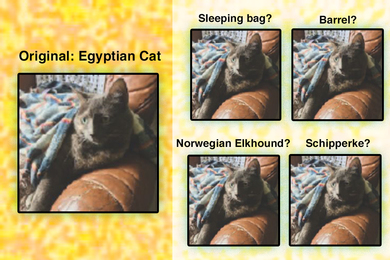
Adding a module that mimics part of the brain can prevent common errors made by computer vision models.

New system enables realistic variations in glossiness across a 3D-printed surface. The advance could aid fine art reproduction and the design of prosthetics.
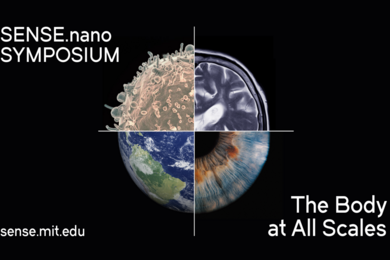
Applications and challenges of sensing technology have been accelerated by Covid-19.

A new approach could lower computing costs and increase accessibility to state-of-the-art natural language processing.
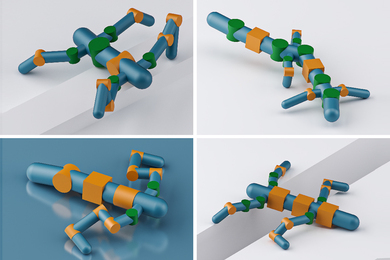
MIT researchers’ new system optimizes the shape of robots for traversing various terrain types.

MIT is among nine universities selected as part of a program sponsored by the DoE to support science-based modeling and simulation and exascale computing technologies.
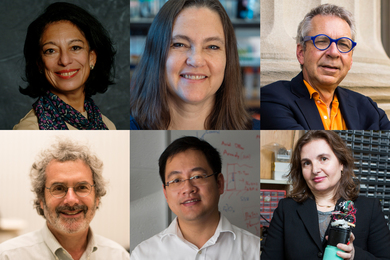
Choucri, Drennan, Fisher, Gershenfeld, Li, and Rus are recognized for their efforts to advance science.
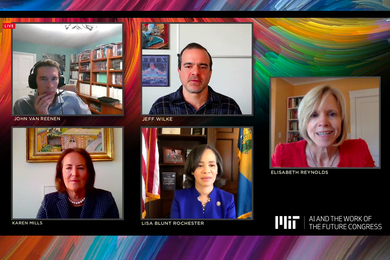
MIT task force wraps up with a final conference, sounds note of optimism that new ideas, better policies can help sustain good careers.
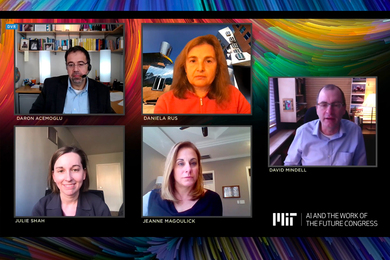
Technologies like robots and artificial intelligence could partner with humans, not oust them from work, research and business leaders say.

A faster way to estimate uncertainty in AI-assisted decision-making could lead to safer outcomes.

MIT Schwarzman College of Computing and the Singapore Defense Science and Technology Agency award funding to 13 AI-focused projects.

Analysis points to ways engineering strategies could be reimagined to minimize delays and other unanticipated expenses.

“We need more technologists in the room while policies are formulated,” says the MIT senior.