
The MIT-IBM Computing Research Lab launches to shape the future of AI and quantum computing
Building on a long-standing MIT–IBM collaboration, the new lab will chart the convergence of AI, algorithms, and quantum computing.
Building on a long-standing MIT–IBM collaboration, the new lab will chart the convergence of AI, algorithms, and quantum computing.

A new method could bring more accurate and efficient AI models to high-stakes applications like health care and finance, even in under-resourced settings.

MIT researchers leveraged a surprise discovery to devise a faster and more precise biomedical imaging technique.

The “EnergAIzer” method generates reliable results in seconds, enabling data center operators to efficiently allocate resources and reduce wasted energy.

New dataset of 30,000-plus competition math problems from 47 countries gives AI researchers a harder test — and students worldwide a better training ground.

Ultra-efficient chip design enables extremely strong cryptography algorithms to run on energy-constrained edge devices.

A new training method improves the reliability of AI confidence estimates without sacrificing performance, addressing a root cause of hallucination in reasoning models.

The associate professors of EECS and chemistry, respectively, are honored for exceptional contributions to teaching, research, and service at MIT.

Researchers are developing hardware and algorithms to improve collaboration between divers and autonomous underwater vehicles engaged in maritime missions.
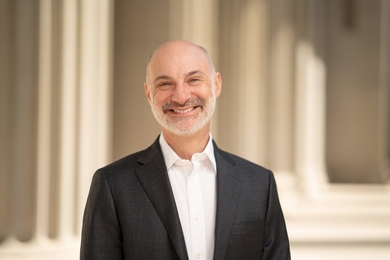
As the School of Humanities, Arts, and Social Sciences marks 75 years, Dean Agustín Rayo reflects on how AI is reshaping higher education and why SHASS disciplines continue to be central to MIT’s mission.

The influential first leader of the Computation Structures Group at MIT played a key role in the development of asynchronous computing.
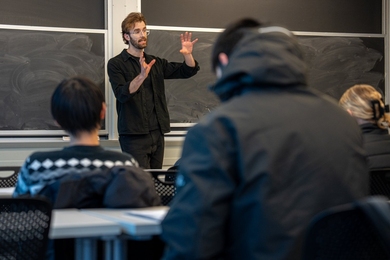
As the NC Ethics of Technology Postdoctoral Fellow, Michal Masny is advancing dialogue, teaching, and research into the social and ethical dimensions of new computing technologies.

Researchers use control theory to shed unnecessary complexity from AI models during training, cutting compute costs without sacrificing performance.

Researchers developed a system that intelligently balances workloads to improve the efficiency of flash storage hardware in a data center.

MIT researchers developed a testing framework that pinpoints situations where AI decision-support systems are not treating people and communities fairly.