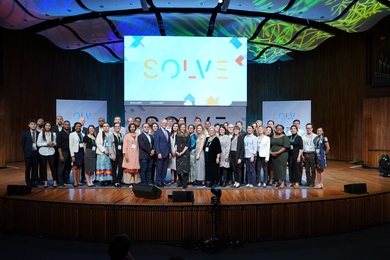
MIT Solve convenes leaders to scale global social impact
Solve at MIT 2019 connects cross-sector leaders to accelerate tech startups addressing some of the world’s most pressing problems.
Solve at MIT 2019 connects cross-sector leaders to accelerate tech startups addressing some of the world’s most pressing problems.
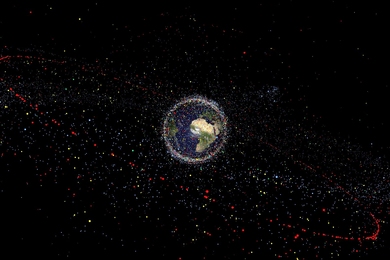
Teams from the MIT Media Lab, European Space Agency, and World Economic Forum will create a rating system and global standards for space waste mitigation.
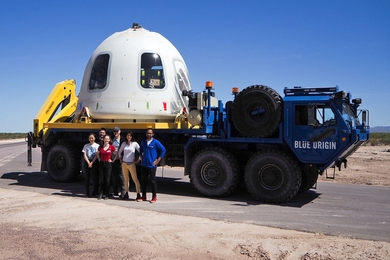
Space Exploration Initiative research aboard Blue Origin’s New Shepard experiment capsule crossed the Karman line for three minutes of sustained microgravity.
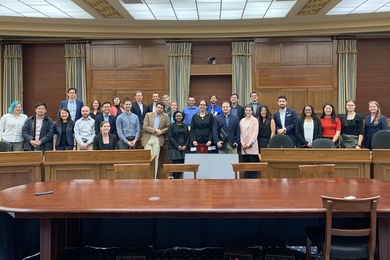
Students and postdocs from MIT's Science Policy Initiative meet with lawmakers on science-engineering-technology Congressional Visit Days 2019.
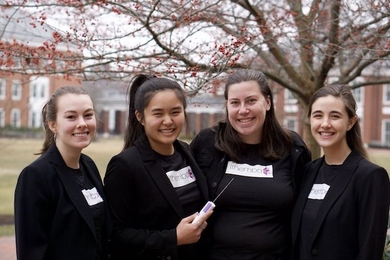
Students recognized for revolutionary solutions to women’s health, food waste, transportation, and mobility and communication for people with disabilities.

Researchers set sights on a new standard for issuing, sharing, and verifying academic credentials.

Machine learning can reveal optimal growing conditions to maximize taste and other features.

Researchers are developing a so-called "daisy-chain" gene-drive system that provides controls for genetic engineering of certain populations.
Researchers say new facilities in space should be available to scientists from any country.
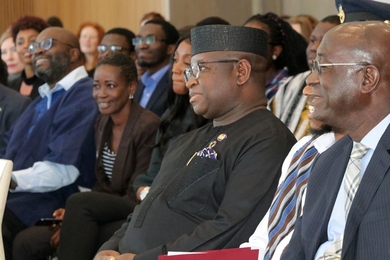
Public talk outlines ambitious plans to make his nation a hub for technology and innovation.
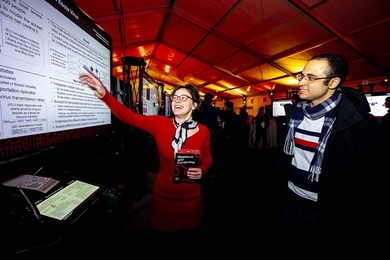
Research projects show creative ways MIT students are connecting computing to other fields.

Visiting fellows engage with students in the School of Architecture and Planning to create startups aimed at social impact.
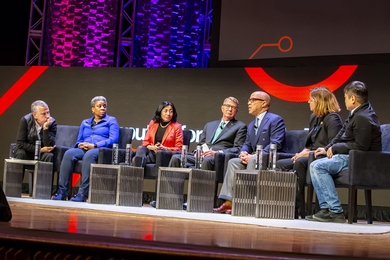
Leaders from government, philanthropy, academia, and industry say collaboration is key to make sure artificial intelligence serves the public good.
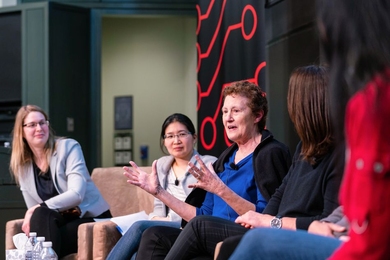
Luminaries in computing and cognition discuss their journeys and share their insights.
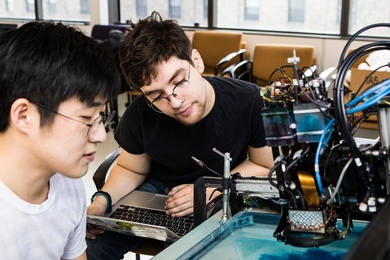
“We see an incredible future where the College of Computing channels the collaborative potential of disciplines,” says grad student Matthew Claudel.