Language skills stay strong in older adults, even while other cognitive abilities decline
MIT researchers find that activity in the brain’s language network is nearly identical in young and old people.
MIT researchers find that activity in the brain’s language network is nearly identical in young and old people.
Shannon Knight, a brain and cognitive sciences PhD candidate and McGovern Institute researcher, focuses on developing a novel gene therapy.
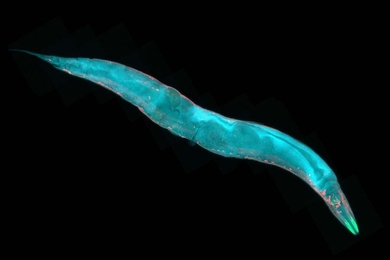
A study of worms finds a protein that helps shape the structure of the genome is critical for establishing the identity of some neurons.
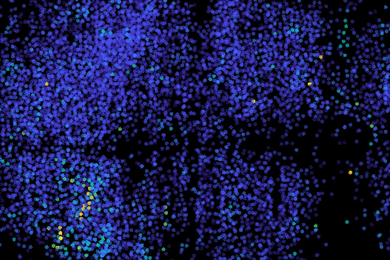
The new technique could help scientists learn how the entire brain works to generate decisions and emotions.

The MIT community celebrated the talent, dedication, and impact of its staff.
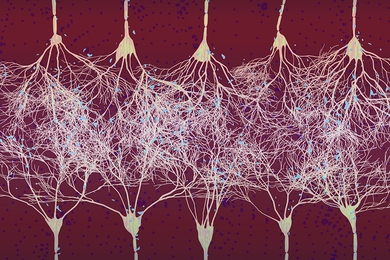
Scientists find that learning to identify a new object subtly reshapes visual processing in the brain.
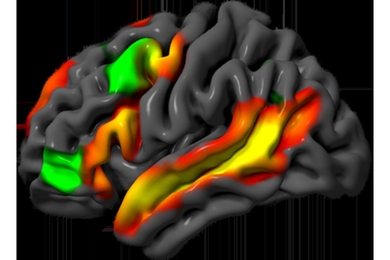
Neuroscientists find logical reasoning does not involve language-processing parts of the brain.
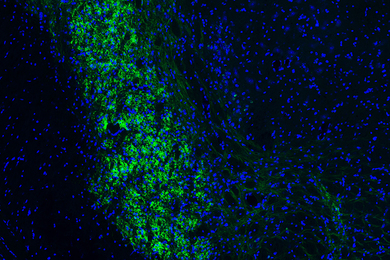
A simple brain circuit measures objects’ distance from the body using touch signals from a rodent’s whiskers, MIT scientists find.
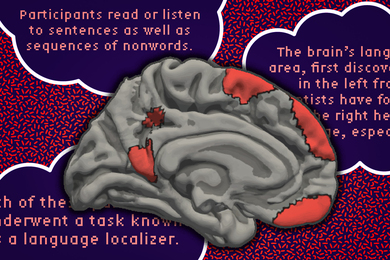
A new study reveals that parts of the brain located far from the canonical language-processing centers are also involved in language comprehension.

A new study shows people expect reciprocal generosity only in interactions with friends or others of equal social status.
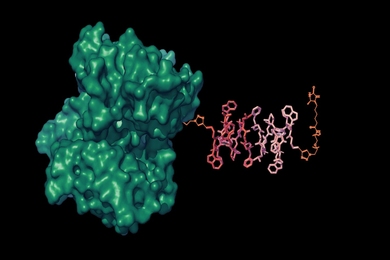
New MRI sensors developed at MIT sensitively detect target molecules in the brain and body.

Six MIT faculty, along with 10 additional alumni, are recognized by their peers for their outstanding contributions to research in the natural and social sciences.

Computational neuroscientist Sven Dorkenwald and cell biologist Whitney Henry, along with two MIT alumni, are recognized for their exceptional early-career research contributions.
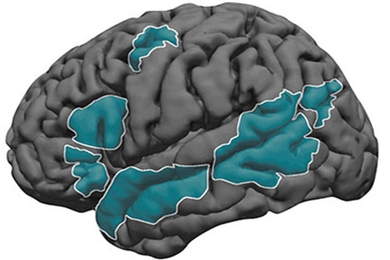
The brain’s language network is still evolving in adolescence. But by age 4, language processing is already handled by the left side of the brain, new research finds.
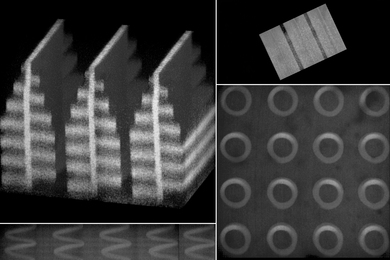
MIT researchers created tiny 3D photonic devices with features small enough to channel visible light.