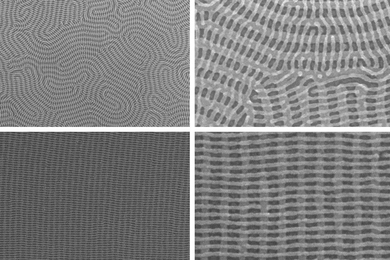
Self-stacking nanogrids
Polymer nanowires that assemble in perpendicular layers could offer route to tinier chip components.
Polymer nanowires that assemble in perpendicular layers could offer route to tinier chip components.

Results may help improve efficiency of solar cells, energy-harvesting devices.
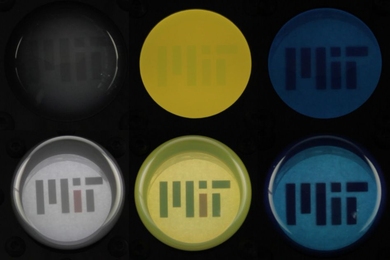
Material may offer cheaper alternative to smart windows.
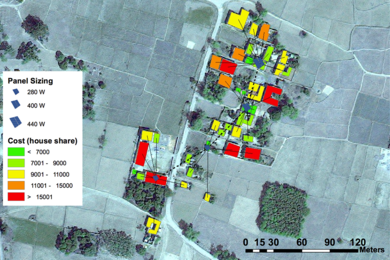
At MIT’s Tata Center for Technology and Design, researchers are exploring ways to extend electricity access to rural communities in India using microgrids.
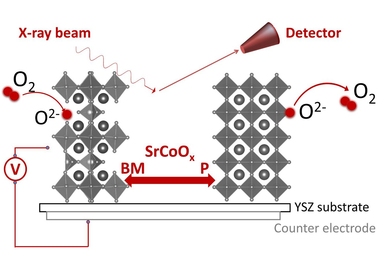
Small voltage can flip thin film between two crystal states — one metallic, one semiconducting.

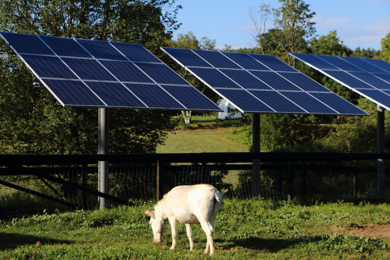
MOSAIC award spurs MIT research into concentrator solar cells that can run in shade and full sun with power control and wavelength separation.
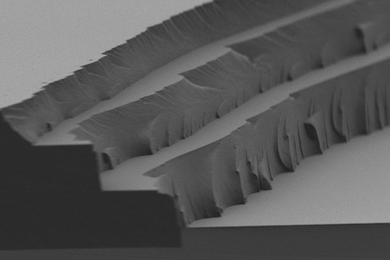
Material could harvest sunlight by day, release heat on demand hours or days later.
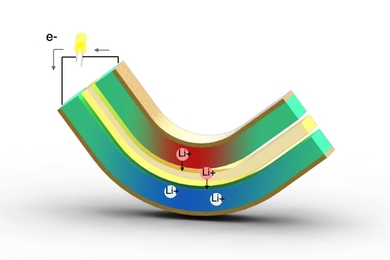
New device could provide electrical power source from walking and other ambient motions.

Three MIT graduate students win Silver Awards for work on catalysts, hydrogels, and magnetic nanoparticles.

An MIT development could benefit both the environment and human health.

Belcher, Bhatia, Brown, and Horvitz recognized for demonstrating a prolific spirit of innovation and invention resulting in a tangible impact on society.
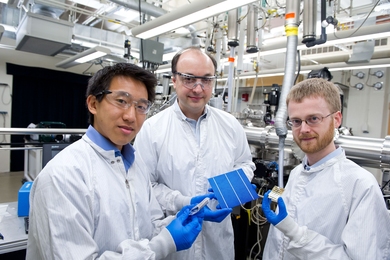
MIT researchers recommend rapidly scaling up current silicon-based systems while continuing to work on other technologies.

Graduate student Fahad Mahmood and colleagues show presence of charge-density waves in superconductive material.

Water-based “Band-Aid” senses temperature, lights up, and delivers medicine to the skin.