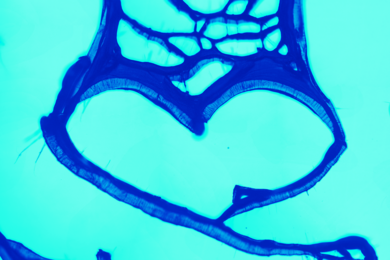
Getting to the heart of carbon nanotube clusters
MIT researchers create predictable patterns from unpredictable carbon nanotubes.
MIT researchers create predictable patterns from unpredictable carbon nanotubes.

Assistant professor in EECS is developing materials with novel structures and useful applications, including renewable energy and information storage.


Study finds adding volcanic ash reduces the overall energy required to manufacture concrete.
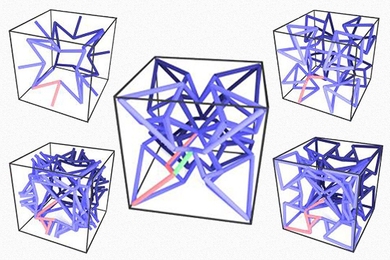
With new approach, researchers specify desired properties of a material, and a computer system generates a structure accordingly.
Funding is available to MIT faculty to support educational innovations in pre-K-12, Higher Education, and Workplace Learning.
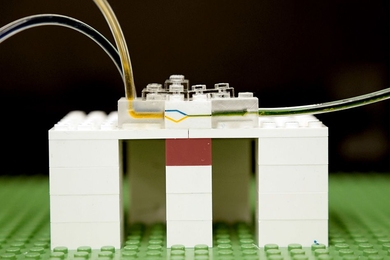
MIT engineers make microfluidics modular using the popular interlocking blocks.
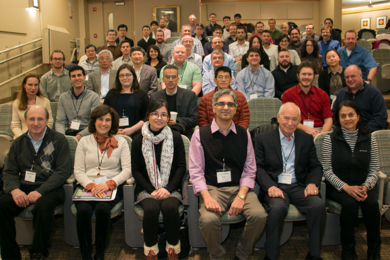
AIM Photonics Academy winter session draws over 60 participants from industry and academia.
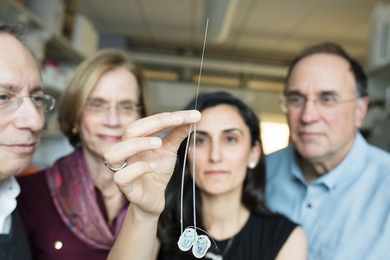
Miniaturized system could be used to treat neurological disorders that affect specific brain regions.

Design is major stepping stone toward portable artificial-intelligence devices.
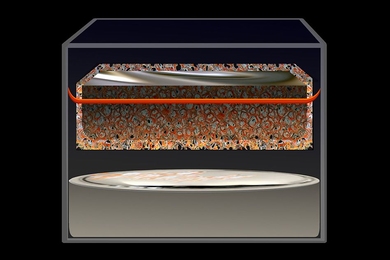
New metal-mesh membrane could solve longstanding problems and lead to inexpensive power storage.
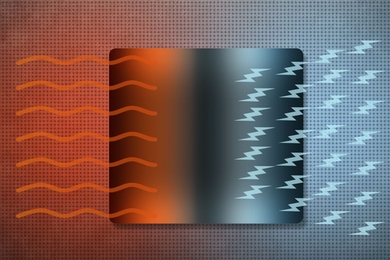
Study finds topological materials could boost the efficiency of thermoelectric devices.

Faculty members were recognized for excellence via a diverse array of honors, grants, and prizes over the last quarter.
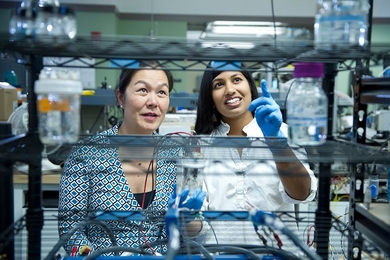
New model measures characteristics of carbon nanotube structures for energy storage and water desalination applications.
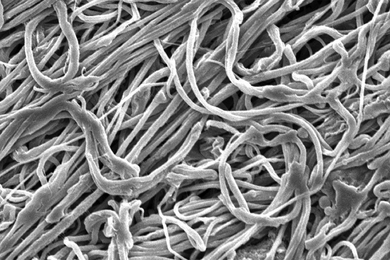
New technique developed at MIT could produce strong, resilient nanofibers for many applications.