
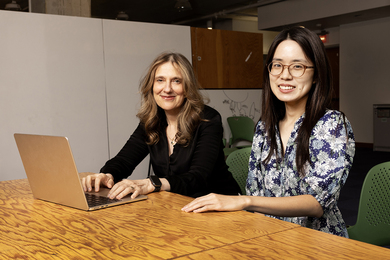
3 Questions: On biology and medicine’s “data revolution”
Professor Caroline Uhler discusses her work at the Schmidt Center, thorny problems in math, and the ongoing quest to understand some of the most complex interactions in biology.
Professor Caroline Uhler discusses her work at the Schmidt Center, thorny problems in math, and the ongoing quest to understand some of the most complex interactions in biology.
VaxSeer uses machine learning to predict virus evolution and antigenicity, aiming to make vaccine selection more accurate and less reliant on guesswork.

New research shows the natural variability in climate data can cause AI models to struggle at predicting local temperature and rainfall.

Solubility predictions could make it easier to design and synthesize new drugs, while minimizing the use of more hazardous solvents.

New research shows automatically controlling vehicle speeds to mitigate traffic at intersections can cut carbon emissions between 11 and 22 percent.

Storage systems from Cloudian, co-founded by an MIT alumnus, are helping businesses feed data-hungry AI models and agents at scale.
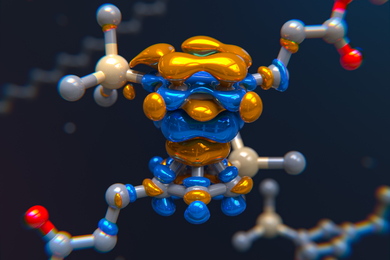
Researchers created polymers that are more resistant to tearing by incorporating stress-responsive molecules identified by a machine-learning model.

This new approach could lead to enhanced AI models for drug and materials discovery.
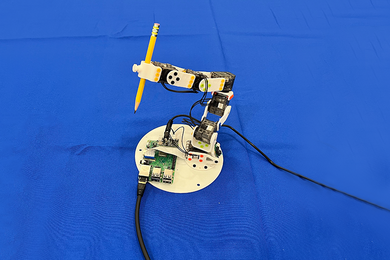
Neural Jacobian Fields, developed by MIT CSAIL researchers, can learn to control any robot from a single camera, without any other sensors.

ChemXploreML makes advanced chemical predictions easier and faster — without requiring deep programming skills.

Combining powerful imaging, perturbational screening, and machine learning, researchers uncover new human host factors that alter Ebola’s ability to infect.

MIT researchers found that special kinds of neural networks, called encoders or “tokenizers,” can do much more than previously realized.
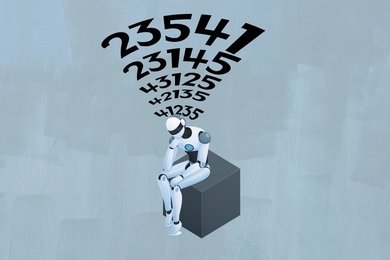
Language models follow changing situations using clever arithmetic, instead of sequential tracking. By controlling when these approaches are used, engineers could improve the systems’ capabilities.

The simulations matched results from an underground lab experiment in Switzerland, suggesting modeling could be used to validate the safety of nuclear disposal sites.

MIT engineers designed a versatile interface that allows users to teach robots new skills in intuitive ways.