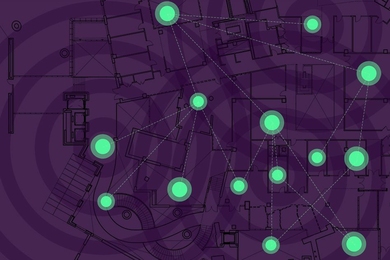
System helps smart devices find their position
Connected devices can now share position information, even in noisy, GPS-denied areas.
Connected devices can now share position information, even in noisy, GPS-denied areas.
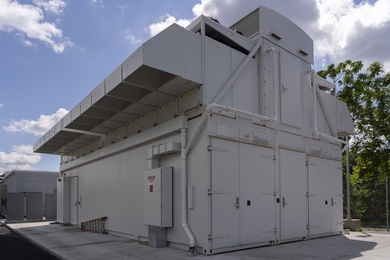
TX-GAIA is tailor-made for crunching through deep neural network operations.
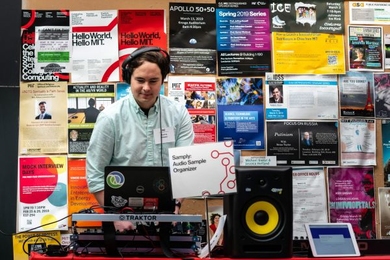
MIT grad student startup Samply uses algorithms to help music producers find the perfect sound.
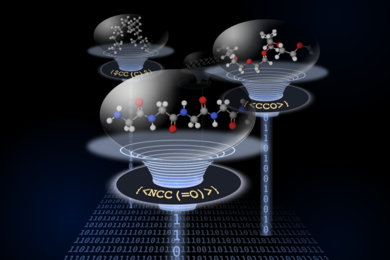
BigSMILES language allows computers and researchers to convey stochastic configurations more clearly.

Commercial cloud service providers give artificial intelligence computing at MIT a boost.
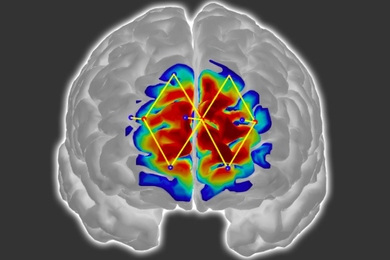
System could help with diagnosing and treating noncommunicative patients.
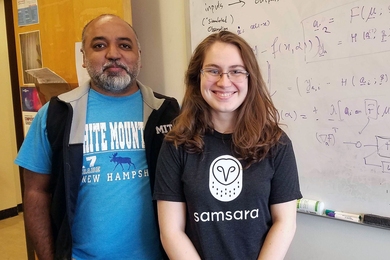
UROP student Sonia Reilly studies the math of machine learning to improve predictions of natural disasters.

Task force calls for bold public and private action to harness technology for shared prosperity.
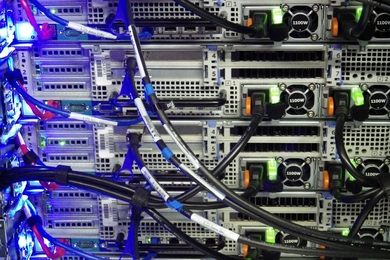
Nearly $12 million machine will let MIT researchers run more ambitious AI models.
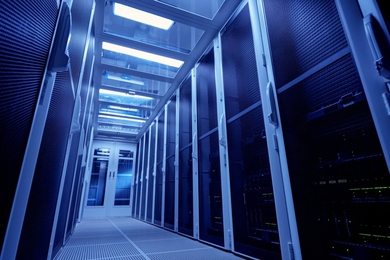
MIT system “learns” how to optimally allocate workloads across thousands of servers to cut costs, save energy.
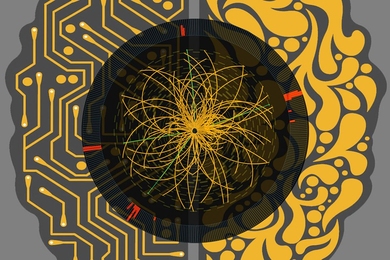
Prototype machine-learning technology co-developed by MIT scientists speeds processing by up to 175 times over traditional methods.

Model replaces the laborious process of annotating massive patient datasets by hand.
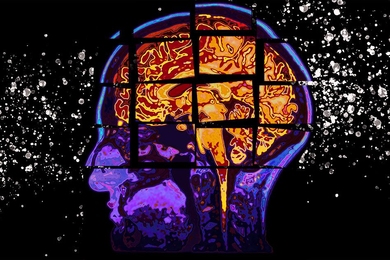
Researchers hope the system can zero in on the right patients to enroll in clinical trials, to speed discovery of drug treatments.
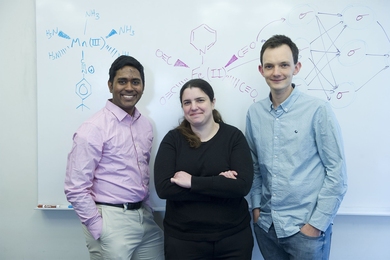
MIT researchers use a new machine learning technique to rapidly evaluate new transition metal compounds to identify those that can perform specialized functions.
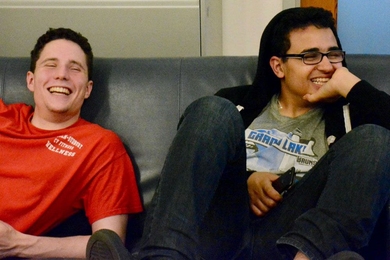
Two longtime friends explore how computer vision systems go awry.