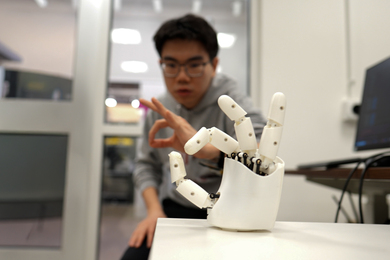
Wristband enables wearers to control a robotic hand with their own movements
By moving their hands and fingers, users can direct a robot to play piano or shoot a basketball, or they can manipulate objects in a virtual environment.
By moving their hands and fingers, users can direct a robot to play piano or shoot a basketball, or they can manipulate objects in a virtual environment.
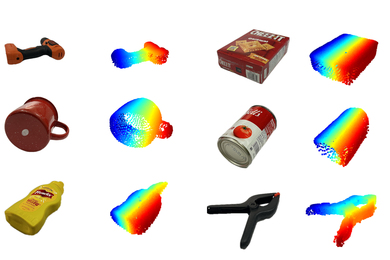
With this new technique, a robot could more accurately detect hidden objects or understand an indoor scene using reflected Wi-Fi signals.
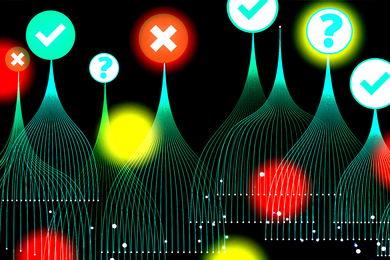
This new metric for measuring uncertainty could flag hallucinations and help users know whether to trust an AI model.

Academia-industry relationship is an early-stage accelerator, supporting professional progress and research.
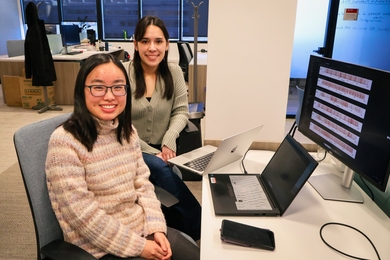
Researchers at MIT, Mass General Brigham, and Harvard Medical School developed a deep-learning model to forecast a patient’s heart failure prognosis up to a year in advance.

Professor Jesse Thaler describes a vision for a two-way bridge between artificial intelligence and the mathematical and physical sciences — one that promises to advance both.
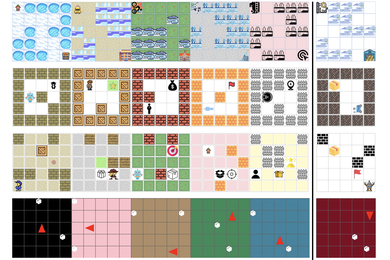
A new hybrid system could help robots navigate in changing environments or increase the efficiency of multirobot assembly teams.
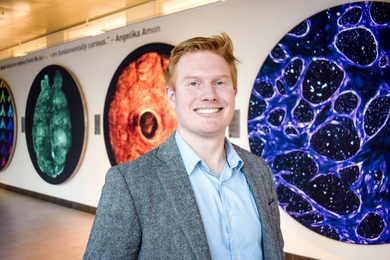
Assistant Professor Matthew Jones is working to decode molecular processes on the genetic, epigenetic, and microenvironment levels to anticipate how and when tumors evolve to resist treatment.
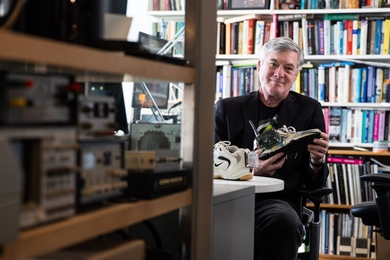
From early motion-sensing platforms to environmental monitoring, the professor and head of the Program in Media Arts and Sciences has turned decades of cross-disciplinary research into real-world impact.

New work suggests the brain can deliver neuron-specific feedback during learning — resembling the error signals that drive machine learning.
A new approach could help users know whether to trust a model’s predictions in safety-critical applications like health care and autonomous driving.
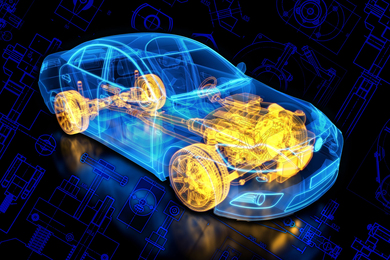
The approach could help engineers tackle extremely complex design problems, from power grid optimization to vehicle design.

By leveraging idle computing time, researchers can double the speed of model training while preserving accuracy.

By providing holistic information on a cell, an AI-driven method could help scientists better understand disease mechanisms and plan experiments.
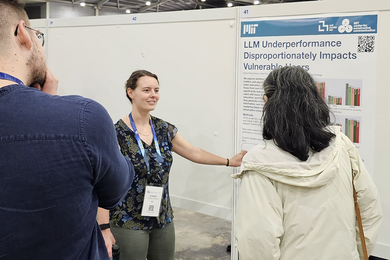
Research from the MIT Center for Constructive Communication finds leading AI models perform worse for users with lower English proficiency, less formal education, and non-US origins.