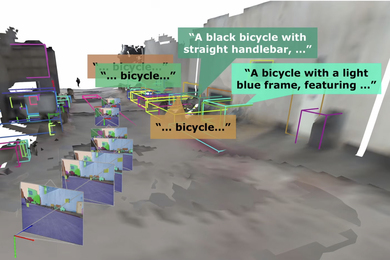
Could AI tell you where you left your keys?
A new spatial memory system for robots efficiently captures details about the objects they see while exploring their environment.
A new spatial memory system for robots efficiently captures details about the objects they see while exploring their environment.
MIT researchers provide a major upgrade to the nearly century-old idea of random utility models.

Using technology invented at MIT, Cartesian’s system for locating objects could also find uses in manufacturing, logistics, and robotics.

IAIFI enters its second phase with increased funding, broader ambitions, and a growing community at the frontier of AI and fundamental physics.

MIT researchers use the classic game as a test bed for AI agents, finding a small AI model can outperform the biggest ones at 1 percent of the cost.
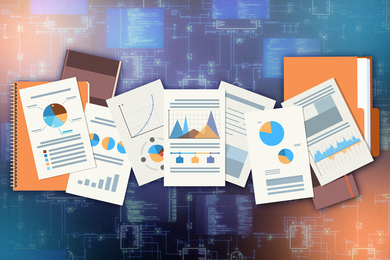
The new ChartNet training dataset could improve the accuracy of vision-language models that help analyze business trends or interpret scientific figures.

Newey has been a leading figure in econometric theory for more than four decades, shaping both research and training in the field.
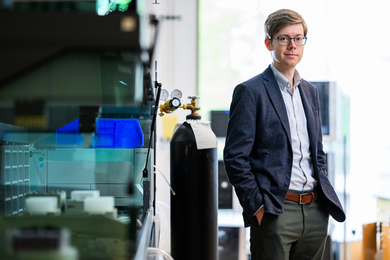
Connor Coley works at the interface of chemistry and machine learning, to discover and design new drug compounds.

MIT faculty member in electrical engineering and computer science to focus on innovation in engineering education and new pedagogical approaches.

New AI education program from MIT Open Learning debuts with AI-powered personalization and a free introductory course for learners everywhere.
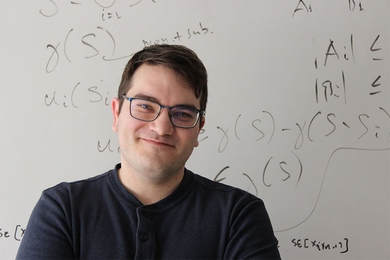
Assistant Professor Gabriele Farina mines the foundations of decision-making in complex multi-agent scenarios.

Founded by Jake Donoghue PhD ’19 and former MIT researcher Jarrett Revels, the company is creating an AI-driven platform to help diagnose and treat disease.
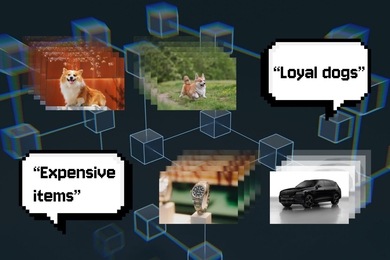
A new debiasing technique called WRING avoids creating or amplifying biases that can occur with existing debiasing approaches.

Building on a long-standing MIT–IBM collaboration, the new lab will chart the convergence of AI, algorithms, and quantum computing.

A new method could bring more accurate and efficient AI models to high-stakes applications like health care and finance, even in under-resourced settings.