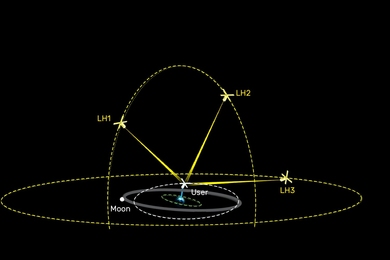
High-orbit satellites could light the way for travel to the moon
Acting as cooperative optical beacons, the satellites could provide GPS-like navigation and communications support for spacecraft operating across cislunar space.
Acting as cooperative optical beacons, the satellites could provide GPS-like navigation and communications support for spacecraft operating across cislunar space.
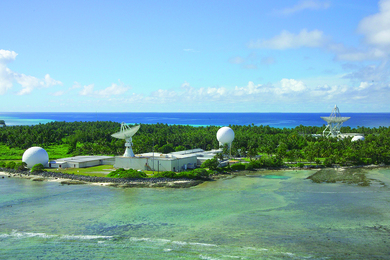
Members of the laboratory community reflect on technology impacts that shaped the United States and the world over the past 75 years.

A new technique produces wafer-scale samples, overcoming a major roadblock to using these materials in quantum technologies.
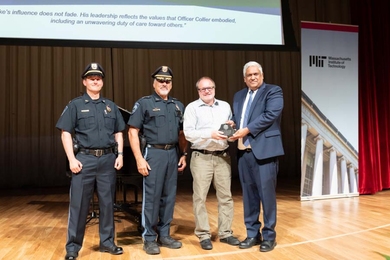
The MIT community celebrated the talent, dedication, and impact of its staff.
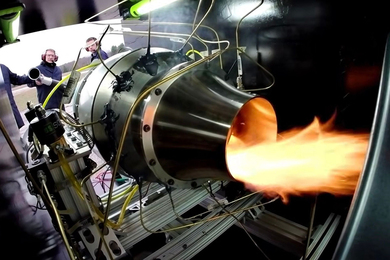
MIT students designed, built, and tested a jet engine with AI copilots, assessing AI’s usefulness in developing high-performance aerospace systems.

The Jameel Observatory-CREWSnet project opens a solar-powered “adaptation fortress” in Satkhira, a region facing severe and growing climate threats.
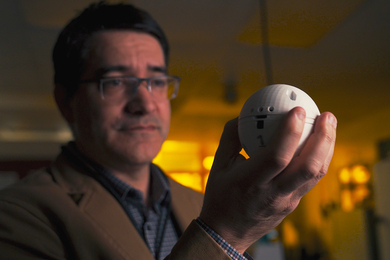
The “TOSSIT” device, developed at MIT Lincoln Laboratory, can warn service members and first responders of dangerous vapors and aerosols.

A USAF cadet and a Lincoln Laboratory researcher found AI chatbots can help nontechnical service members produce viable software applications for their unique problems.
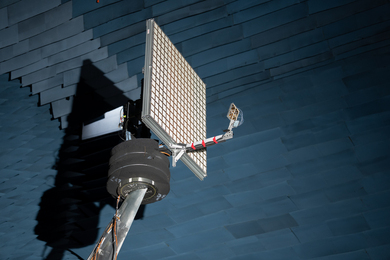
The prototype array uses a small, lightweight, low-power, and low-cost aperture.
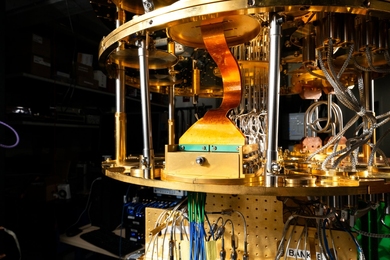
A prototype wiring system for dilution refrigerators could advance the realization of practical quantum computers.

This first use of laser communications on a crewed mission at lunar distance was a foundational step to establishing a high-speed internet in deep space.
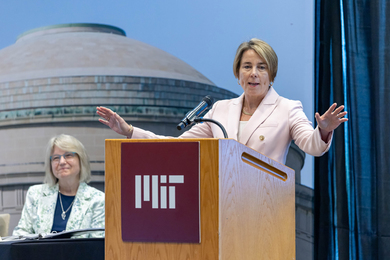
The Quantum Systems Laboratory will catalyze quantum innovation and be open to government, academic, and industry researchers.

With $25 million investment from the Commonwealth of Massachusetts, MIT to build a new shared-use facility to serve as a statewide quantum toolbox.
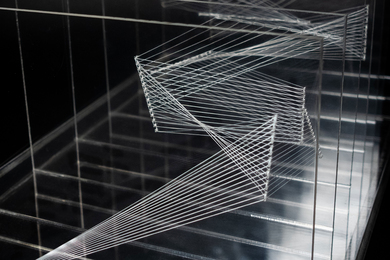
A new technique helps scientists measure a phenomenon that can cause quantum circuits to perform differently than expected, increasing the error in computations.
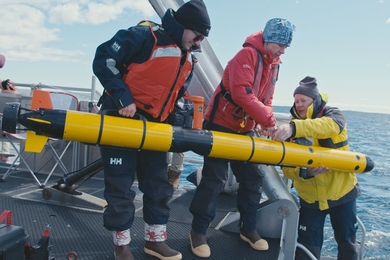
Researchers are developing hardware and algorithms to improve collaboration between divers and autonomous underwater vehicles engaged in maritime missions.