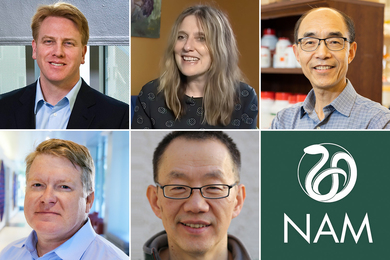
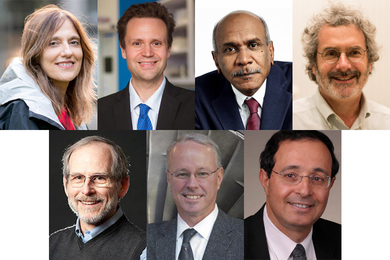
Twelve with MIT ties elected to the National Academy of Medicine for 2023
Five MIT faculty, along with seven additional affiliates, are honored for outstanding contributions to medical research.
Five MIT faculty, along with seven additional affiliates, are honored for outstanding contributions to medical research.
By focusing on causal relationships in genome regulation, a new AI method could help scientists identify new immunotherapy techniques or regenerative therapies.

Although computer scientists may initially treat data bias and error as a nuisance, researchers argue it’s a hidden treasure trove for reflecting societal values.
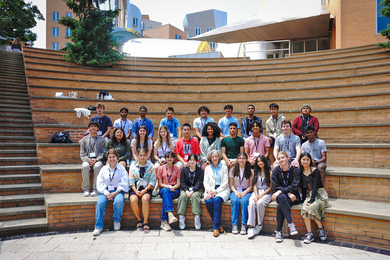
A one-week summer program aims to foster a deeper understanding of machine-learning approaches in health among curious young minds.
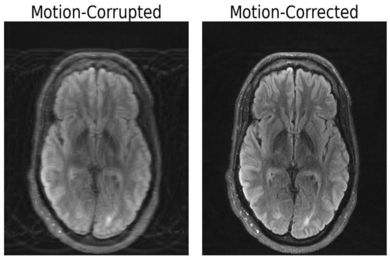
The challenge involves more than just a blurry JPEG. Fixing motion artifacts in medical imaging requires a more sophisticated approach.
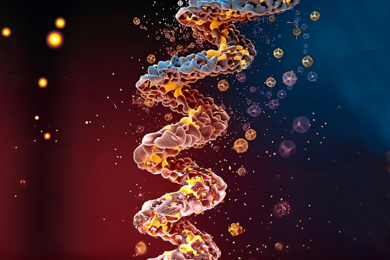
“FrameDiff” is a computational tool that uses generative AI to craft new protein structures, with the aim of accelerating drug development and improving gene therapy.
BioAutoMATED, an open-source, automated machine-learning platform, aims to help democratize artificial intelligence for research labs.

The machine-learning algorithm identified a compound that kills Acinetobacter baumannii, a bacterium that lurks in many hospital settings.
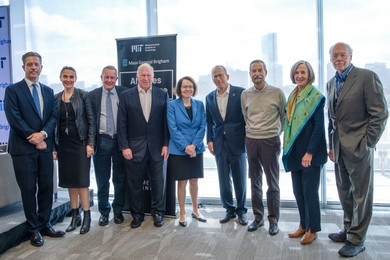
With the artificial intelligence conversation now mainstream, the 2023 MIT-MGB AI Cures conference saw attendance double from previous years.
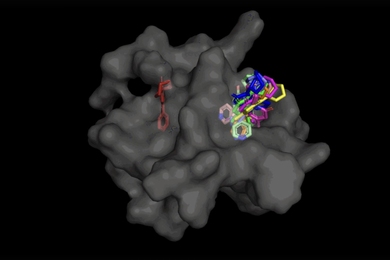
MIT researchers built DiffDock, a model that may one day be able to find new drugs faster than traditional methods and reduce the potential for adverse side effects.
Seven researchers, along with 14 additional MIT alumni, are honored for significant contributions to engineering research, practice, and education.
Deep-learning model takes a personalized approach to assessing each patient’s risk of lung cancer based on CT scans.
New fellows are working on health records, robot control, pandemic preparedness, brain injuries, and more.
But the harm from a discriminatory AI system can be minimized if the advice it delivers is properly framed, an MIT team has shown.
Researchers used a powerful deep-learning model to extract important data from electronic health records that could assist with personalized medicine.