
AI and machine learning for engineering design
Popular mechanical engineering course applies machine learning and AI theory to real-world engineering design.
Popular mechanical engineering course applies machine learning and AI theory to real-world engineering design.

MIT CSAIL researchers developed SustainaPrint, a system that reinforces only the weakest zones of eco-friendly 3D prints, achieving strong results with less plastic.

System developed at MIT could provide realistic predictions for a wide variety of reactions, while maintaining real-world physical constraints.

Tools build on years of research at Lincoln Laboratory to develop a rapid brain health screening capability and may also be applicable to civilian settings such as sporting events and medical offices.
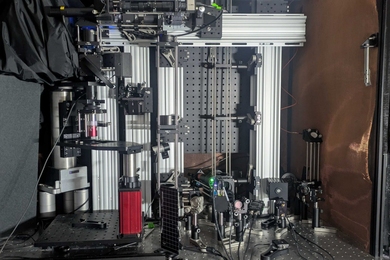
By combining several cutting-edge imaging technologies, a new microscope system could enable unprecedentedly deep and precise visualization of metabolic and neuronal activity, potentially even in humans.

Researchers develop a fast-acting, cell-permeable protein system to control CRISPR-Cas9, reducing off-target effects and advancing gene therapy.

MIT spinout Tissium recently secured FDA marketing authorization of a biopolymer platform for nerve repair.

Researchers developed a tool to recreate cells’ family trees. Comparing cells’ lineages and locations within a tumor provided insights into factors shaping tumor growth.

The Lemelson-MIT program challenges student teams across the country to solve problems in their communities — and present their inventions at MIT.

ChemXploreML makes advanced chemical predictions easier and faster — without requiring deep programming skills.
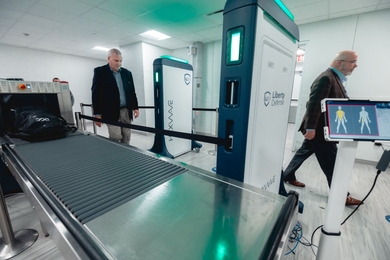
Lincoln Laboratory's 3D microwave imaging technology for detecting concealed threats was integrated into HEXWAVE, commercially developed by Liberty Defense.

Through a collaboration between the MIT first-year learning community Terrascope, Diné College, and University of Puerto Rico, students learn fundamental design principles — and much more.

An AI pipeline developed by CSAIL researchers enables unique hydrodynamic designs for bodyboard-sized vehicles that glide underwater and could help scientists gather marine data.
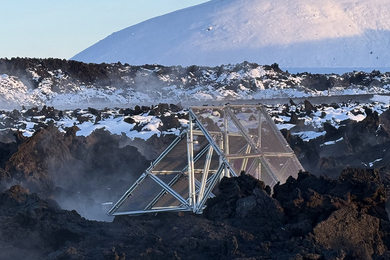
Ongoing research by three architecture faculty aims to yield structures that protect communities from the devastation of volcanic eruptions.

From the classroom to expanding research opportunities, students at MIT Music Technology use design to push the frontier of digital instruments and software for human expression and empowerment.