
Strengthening students’ knowledge and experience in climate and sustainability
Through the year-long MCSC Climate and Sustainability Scholars Program, students have the opportunity to lead research projects.
Through the year-long MCSC Climate and Sustainability Scholars Program, students have the opportunity to lead research projects.
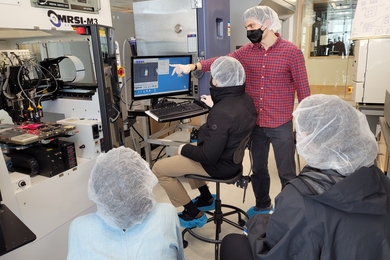
MIT’s LEAP at MIT.nano is the first in a network to advance manufacturing for the state.
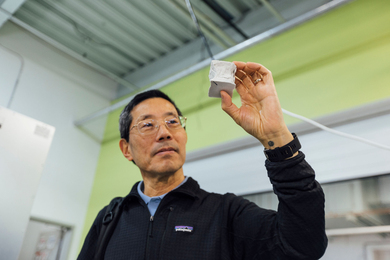
The Center for Electrification and Decarbonization of Industry unites MIT climate researchers to create scalable clean energy solutions under one roof.

The NCSOFT-sponsored program will advance cutting-edge technologies for gaming and data visualization.
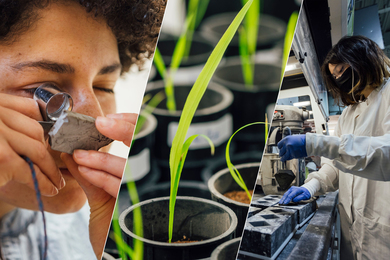
The portfolio of multiyear projects focuses on delivering breakthrough solutions.
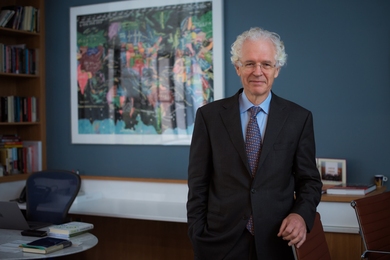
From nuclear proliferation to climate change, Richard K. Lester taps research talent to map a path toward a sustainable planet.

Primary focus will be to advance and promote technology, innovation, and entrepreneurship across the school.
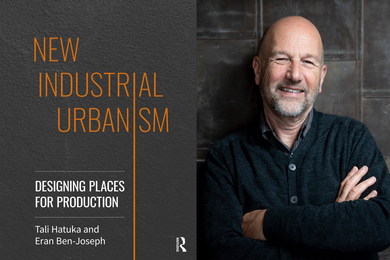
In his book, “New Industrial Urbanism,” Eran Ben-Joseph looks at the evolving form and function of 21st-century cities.
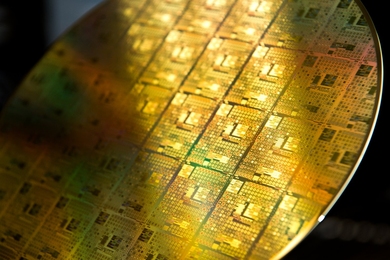
MIT, RPI, and SUNY convene a national conversation on semiconductor tech translation and hard-tech startups.
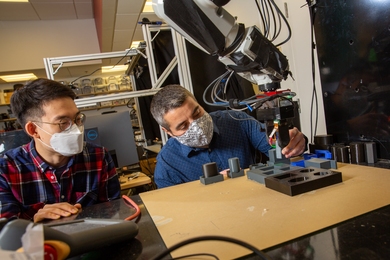
Associate professor and principal investigator with the MIT Schwarzman College of Computing’s Science Hub discusses the future of robotics and the importance of industry-academia collaborations.

MIT AI Hardware Program launches with five inaugural companies to advance AI technologies for the next decade.

Faculty leaders detail promising technologies, materials, and methods that could help unlock a low-carbon future in sectors where emissions are hardest to cut.
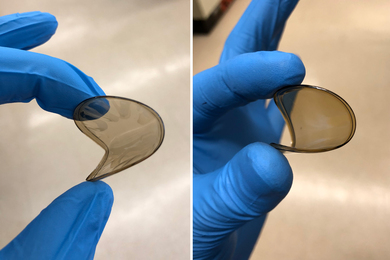
A new membrane material could make purification of gases significantly more efficient, potentially helping to reduce carbon emissions.

Combining her drive for sustainability, innovation, and diversity, Janelle Heslop MBA ’19, SM ’19 leads a $1B project to drive impact in operations.

Virtual conference gathered students, faculty, and industry partners to explore the future of microsystems and nanotechnology.