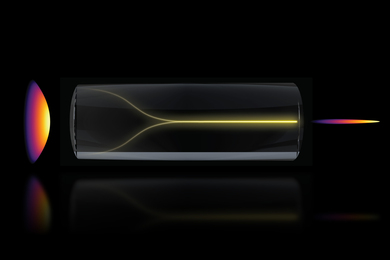
Self-organizing “pencil beam” laser could help scientists design brain-targeted therapies
MIT researchers leveraged a surprise discovery to devise a faster and more precise biomedical imaging technique.
MIT researchers leveraged a surprise discovery to devise a faster and more precise biomedical imaging technique.
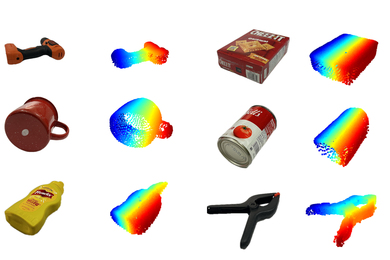
With this new technique, a robot could more accurately detect hidden objects or understand an indoor scene using reflected Wi-Fi signals.
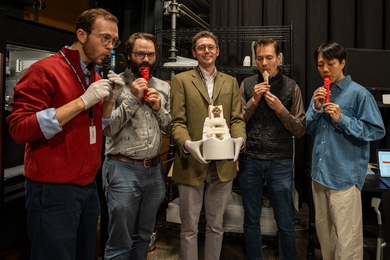
Through an interdisciplinary collaboration between MIT and the Museum of Fine Arts, Boston, researchers are creating playable physical and synthesized replicas.
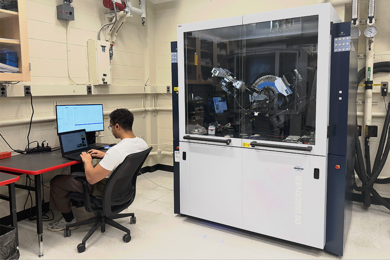
The X-ray diffraction and imaging facility at MIT.nano adds a new tool to support research in a wide variety of disciplines.
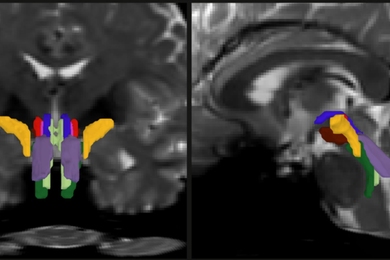
Opening a new window on the brainstem, a new tool reliably and finely resolves distinct nerve bundles in live diffusion MRI scans, revealing signs of injury or disease.

For the first time, the new scope allowed physicists to observe terahertz “jiggles” in a superconducting fluid.
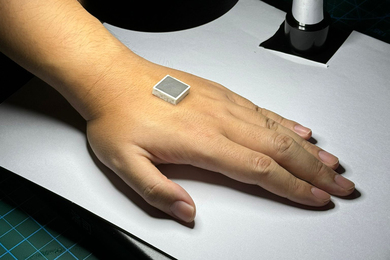
WITEC is working to develop the first wearable ultrasound imaging system to monitor chronic conditions in real-time, with the goal of enabling earlier detection and timely intervention.
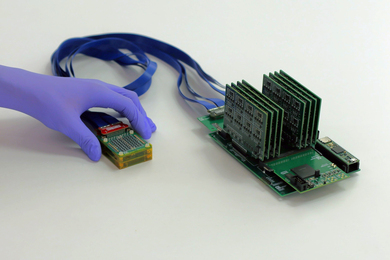
The new system could be used at home or in doctors’ offices to scan people who are at high risk for breast cancer.
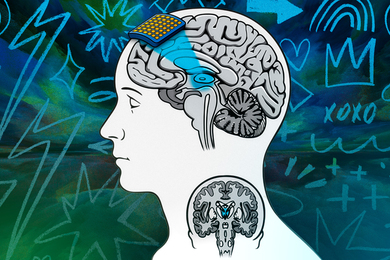
Researchers propose a roadmap for using transcranial focused ultrasound, a noninvasive way to stimulate the brain and see how it functions.
The AI-powered tool could inform the design of better sensors and cameras for robots or autonomous vehicles.
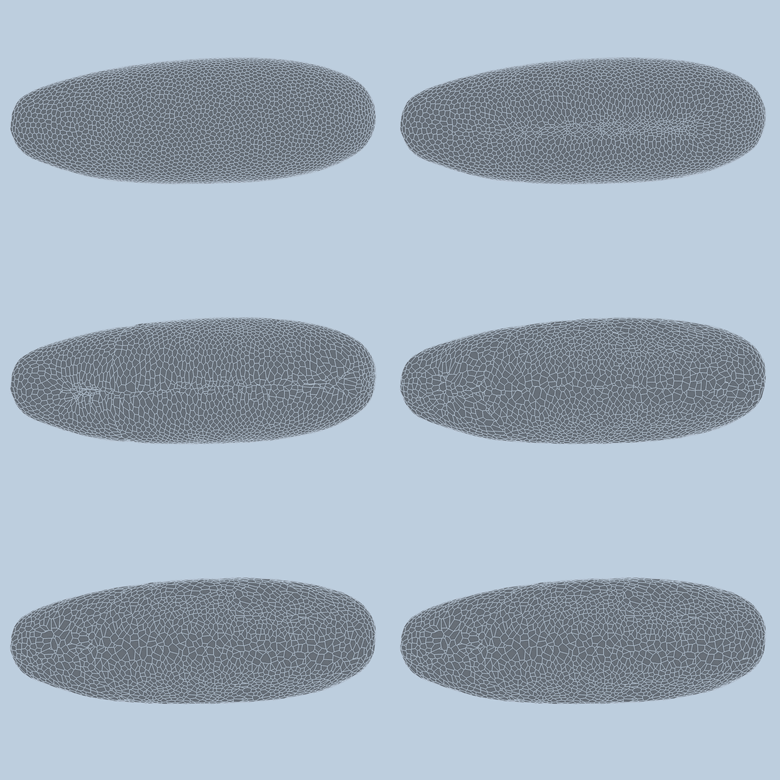
The approach could apply to more complex tissues and organs, helping researchers to identify early signs of disease.
The DIGIT imaging tool could enable the design of quantum devices and shed light on atomic-scale processes in cells and tissues.

A proposed telescope made of thousands of tiny, identical satellites will work to reveal low-frequency radio waves in space.
Acting as a “virtual spectrometer,” SpectroGen generates spectroscopic data in any modality, such as X-ray or infrared, to quickly assess a material’s quality.
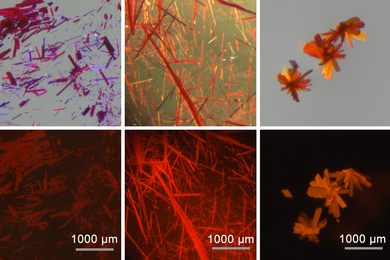
The new dyes are based on boron-containing molecules that were previously too unstable for practical use.