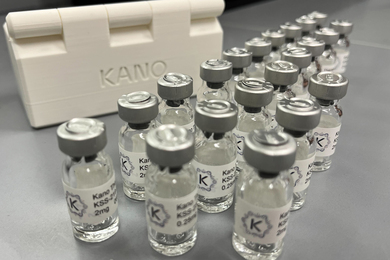
A better DNA material for genetic medicine
With its circular single-stranded DNA molecules, MIT spinout Kano Therapeutics plans to make gene and cell therapies safer and more effective.
With its circular single-stranded DNA molecules, MIT spinout Kano Therapeutics plans to make gene and cell therapies safer and more effective.

New findings may help researchers identify genetic mutations that contribute to rare diseases, by studying when and how single genes produce multiple versions of proteins.

The KATMAP model, developed by researchers in the Department of Biology, can predict alternative cell splicing, which allows cells to create endless diversity from the same sets of genetic blueprints.
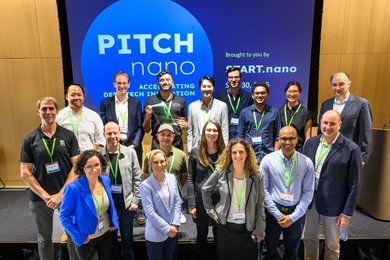
Twelve START.nano companies competed for the grand prize of nanoBucks to be used at MIT.nano’s facilities.
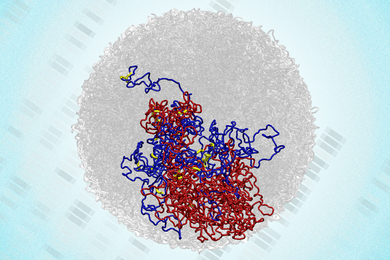
Enabled by a new high-resolution mapping technique, the findings overturn a long-held belief that the genome loses its 3D structure when cells divide.
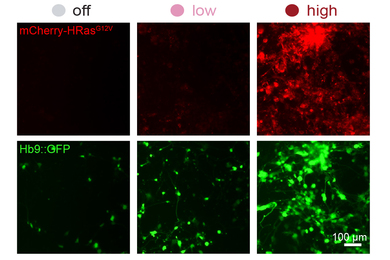
The promoter editing system could be used to fine-tune gene therapy or to more efficiently reprogram cells for therapeutic use.
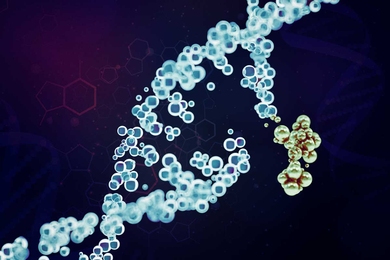
MIT researchers have dramatically lowered the error rate of prime editing, a technique that holds potential for treating many genetic disorders.

Cache DNA has developed technologies that can preserve biomolecules at room temperature to make storing and transporting samples less expensive and more reliable.
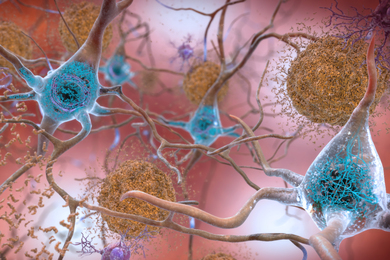
Lipid metabolism and cell membrane function can be disrupted in the neurons of people who carry rare variants of ABCA7.
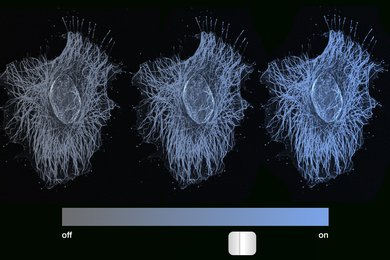
The findings may redefine how cell identity is established and enable the creation of more sophisticated engineered tissues.

The longtime MIT professor and Nobel laureate was a globally respected researcher, academic leader, and science policy visionary who guided the careers of generations of scientists.

Researchers developed a tool to recreate cells’ family trees. Comparing cells’ lineages and locations within a tumor provided insights into factors shaping tumor growth.

Combining powerful imaging, perturbational screening, and machine learning, researchers uncover new human host factors that alter Ebola’s ability to infect.

A new approach for testing multiple treatment combinations at once could help scientists develop drugs for cancer or genetic disorders.

The approach collects multiple types of imaging and sequencing data from the same cells, leading to new insights into mouse liver biology.