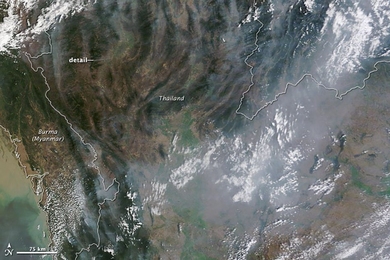
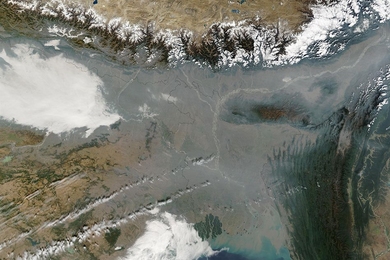
Clearing the air over Southeast Asia
Study finds reducing biomass burning is not enough to significantly improve air quality in Southeast Asia.
Study finds reducing biomass burning is not enough to significantly improve air quality in Southeast Asia.

Climate Changed Symposium combines art and science to envision the global food system under climate change.

May 16-18 event, hosted by MIT Solve, will include remarks from Eric Schmidt, Ursula Burns, Yo-Yo Ma, and Luis Alberto Moreno, among other luminaries.
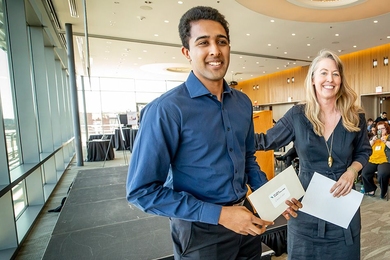
At annual event, 10 teams split $92,500 in prize money for designing innovations that improve lives worldwide.
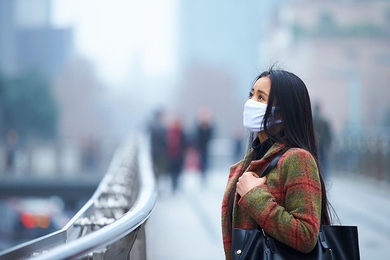
A 4 percent reduction per year in carbon dioxide emissions should net $339 billion in health savings in 2030, researchers estimate.
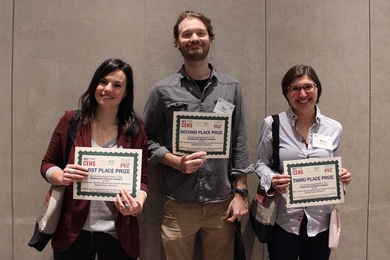
Annual poster session showcases recent work on biological effects of exposure to environmental agents.
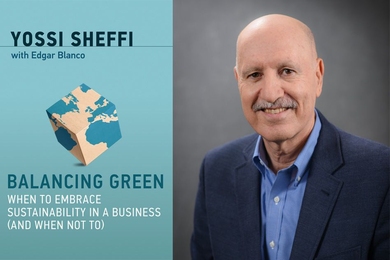
In a new book, MIT professor Yossi Sheffi examines the trade-offs companies face when grappling with sustainability issues.
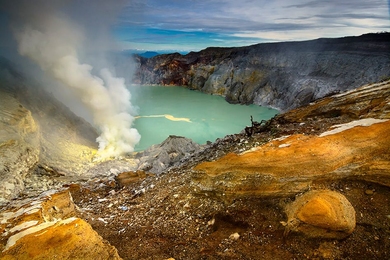
Large concentrations of sulfites and bisulfites in shallow lakes may have set the stage for Earth’s first biological molecules.
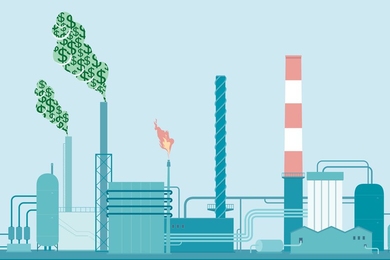
Several different carbon-pricing approaches would help reduce emissions, and some would be fair as well, researchers report.

Concrete Sustainability Hub research shows life-cycle thinking has long-term environmental and economic payoffs.
Water industry publication recognizes J-WAFS director John Lienhard and other influential water sector leaders with strong connections to MIT, in 2018 Top 25 list.
Joint Program researchers advocate for improved modeling approach.
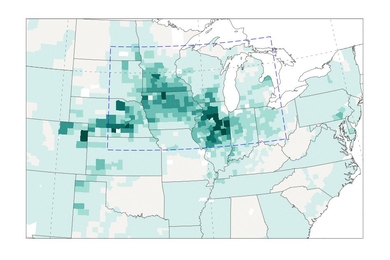
An increase in corn and soybean production in the Midwest may have led to cooler, wetter summers there.

Panel at MIT explores benefits, costs, and political challenges.