
MIT student Jack Carson named 2026 Udall Scholar
The Udall Foundation identifies and rewards future leaders in tribal public policy, Indigenous health policy, and the environment.
Download RSS feed: News Articles / In the Media / Audio
The Udall Foundation identifies and rewards future leaders in tribal public policy, Indigenous health policy, and the environment.
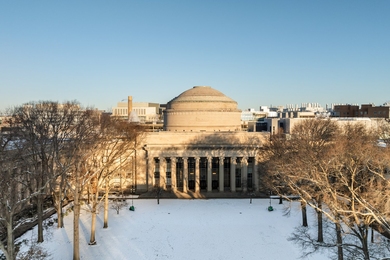
Faculty members and researchers were honored in recognition of their scholarship, service, and overall excellence.

With a novel design, MIT researchers overcame a stubborn problem that has limited the effectiveness of chip-based systems for lidar.

The “MetaEase” technique provides a heads-up to potential scenarios that could cause long wait-times or outages.
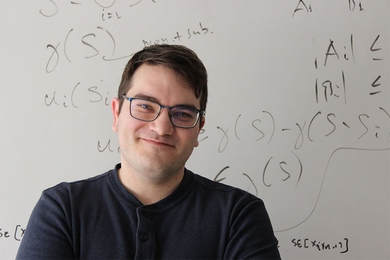
Assistant Professor Gabriele Farina mines the foundations of decision-making in complex multi-agent scenarios.
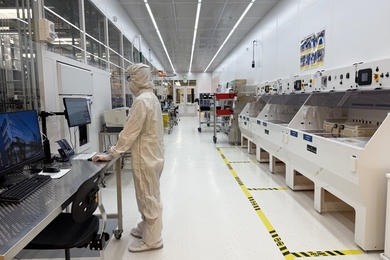
NanoFab Equipment Management and Operations (NEMO) system streamlines shared facilities management via tool trainings, reservations, and lab communications.
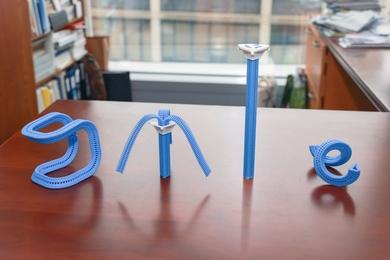
An old patent from MIT Professor Bill Freeman inspired the new “Y-zipper,” a three-sided fastener that snaps gear, robots, and art into shape at the push of a button.

Founded by Peter Godart ’15, SM ’19, PhD ’21, the company has developed technologies for extracting critical metals and making fuel out of aluminum.
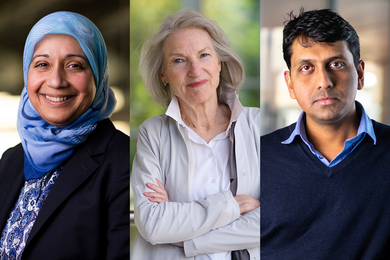
Afreen Siddiqi, Kathleen Thelen, and Vinod Vaikuntanathan, along with alumna Kate Manne, are appointed to the 2026 class of “trail-blazing fellows.”
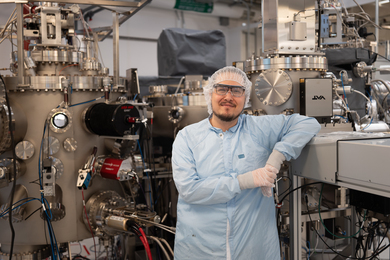

Building on a long-standing MIT–IBM collaboration, the new lab will chart the convergence of AI, algorithms, and quantum computing.

A new method could bring more accurate and efficient AI models to high-stakes applications like health care and finance, even in under-resourced settings.

Fellowship honors contributions of immigrants to American society by awarding $90,000 in funding for graduate studies.
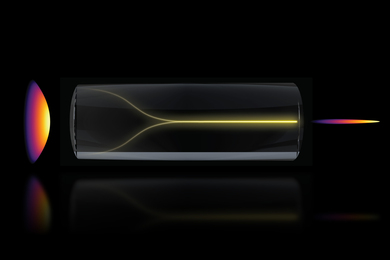
MIT researchers leveraged a surprise discovery to devise a faster and more precise biomedical imaging technique.

The “EnergAIzer” method generates reliable results in seconds, enabling data center operators to efficiently allocate resources and reduce wasted energy.