Topic
Electrical engineering and computer science (EECS)
Download RSS feed: News Articles / In the Media / Audio

Sharing a passion for music and interactive technology
Harmonix co-founder Eran Egozy returns to MIT as professor of the practice in music technology.

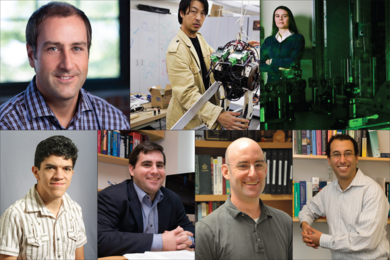
National Academy of Sciences elects four MIT professors
Chakraborty, Lynch, Ploegh, and Sabatini honored for research achievements.
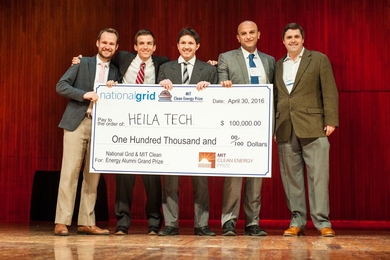
MIT team’s “brain” for microgrids wins Clean Energy Prize
Six teams split $225,000 in prizes at the annual competition that funds clean-energy ideas.
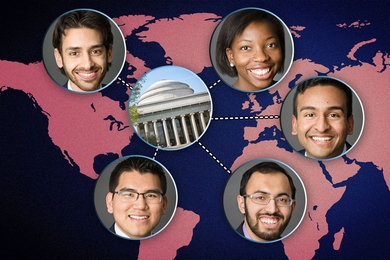
Five from MIT win 2016 Paul and Daisy Soros Fellowships for New Americans
Awards fund graduate studies for immigrants and children of immigrants.
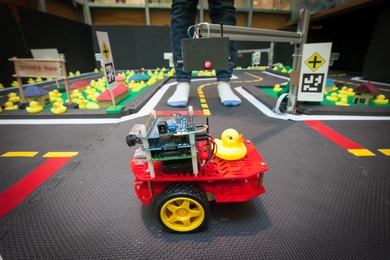
Self-driving cars, meet rubber duckies
“Duckietown” class at Computer Science and Artificial Intelligence Lab teaches autonomy, aims to become global research platform.
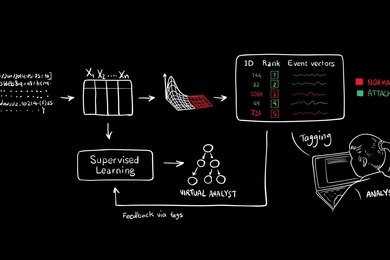
System predicts 85 percent of cyber-attacks using input from human experts
Virtual artificial intelligence analyst developed by the Computer Science and Artificial Intelligence Lab and PatternEx reduces false positives by factor of 5.

Patching up Web applications
New debugging method found 23 undetected security flaws in 50 popular Web applications.

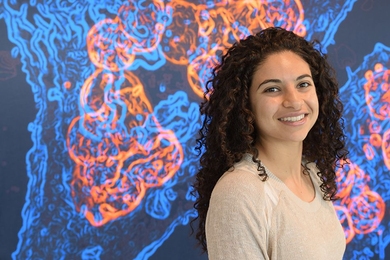
An ace on the court and in the lab
EECS senior Ava Soleimany talks about leadership, her research in synthetic biology, and her tenure as captain of the women’s tennis team.

Using new models and big data to better understand financial risk
Bringing together engineers, data theorists, mathematicians, economists, biologists, and policy experts, IDSS is looking at financial risk through a multidisciplinary lens.

QS World University Rankings rates MIT No. 1 in 12 subjects for 2016
MIT ranked within the top 5 globally for 19 of 42 subject areas.

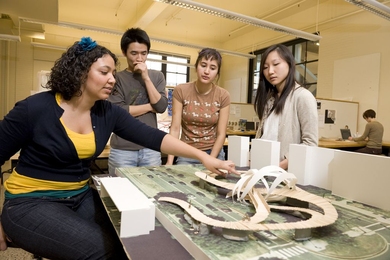
New undergraduate majors and minors to debut in fall 2016
Driven by student demand and the blending of fields, new opportunities include management tracks and minors in computer science, data science, and innovation.

Using data from social networks to understand and improve systems
Researchers in IDSS are learning how ideas evolve over networks, quantifying the influence of individuals in networks, and making better predictions.