3 Questions: Shedding light on why power grids go dark
Pablo Duenas-Martinez, a MITEI research scientist, describes the “death spiral” of events that caused the 12-hour Iberian peninsula power outage in 2025, and five lessons learned.
Macro, a modeling tool developed by the MIT Energy Initiative, enables energy-system planners to explore options for developing infrastructure to support decarbonized, reliable, and low-cost power grids.
AI supports the clean energy transition as it manages power grid operations, helps plan infrastructure investments, guides development of novel materials, and more.
Industry leaders agree collaboration is key to advancing critical technologies.
MIT faculty and MITEI member company experts address power demand from data centers.
Assistant Professor Priya Donti’s research applies machine learning to optimize renewable energy.
Now mandated by law, Lincoln Laboratory’s blackout drills are improving national security and ensuring mission readiness.
Researchers are developing algorithms to predict failures when automation meets the real world in areas like air traffic scheduling or autonomous vehicles.
New research finds liquid air energy storage could be the lowest-cost option for ensuring a continuous power supply on a future grid dominated by carbon-free but intermittent sources of electricity.
At the 2025 MIT Energy Conference, energy leaders from around the world discussed how to make green technologies competitive with fossil fuels.
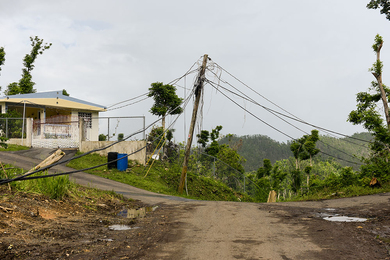
Using the island as a model, researchers demonstrate the “DyMonDS” framework can improve resiliency to extreme weather and ease the integration of new resources.
Global warming potential of sulfur hexafluoride (SF6) is more than 24,000 times that of carbon dioxide.
Researchers urge industry and the research community to explore electrification pathways to reduce chemical industry emissions.
MIT Energy Initiative edX course asks students to rethink how we operate power systems.
In the Northeast, Canadian hydropower could make it so.