
3 Questions: Building more resilient minerals supply chains
Elsa Olivetti, co-director of the MIT Minerals Stewardship Consortium, discusses how research and collaborations can strengthen mineral supply chains.
Elsa Olivetti, co-director of the MIT Minerals Stewardship Consortium, discusses how research and collaborations can strengthen mineral supply chains.
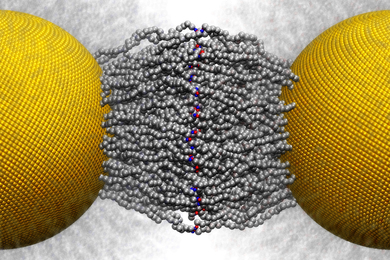
Pliable connector molecules could be key to creating nanoparticle-based materials for photonics, chemical catalysis, medicine, and more.

The new simulation tracks dark matter, galaxies, stars, and cosmic structures over the universe’s first 2 billion years, in greater detail and volume than ever before.

In some regions of the world, the poorest people may spend about 50 percent of their income on food, while the richest spend about 5 percent.

The “CrysVCD” tool developed at MIT could cut the huge amounts of time and money spent on screening out chemically unstable designs.

A new, scalable technique could enable powerful radars and sensors based on quantum technology that works at room temperature.
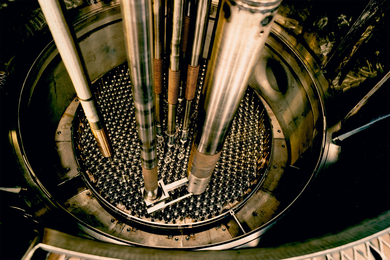
New understanding of how nuclear fuel breaks down and changes in an operating nuclear reactor could help keep some reactors running longer, will inform the next generation of nuclear reactor fuel systems.

The study could help scientists understand how superconductivity and other more complex phenomena emerge in quantum materials.
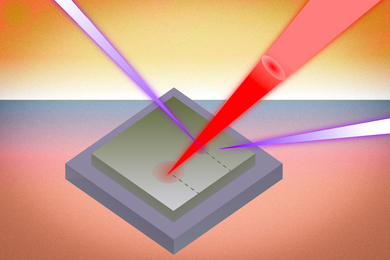
MIT researchers can now precisely measure how heat moves through multilayered materials like computer chips.
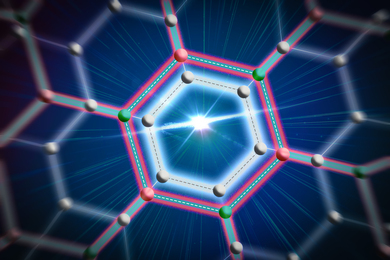
A new technique produces wafer-scale samples, overcoming a major roadblock to using these materials in quantum technologies.
New findings could help researchers design synthetic catalysts that convert nitrogen gas to ammonia, a key step in fertilizer production.
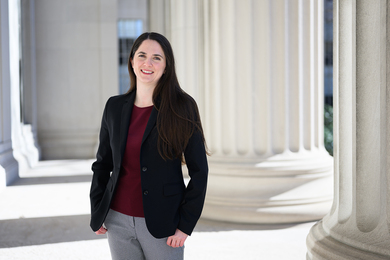
PhD student Lauren Fortier is building on the experience she gained operating a nuclear plant for the Navy to solve a critical hurdle in the wider adoption of the energy source.

Initial research projects advance national priorities across natural resources, manufacturing, nuclear physics, and more.
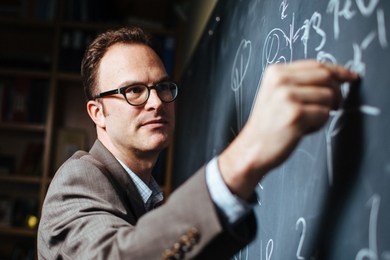
The professor of physics and inaugural director of the NSF AI Institute for Artificial Intelligence and Fundamental Interactions will lead LNS and continue his research in particle physics.
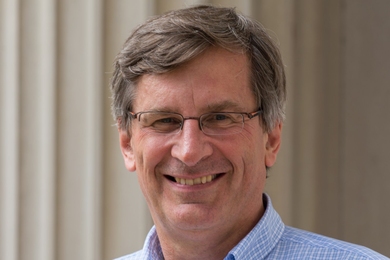
Wyslouch remains the director of the Bates Research and Engineering Center and will continue research on heavy ion collisions.