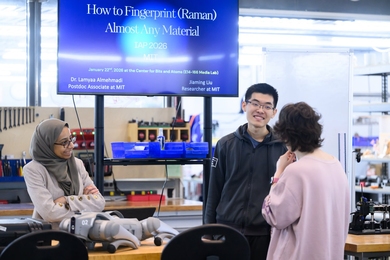
Lasers, robots, action: MIT workshop explores Raman spectroscopy
Participants learn how laser “fingerprinting” can help identify materials in fields ranging from law enforcement to art restoration.
Participants learn how laser “fingerprinting” can help identify materials in fields ranging from law enforcement to art restoration.
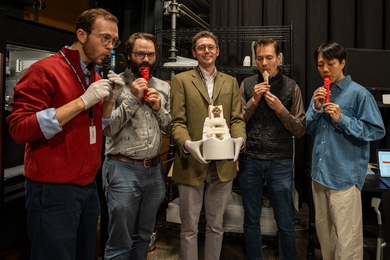
Through an interdisciplinary collaboration between MIT and the Museum of Fine Arts, Boston, researchers are creating playable physical and synthesized replicas.
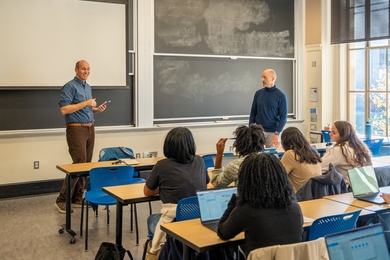
In STS.059 (The Bioeconomy and Society), students explore the social and political factors at work in the biology, biotech, and biological engineering sectors.
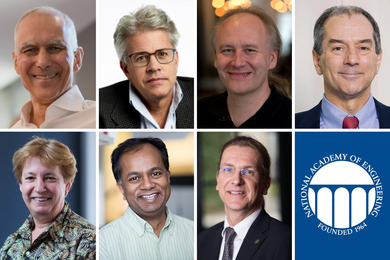
Seven faculty members, along with 12 additional alumni, are honored for significant contributions to engineering research, practice, and education.
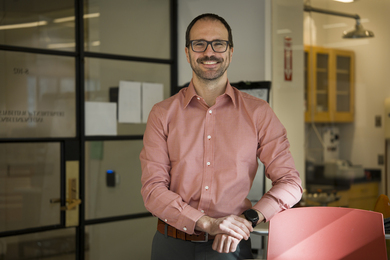
Associate Professor Rafael Gómez-Bombarelli has spent his career applying AI to improve scientific discovery. Now he believes we are at an inflection point.

MIT researchers’ DiffSyn model offers recipes for synthesizing new materials, enabling faster experimentation and a shorter journey from hypothesis to use.
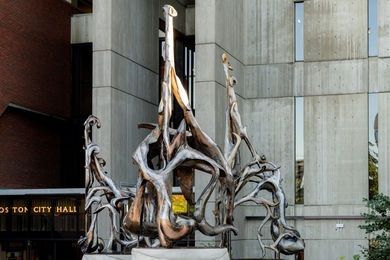
The MIT lecturer and artist-in-residence transformed hundreds of inscribed and hammered steel plates into “Amulet,” a soaring public artwork at City Hall Plaza.
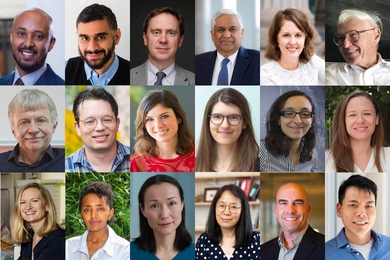
The program recognizes outstanding mentorship of graduate students.
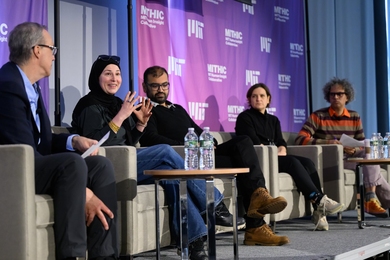
The inaugural MIT Human Insight Collaborative (MITHIC) Annual Event showcased the breadth of projects supported in the first year of the presidential initiative.
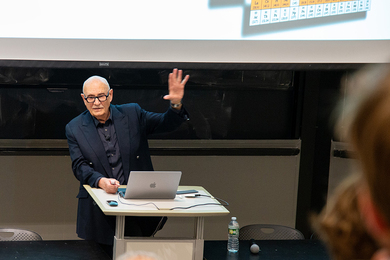
At MIT, metallurgist Diran Apelian ScD ’73 urges engineers and researchers to rethink design, recycling, and the life cycle of modern materials.

MIT researchers found a way to predict how efficiently materials can transport protons in clean energy devices and other advanced technologies.
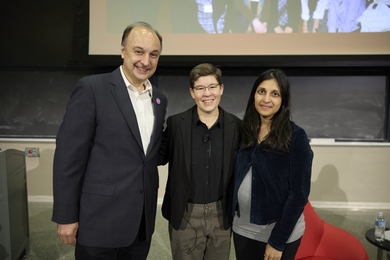
In the 2025 Dresselhaus Lecture, the materials scientist describes her work 3D printing soft materials ranging from robots to human tissues.

The project was designed and built with novel “bio-composite” materials developed by the student team.
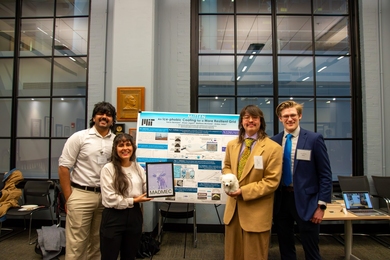
Placing first in the MADMEC innovation contest, the MITten team aims to curb costly power outages during winter storms.
Faculty members and researchers were honored in recognition of their scholarship, service, and overall excellence.