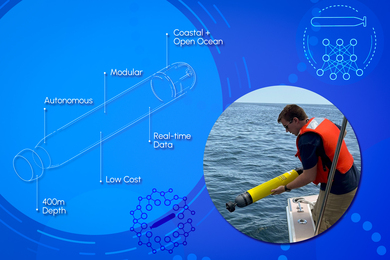
Mapping the ocean with autonomous sensors
Founded by Ravi Pappu SM ’95, PhD ’01, Apeiron Labs is deploying low-cost ocean sensors to improve storm forecasts, detect endangered species, and more.
Founded by Ravi Pappu SM ’95, PhD ’01, Apeiron Labs is deploying low-cost ocean sensors to improve storm forecasts, detect endangered species, and more.

The “MetaEase” technique provides a heads-up to potential scenarios that could cause long wait-times or outages.

The “EnergAIzer” method generates reliable results in seconds, enabling data center operators to efficiently allocate resources and reduce wasted energy.
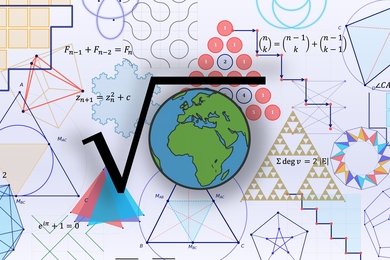
New dataset of 30,000-plus competition math problems from 47 countries gives AI researchers a harder test — and students worldwide a better training ground.
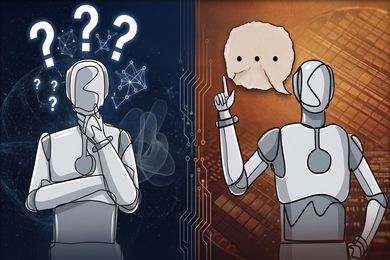
A new training method improves the reliability of AI confidence estimates without sacrificing performance, addressing a root cause of hallucination in reasoning models.
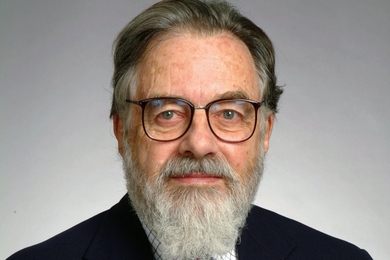
The influential first leader of the Computation Structures Group at MIT played a key role in the development of asynchronous computing.

Researchers use control theory to shed unnecessary complexity from AI models during training, cutting compute costs without sacrificing performance.

Researchers developed a system that intelligently balances workloads to improve the efficiency of flash storage hardware in a data center.
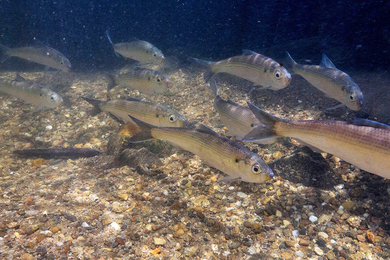
MIT Sea Grant works with the Woodwell Climate Research Center and other collaborators to demonstrate a deep learning-based system for fish monitoring.
An MIT-led team is designing artificial intelligence systems for medical diagnosis that are more collaborative and forthcoming about uncertainty.
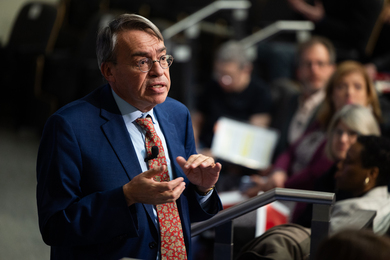
Operations research expert Dimitris Bertsimas delivered the annual Killian Lecture, providing a look at the past and future of his work.
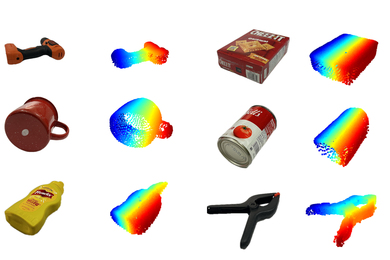
With this new technique, a robot could more accurately detect hidden objects or understand an indoor scene using reflected Wi-Fi signals.
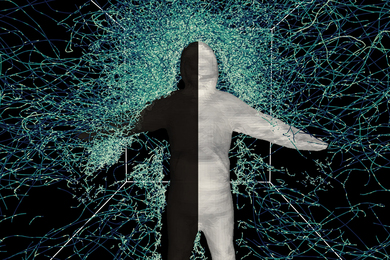
Their flight patterns change in response to different sensory cues, a new study finds. The work could lead to more effective traps and mosquito control strategies.
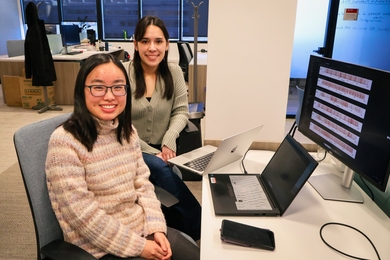
Researchers at MIT, Mass General Brigham, and Harvard Medical School developed a deep-learning model to forecast a patient’s heart failure prognosis up to a year in advance.

Professor Jesse Thaler describes a vision for a two-way bridge between artificial intelligence and the mathematical and physical sciences — one that promises to advance both.